Prime Big Deal Days 2026 for PC Builders: The Price to Beat on Every Part
Some links in this guide are affiliate links - we may earn a commission at no extra cost to you.
Amazon's fall sale, Prime Big Deal Days, runs October 6 and 7 this year, 12:01 a.m. Pacific on the 6th through 11:59 p.m. Pacific on the 7th, with new deals dropping at midnight, 8 a.m. and 1 p.m. Pacific each day. It is the last big discount window before Black Friday, and in a normal year the advice for PC builders writes itself: wait for the GPU, grab the SSD, ignore the cases.
2026 is not a normal year, and the usual advice is backwards in two places.
The first is graphics cards. The Blackwell price increases reached US retail in September, and Tom's Hardware's tracking of Newegg listings put the median RTX 5070 up 36 percent and the RTX 5060 up 27 percent. Our own registry, which reads Amazon's first-party price every morning, has the cheapest RTX 5070 near $850 and the RX 9070 XT near $830 as of October 1. A card going back to its launch price is this year's deal. A card below launch price is a unicorn, and it will be gone before the page finishes loading.
The second is memory and storage. The same datacenter demand that has been pushing RAM and NAND prices up all year has not let go. A 32GB DDR5 kit that cost about $75 in early 2025 sits between $400 and $650 on our tracker depending on the kit and the day, and a Samsung 990 Pro 1TB that sold under $100 last year is near $240. Amazon will put a red "deal" badge on those. A discount on an inflated price is still an inflated price.
So the money goes somewhere different this year. Below is every part we would consider buying during the event, what Amazon charged for it this morning, and the number that makes it worth clicking. Prices are hedged with a tilde because they move hourly during the sale; we will re-run the registry the morning of October 6 and update this page.
The short version
If one GPU line moves during the event, this is the one worth refreshing for. The 9070 XT trades blows with the RTX 5070 Ti in rasterized games at 1440p and 4K, launched at $599, and has spent the autumn above $800 along with everything else. Five partner models are live on Amazon this morning, which is five sellers with stock to move, and 16GB of VRAM is the amount that stays comfortable through this console generation. Under $700 it is the best card you can buy for the money; under $650 buy two and sell one to a friend.
At a glance
Graphics cards: the deal is getting back to launch price
Set your expectations with the launch prices, because that is the line each card has to cross. RTX 5070, $549. RTX 5070 Ti, $749. RX 9070 XT, $599. RX 9070, $549. RX 9060 XT 16GB, $349. Every one of them is above that line today, most by a wide margin, and the event does not need to beat the line to be worth it. It needs to get close.
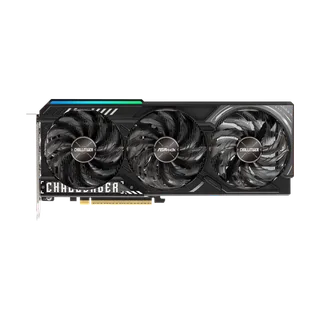
The fastest card AMD makes and the one with the most room to fall. It launched at $599 and the autumn supply squeeze has it above $800 on Amazon this morning. Five different partner models are live in our registry, which means more than one seller has stock to clear, which is how a card ends up in a Lightning Deal.
At 1440p it is a 5070 Ti-class card in rasterized games with 16GB of VRAM, and it needs about a 750W supply. If it shows up under $700, that is the best price-to-performance in the market. Our bottleneck checker will tell you whether your CPU can keep up with it.
The catch: Ray tracing still trails the 5070 Ti, and FSR 4 is in fewer games than DLSS 4.
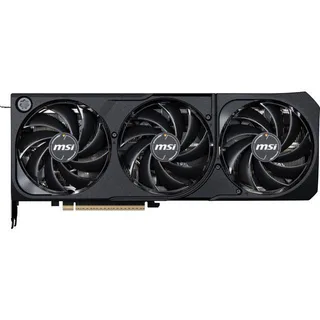
The hardest card to recommend at today's price and the one most people will search for. It launched at $549. BestValueGPU's tracker puts its 90-day average near $790, and it is at roughly $850 on Amazon this morning after the 36 percent median jump Tom's Hardware measured at Newegg. That is RTX 5070 Ti money for a 12GB card.
The reason to keep it on the list is that it is the most-stocked GeForce card on Amazon, with four partner models live this morning, and the most-stocked card is the one most likely to get a promotional price. Under $650 it is a fair 1440p card with the best upscaler in the business. Above $700, buy the 9070 XT instead and do not look back.
The catch: 12GB of VRAM is the smallest amount we would put in a 1440p build in 2026, and the price has further to fall than any other card here.
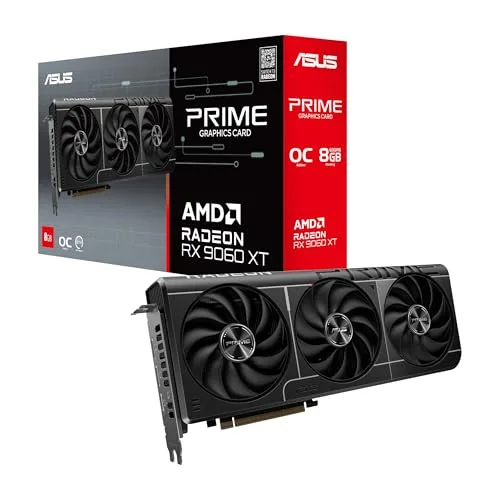
This is the card for a 1080p build that wants to last, or a 1440p build on a budget, and 16GB of VRAM at this tier is the detail that matters. It launched at $349. It is $520 this morning, which is absurd for what it is, and it is exactly the kind of card that drops $100 for two days and then goes back up.
Our line is $400. At that price it is the cheapest 16GB card worth owning. Pair it with a Ryzen 5 and a 650W supply and you have a machine that runs everything released this year at 1080p high without thinking about it.
The catch: Make sure the listing says 16GB. The 8GB version shares the name and is not worth the discount.
Also worth a refresh: the RX 9070 non-XT is at ~$590 this morning against a $549 launch price, the closest to its line of any card we track. It is 10 to 15 percent slower than the XT for 25 percent less money today, and a 5070 competitor at 1440p. If the XT does not move and this one dips to $500, it is the better buy.
CPUs: X3D or nothing
AMD's gaming chips are the only CPUs worth waiting on, because the chips that are not X3D are already priced where they should be. A Ryzen 7 9700X is $339 this morning against a $359 launch price. That is not a deal waiting to happen; that is the price.
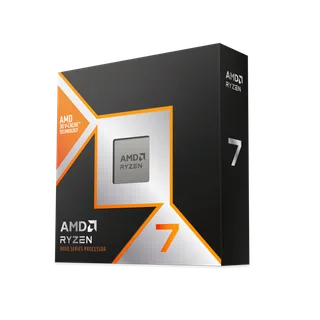
The fastest gaming CPU you can put in a desktop, launched at $479, and the one part on this page that has been going the right direction. Amazon's first-party listing was at $449 at the end of September, and this morning only third-party sellers are showing, which is usually what the day before a promotional price looks like.
If you are building around a 9070 XT or anything faster, this is the chip, and the best GPU for the 9800X3D page shows how much headroom it leaves. If you are on a budget GPU, you do not need it; a Ryzen 7 7800X3D at ~$350 gives up a few percent in games and saves the difference for the card.
The catch: Amazon's own stock comes and goes; if the only seller is a third party above $480, that is not the deal, wait for the next drop.
Displays: the one category that is cheap
Panel oversupply did to monitors what AI demand did to RAM, in the opposite direction. A 27-inch 1440p 180Hz IPS panel is a $230 to $290 product now, and a 27-inch 1440p QD-OLED that cost $800 to $900 two years ago sits roughly in the $500 to $650 band. Samsung took $200 to $600 off its Odyssey OLED line during the back-to-school window, which we covered in August, and this is where a budget stretches furthest this year.
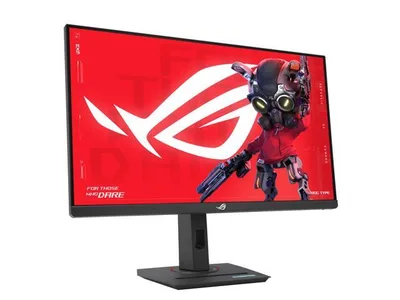
The top pick in our 1440p monitor guide for a reason: 180Hz, a fast IPS panel, G-Sync compatible, and a price that has floated between $230 and $290 all year. Under $230 during the event is a buy. It is the right monitor for every GPU on this page from the 9060 XT up.
If you want the OLED instead, the MSI MPG 271QRX at ~$630 is the one we recommend, and OLEDs are the monitors that moved most in the last sale window. Under $550 for a 27-inch 1440p 360Hz QD-OLED is the number.
The catch: IPS, so blacks are grey next to an OLED, and HDR is a checkbox rather than a feature.
Power supplies, coolers, motherboards: where the discounts are real
These are the parts that genuinely go on sale during Amazon events, because the margins allow it and the brands use the event to clear last year's SKU. They are also the parts people skimp on, which is the wrong order of operations when the GPU costs $800.
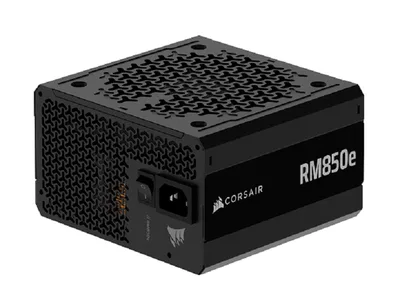
850 watts, Cybenetics Gold, fully modular, and the 2025 revision has the 12V-2x6 cable a current GeForce card wants. It is $100 on Amazon this morning against $116 to $145 at Newegg, and our line for the event is $85. This is enough supply for a 9070 XT or a 5070 Ti with a 9800X3D and margin to spare; the PSU calculator will tell you if your build needs more.
The RM750e at ~$90 is the same unit with 100 fewer watts, right for a 9060 XT or 5070 build, and the RM1000e at ~$140 is the one for a 5080.
The catch: Two revisions share the name. The 2025 one ships a 12V-2x6 cable for current GeForce cards; the original does not, so read the listing before you buy for a 50-series card.
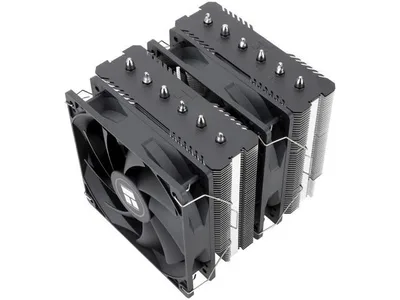
The cooler that ended the argument about whether anyone needs to spend $100 on air cooling. It handles a 9800X3D or a 9700X with room to spare, it is quiet, and it costs about $40. Our line is $33; at that price buy it even if your current cooler is fine, because you will use it on the next build.
If you want liquid, the Arctic Liquid Freezer III Pro 360 at ~$70 is the AIO we recommend in the cooler guide, and it is the one AIO that undercuts the Peerless Assassin on cooling without doubling the price.
The catch: It is tall. Check your case clears 155mm before you buy, and it will not fit under a low-profile RAM kit on some boards.
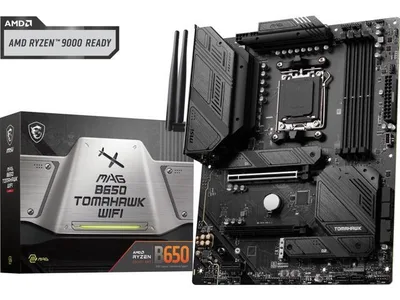
The board under more AM5 builds than any other, with a VRM that runs a 9950X without complaint, Wi-Fi 6E, 2.5G ethernet and three M.2 slots. It is $176 this morning, our line is $150, and with the B850 version already on shelves the B650 is the one with a reason to be cleared. The B850 Tomahawk WiFi at ~$210 is the newer board if the price gap closes.
The catch: PCIe 4.0 on the GPU slot. No current card is limited by that, but the B850 version adds 5.0 for about $35 more.
Peripherals: cheap, and they stay cheap
Mice, keyboards and headsets are flat or down this year and they discount reliably. Three from our guides that are worth checking on the 6th: the Logitech G305 Lightspeed is ~$35, and under $30 is the number, the best cheap wireless mouse in the mouse guide. The Wooting 80HE at ~$200 is the hall-effect keyboard that took over the keyboard guide, and Wooting rarely discounts, so if Amazon shows a number under $180 it is real. The HyperX Cloud III S Wireless at ~$130 is our headset of the month; under $100 is the line.
What to walk past
RAM. A 32GB DDR5 kit is between $400 and $650 on our tracker depending on the day. A 20 percent discount on that is still four times the price of eighteen months ago. If a build needs memory, buy 16GB now and add a second kit when prices come back; our RAM advisor will tell you which speed your CPU can use.
NVMe SSDs. The Samsung 990 Pro 1TB is ~$240 this morning. It was under $100 a year ago. Same logic: buy the smallest drive that works, or buy a PCIe 4.0 drive from a second-tier brand rather than a flagship, and revisit in 2027. The SSD guide has the PCIe 4.0 picks that are still sane.
Anything with a strikethrough price you have never seen it sell at. Amazon's "list price" is often the launch MSRP or a figure from months ago, which is why a card can read "30% off" while sitting at the price it has held all year. Judge every deal against the "today" number in this post, not against the crossed-out one.
The RTX 5060 Ti and the RTX 5080. Both are so far above launch price on Amazon this morning that even a dramatic event discount lands above where they should be. The 5080 is at ~$1,650 against a $999 launch. If you are shopping that tier, the prebuilt-vs-building math currently favors a prebuilt, because system builders buy GPUs at prices you cannot.
The short version
Refresh three things on the morning of October 6: the RX 9070 XT, the Ryzen 7 9800X3D, and whichever monitor you have been putting off. Buy the PSU and cooler at any discount because those prices are real. Walk past RAM and SSDs unless the machine is dead without them. And if you are not sure whether a part fits what you already own, the build-a-PC tool prices a whole system from the same registry these numbers came from.
Found this useful? Pass it along:
Frequently Asked Questions
When is Prime Big Deal Days 2026?
October 6 and 7, 2026. It opens at 12:01 a.m. Pacific on the 6th and closes at 11:59 p.m. Pacific on the 7th, which is 2:59 a.m. Eastern on October 8. Amazon says new deals drop three times a day, at midnight, 8 a.m. and 1 p.m. Pacific, so the best time to check is early morning Eastern on both days. You need a Prime membership for the member-exclusive deals; the free trial counts.
Will graphics cards be discounted during Prime Big Deal Days?
Usually not by much, and this year the bar is lower. GeForce 50-series cards are selling 20 to 36 percent above where they launched because of the Blackwell price increases that hit US retail in September, so an RTX 5070 that lists at $549 sits near $850 to $900 at most stores. During the event, a card merely returning to its launch price is the deal. Anything under launch price is rare and will sell out within the hour.
Is it a good time to buy RAM or an SSD?
No, unless the machine does not work without it. A 32GB DDR5 kit that cost about $75 in early 2025 sits between $400 and $650 on our tracker depending on the day, and a Samsung 990 Pro 1TB that was under $100 last year is near $240. An Amazon discount on those is a discount on an inflated number. Buy the smallest capacity that does the job and put the money into a display or a GPU, where the same dollars go much further.
What is a real deal on a PC part?
A price below the part's normal street price, not below a strikethrough number Amazon prints next to it. The list price Amazon shows is often the manufacturer's suggested price from launch or a figure from months ago, so a '30% off' badge can describe a price the part has sat at all year. Check the current street price first, then judge the deal against that. The table below gives today's price for each part we recommend and the line we would buy at.
Do I need Prime to get the deals?
For the Prime-exclusive deals, yes, but a free 30-day trial started that week qualifies, and the Lightning Deals and category sales that run alongside the event are usually open to everyone. If you are not a member and do not want the trial, you will still see most of the component discounts, just not the ones marked Prime exclusive.