The Best CPU Coolers in 2026: The $40 Answer and When to Spend More
Some links in this guide are affiliate links - we may earn a commission at no extra cost to you.
Picking a CPU cooler in 2026 is not about chasing the lowest possible temperature. It is about matching a chip's heat output to a cooler that stays quiet while doing its job, and then not overpaying for headroom you will never use. The single biggest shift of the last few years is that top-tier air coolers caught up to mid-size AIOs, which quietly killed the old instinct that liquid always means better.
A few things actually matter. Heat output first: an X3D chip concentrates its warmth in a small area and runs hot, and a pushed Intel K-series flagship can dump well over 250W, while a 65W Ryzen 5 barely raises a sweat. Then noise under sustained load, because a cooler that only stays quiet at idle is no cooler at all. Then physical clearance, since big air towers are tall enough to foul case panels and block tall RAM, and AIOs need somewhere to bolt a radiator. Last is mounting and reliability: an air cooler has one fan you can replace for pocket change, while an AIO carries a pump that will eventually wear out. Put that together and the honest 2026 point of view is that a good $40 tower beats a 240mm AIO on value and reliability, and a 360 only earns its price on a genuinely hot flagship or a build you want to show off behind glass.
How we rank: we weigh real cooling headroom against noise, clearance, mounting hassle, and price, not lab-chart bragging rights. Every pick here is one we would bolt onto our own build, matched to the chips people actually run in 2026.
The short version
I point almost every build I help with at the Thermalright Peerless Assassin 120 SE, and I have for three years running. For around $40 it does what $100 coolers did a few years ago, and it stays quiet doing it. Buy it unless you have a specific reason not to: if you have a genuinely hot flagship chip or a silence fetish, step up to the Noctua NH-D15 G2 air cooler, and if you want liquid for thermals-per-dollar, the Arctic Liquid Freezer III is the one to get. That covers about 95% of builds - the rest is aesthetics.
At a glance
The Default: Just Buy This
If you are not building around a flagship chip, the decision is basically made. The Peerless Assassin 120 SE is a dual-tower, six-heatpipe cooler with two quiet 120mm fans, and for around $40 it cools like the $90-120 towers did a few years ago. It has the headroom to keep a Ryzen 7 7800X3D, a Ryzen 7 9700X, or a Core i5/i7 in check while staying quiet under sustained load, which is exactly why it hollowed out the middle of the market. Anything short of a hard-pushed Ryzen 9 or Core i9 sits comfortably inside its range.
The one thing to sort out before you buy is clearance. It is a big dual-tower, so measure your case's cooler-height limit and watch tall RAM before you commit. Beyond that there is not much to think about: reviewers have spent three years trying to dethrone it and mostly failed. Watch the listing price, though, because third-party sellers love to inflate this one, and much above $40 the value case starts to soften.
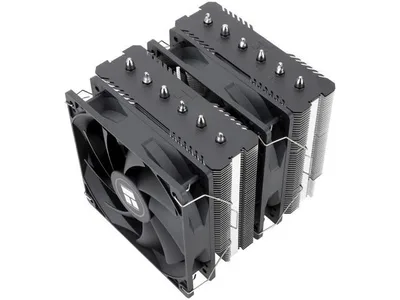
Bottom line: for any build up to a Ryzen 7 or Core i7, this is the cooler to buy and stop thinking about. At its real price nothing touches it.
The catch: It is a big dual-tower, so check your case clearance before you buy, and there is no RGB - which I count as a pro.
The step up in the same family is the Phantom Spirit 120 SE. It is the same idea with a little more muscle: seven heatpipes instead of six and slightly stronger fans, which buys a few degrees of extra headroom on hotter chips. It stays just as quiet and still lives in the $50s, so it is a small move rather than a real tier change.
Where it earns the extra $15 is on a Ryzen 9 or an i7/i9 that you actually load up, because the extra pipe gives the cooler more margin before the fans have to speed up. On anything up to a Ryzen 7 the cheaper Peerless Assassin already has the heat handled, so only reach here if you are feeding it a genuinely warm chip and want a touch more quiet when it is working hard.
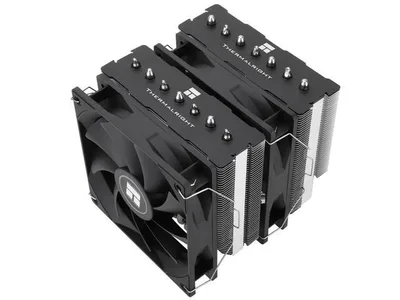
Bottom line: the pick when you want air on a budget but your CPU runs hotter than a Ryzen 7 can throw at a cooler.
The catch: Same big-tower footprint as the Peerless Assassin, so the case-clearance caveat carries straight over.
The Air-Cooling Endgame
When the chip runs genuinely hot and you still want nothing to do with a pump, this is where air cooling tops out. The Noctua NH-D15 G2 is the legendary dual-tower rebuilt: eight heatpipes, refined 140mm fans, and enough capacity to keep a flagship Core i9 or Ryzen 9 under control. It trades blows with 360mm AIOs on the hottest chips while staying quiet, and it does it with no pump to fail and no coolant to slowly permeate away.
The catch is size and price. At $160 it costs as much as a good AIO, and it is a genuinely large heatsink, so both case clearance and RAM height need checking before you commit. The way I think about it is that this is the last cooler you buy for that job. It moves from build to build, outlives the parts around it, and asks nothing of you: no software, no leak risk, no wear item. If you want a hot flagship cooled properly and you never want to think about the cooler again, this is the one.
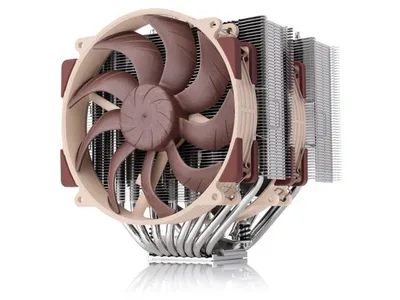
Bottom line: the buy-once air cooler for a flagship chip, if you have the clearance for it and never want to revisit the decision.
The catch: It is expensive for air and it is huge, so verify both case and RAM clearance before you commit.
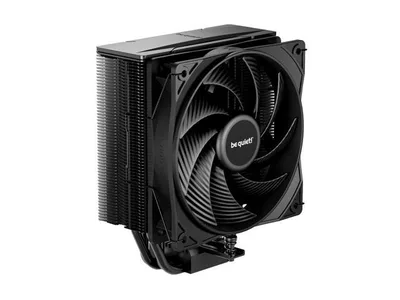
The be quiet! Dark Rock Pro 5 is the silence-first take on the same big-air formula. It matches what a 240mm AIO does thermally while staying nearly inaudible, because keeping noise down is the entire reason the company exists. It has the headroom for a Ryzen 9 or an i7/i9 at stock settings, and the all-black tower looks the part in a build where the cooler is on show.
It gives up a little to the NH-D15 G2 on the very hottest chips run to their limit, so a hard-overclocked flagship is really the Noctua's job. But if your PC sits on the desk next to your head and you care as much about how it looks and sounds as how cold it runs, the stealth black tower is the nicer thing to live with. At around $90 it also undercuts the Noctua by a good margin, which makes it the easier call for a lot of quiet builds.
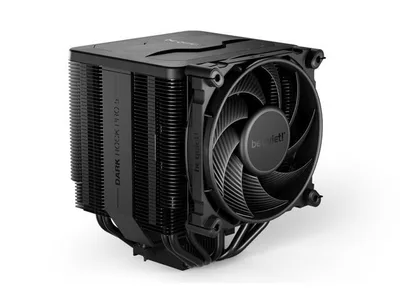
Bottom line: the pick for a quiet build you also have to look at, and a good chunk cheaper than the Noctua.
The catch: It sits a step below the NH-D15 G2 on the very hottest chips, so if you are pushing a flagship to its limit the Noctua pulls ahead.
The AIO Section: If You Want Liquid
Liquid earns its place on three kinds of build: a genuinely hot flagship, a cramped socket that needs tall RAM cleared, and a glass-panel PC where the look matters. Here are the three ways in, sorted by budget.
The Arctic Liquid Freezer III Pro 360 A-RGB is the value benchmark for liquid, and it is not close. A thicker 38mm radiator, strong stock fans, and no software to install get you the vast majority of a flagship AIO's cooling for less than half the money. It has the headroom for anything you can throw at it, a hard-pushed Ryzen 9 or Core i9 included, which is the whole reason to go liquid in the first place.
If you have decided you want an AIO for a hot flagship build, this is the default answer. The one honest catch is that Arctic's mounting instructions are famously dense, so budget a little patience for the install, and there is no LCD screen on the pump if that is what you came for. Spend the money you save on literally anything else in the build, because it cools like units that cost twice as much.
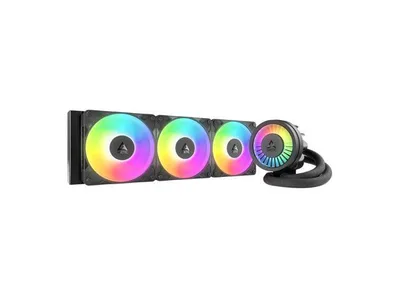
Bottom line: if you want liquid on a flagship and not a screen, this is the one to buy and spend the savings elsewhere.
The catch: There is no LCD bling here, and Arctic's installation instructions are famously dense - budget a little patience for the mount.
The NZXT Kraken Elite 360 is the AIO you buy for the glass panel. A crisp LCD on the pump head shows temperatures, GIFs, or whatever you like, and the cooling underneath genuinely backs up the looks. This is a top-tier 360 with a screen, not a screen bolted onto a mediocre cooler, so it will handle a flagship chip without complaint.
Be honest with yourself about why you are reaching for it, though. At around $280 it costs well over triple the Arctic for similar cooling, and it needs NZXT's CAM software running to drive the display. If the build is meant to be seen behind glass, paying for the screen is a perfectly good reason and I would buy it anyway. If it lives under a desk where nobody ever looks at it, the Arctic does the same cooling for half the money and you will not miss the screen.
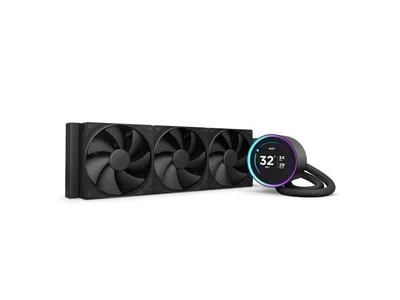
Bottom line: buy it for the screen on a build meant to be seen, not because it cools better than the Arctic.
The catch: You are paying roughly double the Arctic for similar cooling, and it needs NZXT's CAM software running to drive the screen.
The Arctic Liquid Freezer III 240 A-RGB is liquid cooling for mainstream chips without the 360mm price or the radiator space to house it. It comfortably handles anything up to a Ryzen 7 or Core i7, fits smaller and mATX cases, and brings the same Arctic build quality and ARGB as its bigger sibling.
Match it to the chip, though. A 240 is not built for hard-pushed i9-class heat, so a flagship wants the 360 instead. Think of this as the AIO for people who want the clean-socket look and the RAM clearance more than they want maximum headroom. If you are building in a compact case and like the idea of liquid, this is the sensible, affordable way to do it.
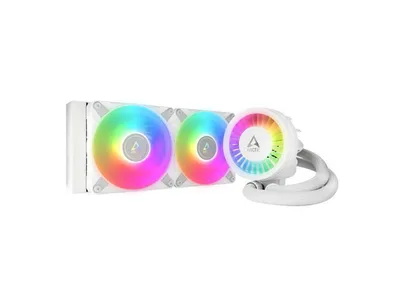
Bottom line: the clean-socket look and RAM clearance of liquid, sized for a mainstream chip and a smaller case.
The catch: 240mm is not built for i9-class heat, so match it to a Ryzen 7 or i7 and below rather than a flagship.
How to Choose (and What to Skip)
The old rule was air for budget, liquid for performance. In 2026 the honest rule is simpler: air unless you have a reason. Big air now matches most AIOs thermally, costs less, cannot leak, and has one replaceable moving part. The reasons to actually pay for liquid are narrow:
- A genuinely hot flagship (a 14900K-class Intel chip, or a 9950X pushed hard) where a 360mm radiator's extra headroom is real rather than theoretical.
- RAM and case clearance. Big air towers are tall and can foul memory; an AIO frees the socket area and clears the way for tall RAM.
- Aesthetics. A clean pump block or a screen beats a fin skyscraper if you have a glass panel and opinions about it.
The mistakes cost money in the other direction too. Do not buy a 360mm AIO for a 65W chip like a Ryzen 5 7600. A $40 tower will run it quieter, never leak, and outlast the AIO, and you will have spent the difference on nothing. Do not pay the screen premium on a build that lives under a desk. And go in clear-eyed that an AIO's pump is a wear item: it works quietly for years and then, one day, it does not, while a good air cooler's only moving part is a fan you swap for $15. That reliability gap is the quiet reason a lot of builders drifted back to air.
One practical check before any of this: the cooler has to fit, and the PSU has to feed the chip you are cooling. The Case Finder lists cooler-height clearance for every case we track, and the PSU calculator folds cooler and fan draw into its estimate. Every build we generate already pairs an appropriate cooler to the CPU's heat output, so this guide is for when you are choosing your own.
More Options Worth a Scroll
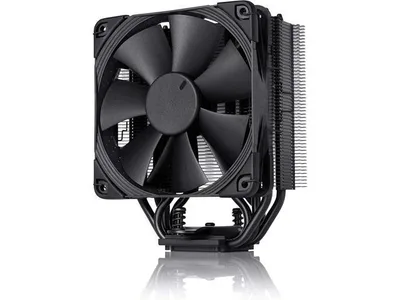
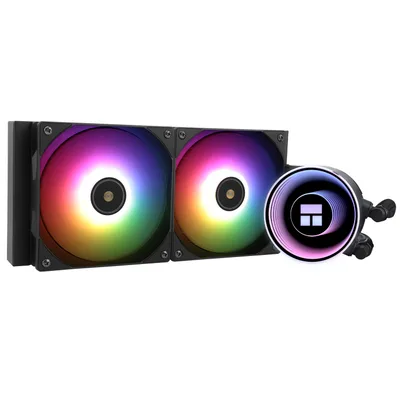
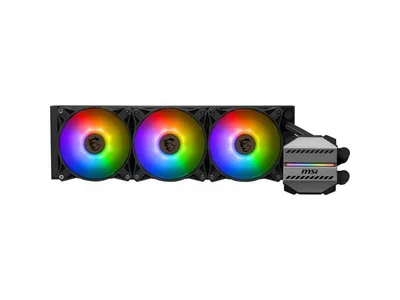
A few more coolers that earn a look if the picks above are out of stock or not quite your fit:
The bottom line
Strip away the noise and 2026 cooling is straightforward. Most builds want the Peerless Assassin at ~$40 and nothing more. Hotter chips or a silence habit justify the Phantom Spirit or, at the top, the NH-D15 G2 and Dark Rock Pro 5 - big air that never wears out. Reach for liquid only when the chip is genuinely hot, the clearance forces your hand, or the build lives behind glass, and when you do, the Arctic Liquid Freezer III line is the honest-value pick while the Kraken Elite is the one you pay extra to show off. Buy for the chip you actually own, check that it fits, and stop chasing the last two degrees.
Related reading
- How to choose the right PC case - cooler-height clearance is really a case-spec problem
- What PSU do I need? - size the power supply for the chip you are cooling
- Ryzen 9850X3D vs 9800X3D - the hot-running X3D chips these coolers are built to tame
- Best CPU for the RTX 5070 - pick the chip before you pick the cooler
- How to build a budget gaming PC - where a $40 cooler fits into the whole build
Found this useful? Pass it along:
Frequently Asked Questions
What is the best CPU cooler in 2026?
For most builds, the Thermalright Peerless Assassin 120 SE at around $40 - it matches coolers that cost three times as much and handles everything up to a Ryzen 7 or Core i5/i7 comfortably. For hot flagship chips or silence obsessives, the Noctua NH-D15 G2 air cooler or an Arctic Liquid Freezer III AIO are the upgrades.
Do I need an AIO liquid cooler or is air cooling enough?
Air is enough for almost everyone in 2026. Top air coolers now match 240-360mm AIOs on most CPUs. AIOs win when you have a 250W+ flagship chip, want a cleaner look around the socket, or need RAM clearance. They add pump noise, cost, and an eventual failure point in exchange.
Is the stock cooler good enough for gaming?
AMD's included coolers are fine for 65W chips like the Ryzen 5 7600 at stock settings, but they get loud under sustained load. Intel K-series and AMD X3D/X series chips do not include coolers and genuinely need a $40+ tower. A better cooler also means higher sustained boost clocks - free performance.
How long do AIO coolers last?
Typically 5-7 years. The pump is the wear item and the coolant slowly permeates out over years. Good air coolers effectively last forever - the only moving part is a standard fan you can replace for $15. It is the quiet reason many builders went back to air.
Does a better CPU cooler improve FPS?
Indirectly, yes. Modern CPUs boost as high as thermals allow, so a cooler that keeps your chip cold sustains higher clocks longer - usually worth a few percent in games versus a struggling stock cooler, and much more comfortable acoustics while doing it.