Thocky, Creamy, Marbly, Clacky: The Best Keyboard for Every Sound in 2026
Some links in this guide are affiliate links - we may earn a commission at no extra cost to you.
Somewhere in the last few years keyboard people stopped describing sound with words that exist and started inventing their own. A board is thocky. Or clacky. Or creamy, or marbly, or poppy. Ask five people on r/MechanicalKeyboards to define any one of them and you will get five confident, mutually incompatible answers, usually with a 90-second sound test attached as evidence.
The vocabulary is nonsense. The thing it describes is completely real, and that is the part worth sitting with. Two boards with identical switches, identical layouts and identical prices can sound like different instruments, and the difference is produced by a handful of physical variables that nobody prints on the box. The slang filled a vacuum left by the spec sheets. It is imprecise because manufacturers are silent, not because the hobby is imagining things.
So here is the decoder, and then the best board in each category. Fair warning on my bias: I think thock is overrated and creamy is underrated, and I will defend that below.
The sound slang, decoded
Free to cite with a link to bottleneckpc.com.
| Term | What it sounds like | What actually produces it |
|---|---|---|
| Thocky | Low, deep, short tail | Mass. Aluminum case, thick PBT caps, dense foam |
| Creamy | Smooth, zero scratch, medium pitch | Heavy factory lube on linear switches |
| Clacky | High, sharp, bright attack | Rigid mount, thin ABS caps, open case volume |
| Marbly | Bright with a hollow ring behind it | POM or polycarbonate plate, minimal foam |
| Frothy | Light, fizzy, quick decay | Lubed linears in a plastic gasket case with foam |
| Poppy | Short, bouncy, fast rebound | Gasket mount with pronounced plate flex |
Read down the right-hand column and you find the thing the hobby keeps burying: only one row is about the switch. Every other sound is produced by the box the switch sits in. This is why the switch obsession in keyboard marketing is aimed at the wrong target. Going from one lubed linear to a different lubed linear barely moves the sound. Going from thin ABS keycaps to thick PBT moves it a lot, and costs less.
Best thocky keyboard: Keychron Q1 Ultra
Thock is the sound of mass, and mass is the one thing you genuinely cannot get cheaply. The Q1 Ultra is a full aluminum case with gasket mounting and layered internal foam, and reviewers and sound tests consistently put it in the deep, dense, short-tail register that people mean when they say a board "sounds like $400." It weighs what it sounds like, which is the whole trick.
The honest catch is that you are paying for metal. At around $230 this costs roughly two and a half times the frothy budget champion further down, and a meaningful chunk of that premium is literally the weight of the case. If the low pitch is what you are chasing, nothing under $150 will get you there and you may as well accept it early. If it is not, you can save a lot of money.
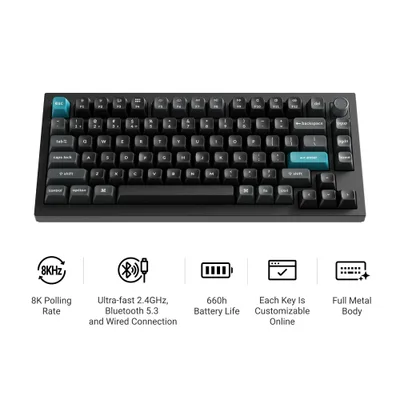
Best thocky
Keychron Q1 Ultra
Full aluminum, gasket mounted, heavily damped. The deep short-tail thock that people buy metal cases to get.
Best creamy keyboard: Keychron V1 Max
Creamy is about texture rather than pitch: no scratch on the downstroke, no spring ping on the way back up, just a smooth uniform stroke. It comes almost entirely from how well the linear switches are lubed at the factory, and the V1 Max is the board I keep coming back to because Keychron tunes it properly out of the box instead of leaving the work to you.
This is where my bias shows. Thock gets the attention, but creaminess is the thing you actually feel on every single keystroke, all day, and it is available for a fraction of the money. At around $95 with a plastic case, hot-swap sockets and pre-lubed linears, the V1 Max does the part of the experience that matters most and skips the part that mostly impresses other keyboard people. If you buy one board from this page without overthinking it, buy this one.
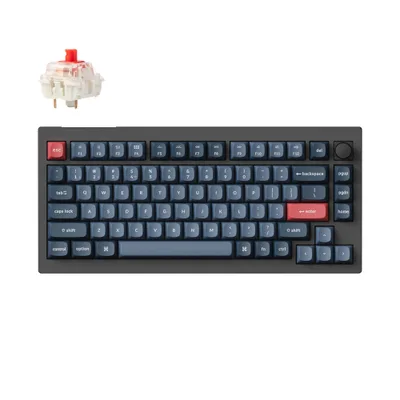
Best creamy
Keychron V1 Max
Properly lubed linears and sensible damping out of the box. The smoothest stroke per dollar on this page.
Best clacky keyboard: Wooting 80HE
Clack is the opposite philosophy: bright, sharp, immediate, with the attack front and center instead of softened. It is unfashionable right now, which I think is a mistake, because a sharp board gives you far clearer feedback about the exact moment of actuation than a heavily damped one does.
The 80HE earns the slot because its whole design points at immediacy. Hall effect switches with adjustable actuation, rapid trigger, and a build that does not smother the attack the way a foam-stuffed budget board does. This is the board for someone who wants to hear the keypress land rather than feel it get absorbed. It is also the most expensive recommendation here at roughly $200, and the analog features are doing a lot of that pricing work, not the acoustics.
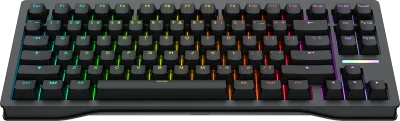
Best clacky
Wooting 80HE
Bright, sharp and immediate, with adjustable Hall effect actuation behind it. Clack with a competitive reason to exist.
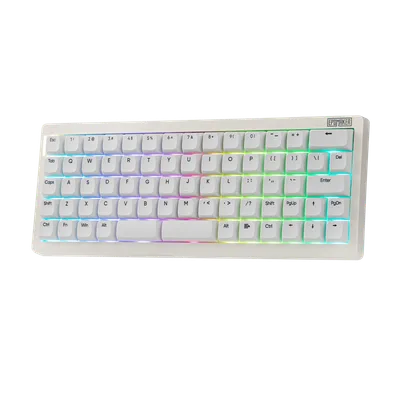
Best marbly keyboard: EPOMAKER TH65
Marbly is the term the hobby argues about most, and I will admit up front it is the shakiest entry in the decoder. The rough consensus is a bright board that still has some resonance left in it, higher pitched than thock but with more body than a pure clack, usually from a stiffer plate paired with restrained foam.
The TH65 lands there, and at around $65 it is the cheapest board on this page by a wide margin. A 65% layout concentrates the sound into a smaller case, which is part of why compact boards tend to read brighter than full-size ones. Buy it if the bright-but-not-thin description is what you are after, or if you want to hear what this category means without spending real money to find out.
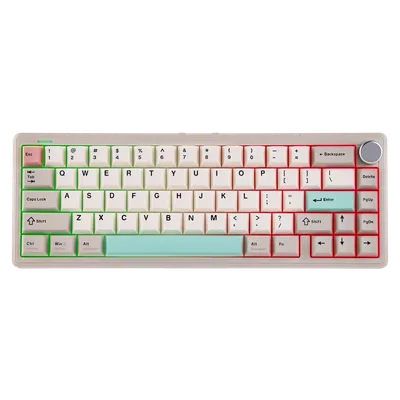
Best marbly
EPOMAKER TH65
Bright with body behind it, in the cheapest package on this page. The low-risk way to find out if marbly is your thing.
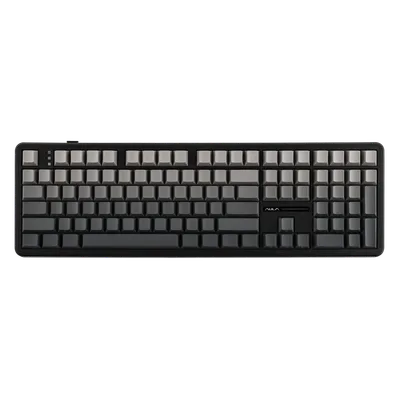
Best frothy keyboard: EPOMAKER x AULA F108
Frothy is what you get when a manufacturer does the cheap version of everything correctly: gasket mount for the flex, factory lube for the smoothness, foam to kill the hollowness, and a plastic case because aluminum would double the price. Light, fizzy, quick to decay, and unmistakably not an office board.
The F108 is the reference implementation, and it is the one people post sound tests of when they want to prove budget boards caught up. The tests are not cheating. At around $90 direct from EPOMAKER you get the full recipe in a full-size layout with a numpad. What keeps it frothy instead of thocky is exactly what keeps it affordable, so do not buy it expecting to mod your way to a low pitch. Buy it because froth is a genuinely pleasant sound and this is the cheapest honest route to it.
Best frothy
EPOMAKER x AULA F108
The reference frothy board. Gasket mount, lubed linears, foam and a plastic case, at the price where that combination became possible.
Runners-up worth a scroll
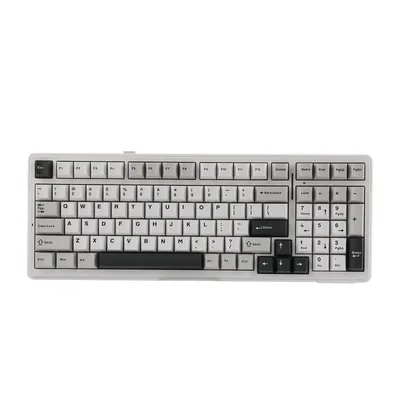
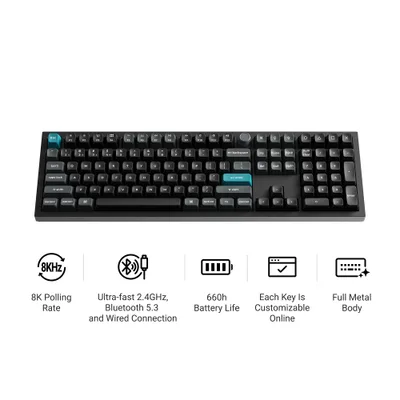
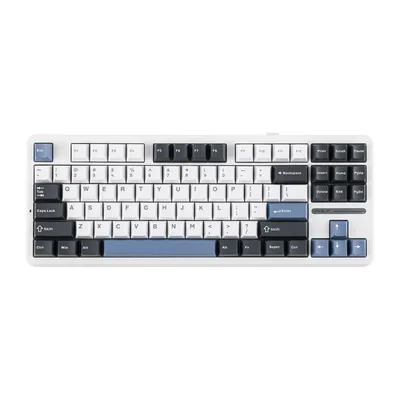
Five boards that lost their category on a detail rather than on merit. The first one is here because of something we noticed in our own retail data rather than in a sound test.
What will not change how your board sounds
Three upgrades get sold as sound fixes and mostly are not.
Swapping between similar switches. Going from a lubed linear to a different lubed linear is a small change that people convince themselves is a large one. Going from a dry scratchy switch to a lubed one is genuinely transformative. The category matters, the brand mostly does not.
Stacking a third layer of foam. The first layer of dampening does most of the work, the second does a little, and the third can deaden a board into sounding like nothing at all. This is a real failure mode and the hobby talks people into it constantly.
Anything marketed as "premium" without naming a material. Case material, plate material and keycap plastic are the three variables that decide your sound. A listing that will not state all three is describing a mood, not a keyboard.
The upgrade that does work every time is keycaps. Thicker PBT drops the pitch and tightens the decay on any board, a standard set fits nearly every layout here, and it costs less than a switch order. If you buy one thing after the board, buy those.
The bottom line
Buy for the sound you actually want, not the one with the best marketing. Thock needs mass, so the Keychron Q1 Ultra and its aluminum case are the honest route. Cream needs lube, and the Keychron V1 Max delivers it for a third of the money, which is why it is the one I would hand most people. Clack needs a board that refuses to smother the attack, which is the Wooting 80HE. Marble and froth are budget territory, and the EPOMAKER TH65 and Aula F108 cover both without much money on the table.
The one line to carry out of the decoder table: the switch is a single row out of six. The case, plate, foam and keycaps are the other five, and they are the ones nobody prints on the box. Pick the chassis for the sound, then tune it with keycaps. That order is cheaper and it actually works.
Building the machine under the desk too? Our PC builder handles the tower, and the bottleneck checker will tell you whether the parts you already own are pulling their weight.
Related reading
- The best budget mechanical keyboards - the full value breakdown under $100
- The best gaming keyboards of 2026 - Hall effect and the competitive end of the market
- Best gaming setup accessories - the rest of the desk
Found this useful? Pass it along:
Frequently Asked Questions
What does thocky mean?
Thocky describes a low, deep sound with a short tail, like dropping a book on carpet. It comes from mass and dampening: an aluminum case with real weight, thick PBT keycaps, and dense internal foam. It is the sound most people mean when they say a keyboard sounds expensive.
What is the difference between creamy and thocky?
Creamy is about texture, thocky is about pitch. Creamy means the switch travel has no scratchiness, which comes from heavy factory lubrication on linear switches. Thocky means the sound sits low, which comes from the case and keycaps. A board can be both, either, or neither - they are produced by different parts of the keyboard.
What makes a keyboard sound marbly?
A higher pitch with a slight hollow ring to it, usually from a POM or polycarbonate plate paired with minimal internal foam. It is the loosest term in the vocabulary and the one enthusiasts argue about most, but it generally describes a bright board that still has some resonance left in it.
Can a cheap keyboard sound like an expensive one?
Most of the way, yes. A gasket-mounted budget board with pre-lubed linears and foam will get you creamy and frothy for well under $100. What money actually buys is thock, because that needs an aluminum case with real mass, and mass is the one thing manufacturers cannot fake cheaply.