RTX 50-Series Price Hike #3: What Every Card Actually Costs Right Now
Some links in this guide are affiliate links - we may earn a commission at no extra cost to you.
The RTX 50 discourse is a screenshot war, and it just entered a new round. July's memes mocked a "$1,000 RTX 5070" and a $2,099 RTX 5080 listing - numbers that were mostly wrong. August's memes are about a $5,090.99 RTX 5090 at Best Buy and an order NVIDIA cancelled so the card could be relisted $500 higher. Those, unfortunately, are real. Sorting the true screenshots from the false ones matters more than ever if you're actually holding a budget.
We track every in-stock board-partner listing for every current card, refreshed daily. So instead of arguing from screenshots, here is the whole lineup measured the same way: cheapest in-stock listing this morning against launch MSRP.
Every card, priced the same way
Premium over launch MSRP, cheapest in-stock listing per card (our tracker, this morning)
The RTX 5090 figure uses this week's cheapest widely-reported retail listing (the repriced ROG Astral at $4,929.99) because the card has zero in-stock listings on our Amazon tracker. The RTX 5060 Ti is absent for the same reason - zero in-stock listings this morning, a first for that card. Every other figure is our live cheapest-in-stock price and moves daily.
Three things jump out of that chart that the discourse is getting wrong.
The "$1,000 RTX 5070" is still the Ti - which now costs more than $1,000. The plain 5070's cheapest in-stock listing on our tracker is about $750; the 5070 Ti crossed four figures for real and sits at about $1,080, a 44% premium that is the worst on the board short of the 5090. Headlines keep dropping the "Ti" and the two cards' reputations keep bleeding into each other, in both directions.
The worst 5080 listing still isn't the price - but the floor keeps climbing. Our tracker's 5080 spread now runs from $1,400 to $2,150 across twelve in-stock cards. A $2,100+ listing remains somebody's water-cooled halo variant screenshotted as if it were the shelf. The floor's own history tells the real story: $1,250 in late July, sold out same day; $1,360 at our last update; $1,400 this morning. That is +40% on a $999 card - bad enough without quoting the worst listing in the store.
The hike is real, and it accelerated. Since our late-July update, every GeForce premium on the board moved up: the 5060 went +17% to +31%, the 5070 +24% to +37%, the 5080 +36% to +40%, the Ti +34% to +44%, and the 5060 Ti stopped listing at all. The screenshots exaggerate a real trend, which is the most dangerous kind of exaggeration - it lets you dismiss the story and miss the trend. And this cycle, the wildest screenshots are the accurate ones.
Why this keeps happening
The push behind hike number three is the same force behind your RAM bill: memory. GDDR7 rides the same constrained supply chain as DDR5, board partners buy it on contracts that keep resetting higher, and memory analysts are forecasting further increases into 2027 rather than relief. When the input that is 20-30% of a card's bill of materials doubles, the sticker follows - and it follows in steps, each time contracts roll over. That is why "wait for the dip" has been losing for three cycles straight.
One update on a caveat from the last version: we flagged an ambiguous $400 "RTX 5060 Ti" listing that hid its memory size. The question answered itself - that listing is gone, and so is every other 5060 Ti on our tracker. Zero in-stock listings this morning, the first current-generation card besides the 5090 to fully vanish. When a mid-range card at a 35% premium sells through to empty, that tells you where demand went when the tiers above it inflated.
This week's screenshots are the real ones
The August meme cycle deserves its own accounting, because unlike July's, it survives a fact-check:
- A 5090 for $5,090. Best Buy listed the MSI RTX 5090 Lightning Z at $5,090.99 - a number so on-the-nose that the coverage wrote itself. The Gigabyte Windforce at the same retailer: $5,498.75. These are live retail listings from a first-party retailer, not marketplace scalpers.
- The cancelled order. A buyer paid $4,429 for a ROG Astral 5090 through NVIDIA's own marketplace; the order was cancelled, per Tom's Hardware, after ASUS supplied a price increase "late" - and the card relisted at $4,929.99. NVIDIA blames ASUS, ASUS hasn't commented, and the buyer got a refund instead of a card. When paying nearly $4,500 gets your order cancelled for not being enough, the market has left MSRP behind as a concept.
- Our tracker agrees by omission. Zero in-stock 5090 listings on the Amazon side, for weeks now. The card effectively no longer participates in normal retail.
One place the coverage overshoots: the same recap articles folding AMD into the story with "Radeon prices up 10-20% this month." Our shelf doesn't show it - the 9070 XT's premium eased from +24% to +22% since late July and the 9060 XT from +40% to +35%, while the plain 9070 sits 4% over launch. AMD is still inflated versus launch, but this month's acceleration is a GeForce story on our data.
What to buy at today's prices, by tier
The tier list follows from the chart: buy the cards carrying the smallest premiums, skip the ones where the hike concentrated. Exact cheapest in-stock listings as we write, hedged because they move daily.
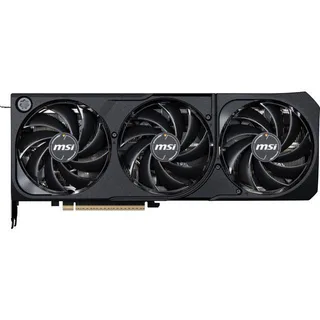
The 1440p GeForce default - if you must go green
ASUS SFF-Ready Prime RTX 5070 White OC 12GB
The 5070's claim to 'least-inflated GeForce card' died since our last update - the $680 GIGABYTE floor sold out and the premium jumped from 24% to 37%. Just three 5070 listings remain in stock on our tracker, all ASUS Prime variants, and this is the cheapest. Still a genuinely strong 1440p card with DLSS 4.5 at its best tier; no longer a pricing bright spot.
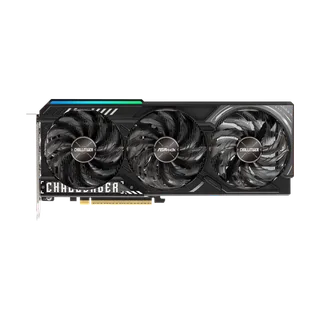
The per-dollar winner at 1440p - now by a wide margin
GIGABYTE RX 9070 XT Gaming OC 16GB
Scores 84 to the 5070 Ti's 87 while now costing about $350 less, with 16GB instead of 12 on the NVIDIA card below it. This pick's premium actually eased since July (+24% to +22%) while the Ti's blew out to +44% - the value gap between them has never been wider. Nine listings in stock, real availability.
If you're going high-end anyway
PNY RTX 5080 Slim Dual-Fan OC 16GB
The 5080 floor's climb continues: $1,250 in late July, $1,360 at our last update, $1,400 this morning - this PNY is the current cheapest of twelve in-stock cards. Versus the 5070 Ti the math is now $320 for 6 score points and real 4K headroom, which is actually a fairer trade than it was, because the Ti inflated faster. If high-end is happening, this is the floor listing, not the $2,150 halo variant.
And the 5090: zero in-stock listings on our Amazon harvest for weeks, while the retail listings that do exist run $4,929 to $5,499 - roughly 2.5x the $1,999 launch price. Finding a 5090 is no longer the problem; finding one that is not two-and-a-half times MSRP is. That money currently buys a 5080 plus an entire second PC, and this week it doesn't even reliably buy the 5090, as the cancelled-order saga above shows.
The move, stated plainly
Our opinion: buy at your tier, this week, if and only if you actually need a card - and refuse the stretch. The hikes are memory-driven and the memory forecast points up through 2027, so waiting has lost three times running. But panic is how you end up paying a 44% premium at the exact tier where the inflation concentrated. The chart is the discipline, and since July the chart turned red: the thin premiums are now all AMD - the 9070 XT at +22%, the one-listing 9070 at +4% - while the GeForce stack's cheapest seat is +31% on an 8GB card nobody should buy for the long haul. The 5070 Ti at +44% and anything with "5090" on the box are where the hike actually landed. The 5070-vs-9070 XT choice that was a coin flip at tied premiums in July is not a coin flip at 37-vs-22.
Before any of it, spend two minutes checking the card against your CPU with the bottleneck calculator - a 34% premium hurts twice when half the card idles behind a five-year-old processor. Every current card's full board-partner price table, cheapest first, lives on our GPU pages, and the build generator will tell you what the whole machine costs at today's prices, prebuilt comparisons included.
Related reading
- NVIDIA is skipping 2026 - what builders should do - why there is no next-gen rescue coming
- RAM and SSD prices: buy now or wait? - the same shortage, on the other side of your parts list
- The 8GB VRAM line in 2026 - why memory size decides how long a card lasts
Found this useful? Pass it along:
Frequently Asked Questions
How much do RTX 50-series cards cost right now?
Cheapest in-stock listings on our tracker this morning: RTX 5060 about $392, RTX 5070 about $750, RTX 5070 Ti about $1,080, RTX 5080 about $1,400. The RTX 5060 Ti has zero in-stock listings, and the RTX 5090's real-world retail listings run roughly $4,929-$5,499 - about 2.5x its $1,999 launch price. Every figure moves daily, and since late July every GeForce figure has moved up.
Is the RTX 5070 really $1,000 now?
The four-figure card is the RTX 5070 Ti, which now genuinely sits at about $1,080. The plain RTX 5070 starts around $750 on our tracker, with other retailers periodically undercutting that. Forum threads keep conflating the two cards, which is easy to do when headlines drop the Ti - but the confusion now flatters the Ti rather than smearing the 5070.
Should I buy a GPU now or wait for prices to drop?
If you need a card, buy at your tier now: the pressure behind the hikes is GDDR7 memory cost, the same shortage driving RAM prices, and memory analysts are forecasting further increases into 2027, not relief. If your current card still does the job, a hike cycle is a bad week to upgrade for fun. What makes no sense is panic-stretching to a higher tier - that locks in the inflation permanently.
Are AMD cards cheaper than NVIDIA right now?
This month, decisively yes on premiums: the RX 9070 XT runs about 22% over launch vs 44% for the RTX 5070 Ti it competes with, the plain RX 9070 sits just 4% over launch, and both Radeon premiums eased slightly since July while every GeForce premium rose. Despite recap articles folding AMD into the hike story, our tracker shows this month's acceleration is a GeForce phenomenon.