NVIDIA Is Sitting Out 2026 - What That Means for Your Next Build
Some links in this guide are affiliate links - we may earn a commission at no extra cost to you.
For thirty years, the safe advice before a big PC purchase was some version of "wait a few months - something better is coming." In 2026 that advice is wrong. NVIDIA is sitting out the entire year. No RTX 50 Super refresh, no RTX 60 series, nothing new on the gaming side until 2027 at the earliest. The card you can buy today is the card you'll be buying in December, and if anything it will cost more by then. So this is the rare year where the honest move is the impatient one: if you need the machine, buy the current generation now and stop waiting for a launch that isn't coming.
That runs against every instinct a builder has trained over a decade of annual cadences. It's worth walking through exactly what NVIDIA did, why it did it, and what it actually means for the prices you're staring at - because once you see the mechanism, the "just buy now" conclusion stops feeling like a sales pitch and starts feeling like arithmetic.
What NVIDIA did, and didn't do
The short version: NVIDIA quietly took the year off from gaming. Reports from The Information and analysis from TrendForce laid it out early in the year, and the picture has only firmed up since. No Super refresh of the RTX 50 line. No next-gen RTX 60 series. The 5070, 5080, and 5090 already on shelves are the complete GeForce roster for all of 2026. Multiple outlets - Tom's Hardware, PC Gamer, and Tom's Guide - corroborated the reporting.
What makes this genuinely unusual isn't just the pause. It's the silence around it. NVIDIA didn't announce a skip year; there was no keynote slide reading "we're taking 2026 off." The Super refresh simply slipped off the calendar and was reportedly shelved indefinitely, and the RTX 60 series - expected to ride the next-gen Rubin architecture - got pushed to 2027 or 2028. A company that has launched a new GeForce card every year for three decades let a full cycle pass without one, and mostly let leakers do the talking. That absence is the story.
Why a company drowning in money skips the easy launch
It looks bizarre from the outside. NVIDIA has never been more valuable, and a Super refresh is close to free money - same silicon, tweaked clocks, a fresh sticker. So why walk away from it? Two forces, and they reinforce each other.
The first is where the profit actually lives. Gaming now accounts for roughly 8% of NVIDIA's revenue. In 2022 that number was around 35%. The company's real business is AI accelerators for data centers, where a single chip sells for the price of a car and the margins dwarf anything a $650 graphics card can return. Every wafer NVIDIA commits to gaming is a wafer it isn't turning into a Blackwell or Rubin datacenter part at several times the profit. In that math, a consumer refresh isn't easy money - it's an opportunity cost.
The second force is memory, and it's the one that turns a preference into a decision. The 2026 DRAM shortage has Samsung, SK Hynix, and Micron steering production toward HBM, the high-bandwidth memory that feeds AI accelerators, because that's where the margins are. That leaves less GDDR7 for gaming GPUs, and what's left costs more. NVIDIA reportedly cut supply to its board partners by up to 20% and pulled the Super refresh rather than launch new cards into a market where the memory to build them is scarce and expensive. Put the two together and skipping the year isn't a snub aimed at gamers. It's a company allocating a constrained resource toward its most profitable product, exactly as you'd expect it to.
What it means for prices and for buying
Here's the part that actually touches your wallet. In a normal year, the refresh cycle is what drags prices down. A Super card launches, the base model it replaces gets cheaper, and the whole stack ratchets down a notch. The RTX 4070 fell in price when the 4070 Super arrived; the same thing happened a generation earlier. That cadence is the entire reason "wait a few months" was ever good advice. It gave you a scheduled reason to expect a better deal.
That cycle is broken for 2026. There is no Super refresh coming to undercut today's prices, and no next-gen card to make the 5070 look like last year's model. With nothing new pressing down on the stack from above - and the memory crunch pressing up from below - prices did the opposite of what waiters hoped. Through mid-2026 they climbed. The RTX 5090 that flirted with $3,600 in the spring now sits north of $6,500, and $6,500-9,600 is the band where it can be found at all. The RTX 5080 runs around $1,250 at the cheapest retailer we track ($1,600+ on Amazon), the RX 9070 XT near $750, the RTX 5070 around $860. These aren't launch-week markups that will settle; they're the floor that memory costs put under everything, and that floor isn't cracking before 2027.
So the buying logic inverts. Normally you wait because waiting is rewarded. This year, waiting is a bet that memory prices will fall and NVIDIA will suddenly care about the gaming market again - two things that show no sign of happening in 2026. The downside of buying now is that you paid a memory-crisis tax. The downside of waiting is that you pay a bigger one later, on the same hardware, after months of doing without.
The honest what-to-do
None of this means you should panic-buy a GPU you don't need. It means the calculus is simpler than usual, and it splits cleanly.
If your current rig still does what you ask of it, do nothing. A skip year is a fine year to keep the machine you have. There's no new card tempting you and no falling price to chase, so the pressure to upgrade is genuinely low. Sit tight.
If you actually need the machine - your card died, you're building fresh, your current setup can't run what you play - then buy the current generation now, and buy the right tier for your budget rather than stretching for a halo card during a price spike. The lineup on shelves is good: the RTX 5070 and RX 9070 XT are both strong 1440p cards, and AMD's RX 9000 series gives NVIDIA real competition on value for the first time in a while. If you can be flexible on brand, this may be the year AMD earns your money, because it kept shipping while NVIDIA pulled back. The one move that makes no sense in 2026 is the reflex to wait for the next thing. There is no next thing until well into 2027.
If that second case is you, these are the two cards that sentence points at - the exact cheapest in-stock listings from our live variant feed as we write, hedged because they move daily:
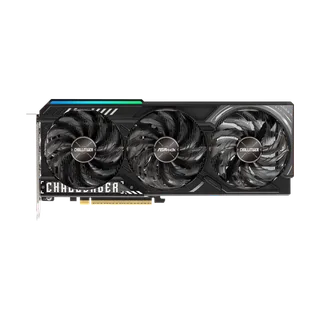
The value pick of the skip year
GIGABYTE RX 9070 XT Gaming OC 16GB
AMD kept shipping while NVIDIA pulled back, and it shows in the price column: this is a 4K-capable 16GB card for around $750-800 while the equivalent NVIDIA tier drifts up. The cheapest in-stock 9070 XTs we track start near ~$750.
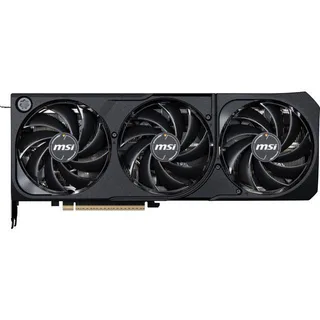
If you're staying green
GIGABYTE RTX 5070 WINDFORCE OC SFF 12GB
The sane NVIDIA buy of the moment: 1440p-strong, DLSS 4.5 does real work at this tier, and the SFF-ready cooler fits almost any case. The cheapest in-stock 5070 on our feed is ~$860 as we write; this listing has moved with the rest, so check the live price.
Free to cite
The numbers and claims behind this piece, in one place. Free to cite with a link to bottleneckpc.com.
- NVIDIA is shipping no new gaming GPU in 2026 - no RTX 50 Super, no RTX 60 series - the first skip year in three decades.
- Gaming is down to roughly 8% of NVIDIA revenue, from about 35% in 2022.
- The trigger is the 2026 memory shortage: makers are prioritizing HBM for AI, squeezing the GDDR7 gaming cards need. NVIDIA reportedly cut board-partner supply by up to 20%.
- The RTX 60 series is pushed to 2027 or 2028; the next GeForce cards won't arrive before 2027.
- Prices rose rather than fell: RTX 5090 north of $6,500 ($6,500-9,600 where findable), RTX 5080 ~$1,250 at the cheapest retailer we track, RX 9070 XT ~$750, RTX 5070 ~$860 as of September 2026.
The bottom line
NVIDIA sitting out 2026 doesn't mean you can't build a great PC this year. It means the oldest rule in the hobby - wait, something better is coming - has no force behind it for once. There is no better thing coming, not from NVIDIA, not before 2027. The RTX 50 series and AMD's RX 9000 series are both good, they're what you get, and they're not getting cheaper while the memory crisis holds. So the honest advice is the plain one: if you don't need to buy, don't. If you do, buy the right current-gen card for your budget, pair it sensibly, and get on with it.
If you want to see exactly which card fits your budget this month, our best GPU to buy in 2026 guide breaks it down tier by tier with this week's street prices. And before you commit to any pairing, run your CPU and GPU through the bottleneck checker so you don't hamstring the card you just paid a premium for.
Related reading
- Best GPU to buy in 2026 - the honest tier-by-tier pick list at current prices
- Best CPU for the RTX 5070 - the balanced pairing for the mid-range sweet spot
- Build a PC - full parts lists at your budget with live pricing baked in
Found this useful? Pass it along:
Frequently Asked Questions
Is NVIDIA really not releasing any new GPUs in 2026?
That's what the credible reports say, and half a year in, nothing has contradicted them. No RTX 50 Super refresh, no RTX 60 series. The current RTX 5070, 5080, and 5090 are the whole lineup for the year. The next new GeForce cards aren't expected before 2027.
Should I wait for NVIDIA's next GPU or buy now?
If you're holding out for a new NVIDIA gaming GPU, you're holding out until 2027 at the earliest. That's a long time to sit on hardware that isn't cutting it. If you need the machine now, buy what's on shelves - the RTX 5070 (~$860) and RX 9070 XT (~$750) are both excellent 1440p cards, and there is nothing cheaper coming to reward the wait.
Why is NVIDIA skipping a year of gaming GPUs?
Money and memory. NVIDIA earns far more selling AI accelerators to data centers than $650 gaming cards to consumers - gaming is down to roughly 8% of revenue, from about 35% in 2022. On top of that, the 2026 DRAM shortage has memory makers funneling capacity toward HBM for AI chips, which squeezes the GDDR7 that gaming GPUs need. So NVIDIA cut gaming supply and shelved the refresh.
Will GPU prices drop in 2026 without new launches?
They didn't - they climbed. With no Super refresh to undercut the stack and a worsening memory crunch, street prices rose through mid-2026. The RTX 5090 went from ~$3,600 in spring to north of $6,500 by September - the retail listings that exist run $6,500-9,600 - and the RX 9070 XT drifted up to ~$750. Without new NVIDIA cards applying pressure, current pricing has no reason to fall while memory costs stay elevated.