The Best Gaming Headset to Buy Right Now (September 2026)
Some links in this guide are affiliate links - we may earn a commission at no extra cost to you.
A gaming headset is the one thing on your desk that touches your frame rate exactly zero percent and your actual experience enormously. It is also the peripheral people overthink the least and regret the most - grabbing whatever has the loudest RGB or the biggest "7.1 surround" sticker on the box, then wondering why their ears ache after two hours and why they still cannot tell which direction footsteps are coming from. The stuff that decides whether you love a headset is quieter than the marketing: how wide and accurate the soundstage is, whether the mic is good enough that your squad is not begging you to replace it, how the wireless holds up over a long session, and above all whether the thing is still comfortable at hour four.
We treat headsets the way we treat CPUs and GPUs everywhere else on this site - pure price-to-performance, updated every month. Headset pricing moves constantly. Models get discontinued, successors launch at MSRP and then quietly slide 30%, and last month's "meh" pick becomes this month's steal. So this page crowns one Headset of the Month, keeps the full field current beneath it, and archives every past winner at the bottom so you can see exactly how the market has moved. This month the crown stays where it was, and the reason it stays is not the reason it was won - the full case is below.
How we rank: we judge headsets on comfort first, then sound and mic quality per dollar, and we re-check every price against live Amazon and Newegg listings so the numbers here are what these actually sell for this month, not MSRP fantasy. No headset affects your FPS, so this is one buy you can make without running a single bottleneck calculation.
The short version
The HyperX Cloud III S Wireless keeps the crown, and last month's asterisk is gone. In August I wrote that it was holding on despite losing the $130 sale price that won it in July. That price came back - it is $129.99 as I write this, against a $179.99 list.
The odd thing about September is that it did not come back alone. The SteelSeries Arctis Nova 5 and the Razer BlackShark V3 are sitting at exactly $129.99 as well, while the Turtle Beach Atlas Air has drifted back up to about $180. Three headsets that were spread across $130 to $180 a month ago have collapsed onto one number, which means price has mostly stopped being a tiebreaker and the decision is now about what each one is for. On those terms the Cloud III S wins the general case: 120 hours of battery, dual 2.4GHz-plus-Bluetooth wireless, and the comfiest earcups in the class. The other three each win a narrower lane, and I say which below.
Spend less only if the whole peripheral budget went into your GPU - the $25 HyperX Cloud Stinger 2 Core is the honest floor. Spend more only if headphone audio is a genuine hobby, in which case the Audeze Maxwell 2 is the endgame; for everyone in between, this is where the money goes.
At a glance
Headset of the Month: HyperX Cloud III S Wireless (September 2026)
The Cloud III S Wireless is the quiet successor to the discontinued Cloud III Wireless. It launched at $179.99, spent July drifting as low as $130, firmed back to about $150 through August, and is $129.99 again now. What you get is the stuff that actually decides whether a headset stays on your head: 53mm angled drivers with clean, honest positional audio, a 120-hour battery that stretches closer to 200 hours on Bluetooth, and the plush earcups the Cloud line has been famous for since the beginning. It runs both 2.4GHz and Bluetooth, and it is not welded to one machine - it works on PC, PS5, and Switch. The one soft spot is the mic. It is genuinely fine for Discord and in-game comms, but it is not the boom you build a stream around.
With four headsets tied on price, here is the honest comparison. The SteelSeries Arctis Nova 5 is a genuinely good headset with a deeper software feature set and about half the battery life. If you charge things when they beep and never think about it again, take the SteelSeries and its presets. If a headset that runs for a month between charges sounds like the better deal, that is the Cloud III S.
One headset does beat it on the battery argument, and it would be dishonest to leave it out: the HyperX Cloud Alpha Wireless is about $109 and rated for 300 hours, nearly triple the Cloud III S. It is 2.4GHz only - no Bluetooth, so no phone, no Switch handheld, no second device - and it is an older design. If you play on one PC and nothing else, it is the cheaper and longer-lasting buy. The Cloud III S wins for everyone whose headset has to follow them between machines.
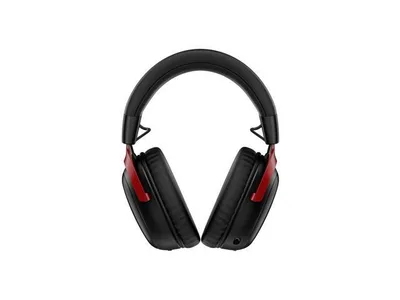
For most people the job description is simple - comfort, battery, and clean game audio in one wireless package - and nothing at $130 does all three better. Charge it twice a month, forget it is on your head, and get back to playing.
The catch: The detachable mic is good, not great - fine for Discord and in-game comms, but not the mic you want to stream on as your main.
Tight budget: HyperX Cloud Stinger 2 Core
If the entire peripheral budget got swallowed by the GPU - and honestly, respect - this is the move. The Stinger 2 Core is wired, light, and it flat-out sounds better than anything else in its price bracket because it runs the same HyperX tuning philosophy as headsets three times the price, just stripped of the extras. There is no wireless, no companion app, no RGB, no swappable anything. What there is: a comfortable clamp, drivers that image cleanly enough for competitive play, and a mic that is perfectly serviceable for a Discord call. This is the headset I hand someone who wants to spend as little as possible without ending up embarrassed by the result. It will not wow anyone, and at around forty dollars it is not trying to. It is trying to be the honest floor, and it clears that bar with room to spare.
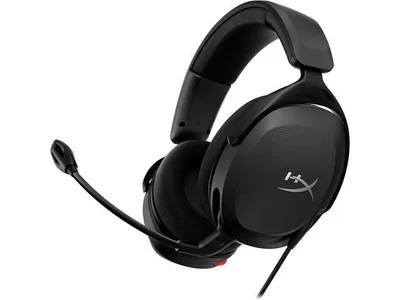
Buy it, put the savings into the graphics card, and step up the headset later when the budget recovers. Nothing in this bracket makes you regret spending so little.
The catch: It is wired and the build is basic, so you are trading every frill for pure sound-per-dollar.
Competitive FPS: Razer BlackShark V3
Razer tore the entire BlackShark line down this year and rebuilt it all-wireless: the $72 V3 X HyperSpeed, this $130 standard V3, and the $249 V3 Pro with ANC and 10ms HyperSpeed wireless. The esports tuning is the whole reason to reach for one. The signature is flat, detailed, and deliberately footstep-forward, so you hear someone creeping up the stairs a half-second before you see them - the kind of edge that wins rounds in a tight shooter. Of the three, the standard V3 is the value sweet spot: you are paying for the sound signature that actually matters in a match, not the ANC and extra battery you will barely register mid-fight. The honest catch is the mic, which has never been the strength of this line. If your comms live in Discord and you talk more than you shoot, the driver quality is not worth the mic compromise.
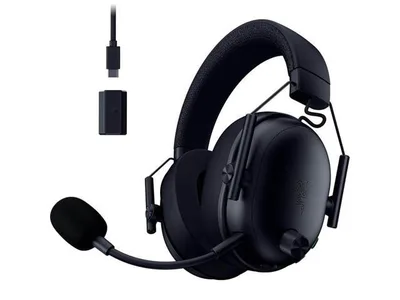
If positional accuracy in shooters is the thing you care about most and your squad lives in Discord anyway, this is the headset that earns its keep. Buy it for the sound, not the spec sheet.
The catch: The mic is the weak spot across the whole V3 line, so if you talk more than you shoot, look elsewhere.
Positional audio: Turtle Beach Atlas Air
This is one of the only wireless open-back gaming headsets that exists, and open-back is the entire pitch. Closed-back headsets seal sound in; open-back lets the drivers breathe, and the payoff is a soundstage that feels wide and airy instead of trapped against your ears. In practice that means positional accuracy that genuinely helps in shooters - a real sense of distance and direction that closed cans approximate but never quite nail. At 301g with floating, self-adjusting earcups, it also basically disappears on your head over a long session, which matters as much as the audio does. The tradeoff is the flip side of the same coin: open-back leaks in both directions, so everyone in the room hears your game and you hear the room. It wants a quiet space you control. Give it one and nothing else on this list places a sound more precisely.
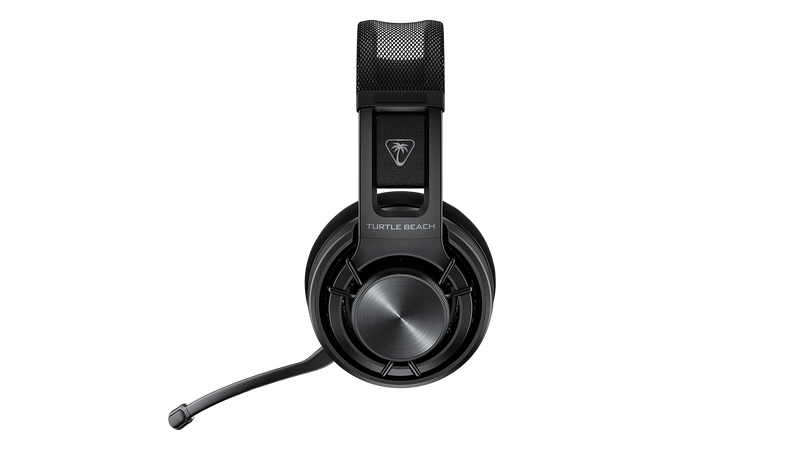
If you have a room to yourself and your priority is hearing exactly where a footstep is coming from, this is the pick. In a shared space, buy something closed-back instead.
The catch: Open-back means everyone in the room hears your game and you get zero noise isolation - a nonstarter in a shared space.
Endgame: Audeze Maxwell 2
This is the one you buy when headphone audio has quietly turned into a hobby. Custom 90mm planar magnetic drivers, an 80-hour battery, and what a lot of people consider the best-sounding gaming headset ever made - the Maxwell 2 is a real step up in fidelity over everything else on this page, not a marketing step. Music sounds like music, game audio has weight and texture, and the imaging is precise without the thin, clinical edge some audiophile cans have. It is also the most expensive thing here and, at 560g, by a wide margin the heaviest, which is the honest cost of hauling those planar drivers around on your head. If this is your first audiophile-tier headset, the jump in quality is obvious and worth it. If you already own the original Maxwell, the upgrade math gets a lot harder to justify - the gap to the sequel is small.
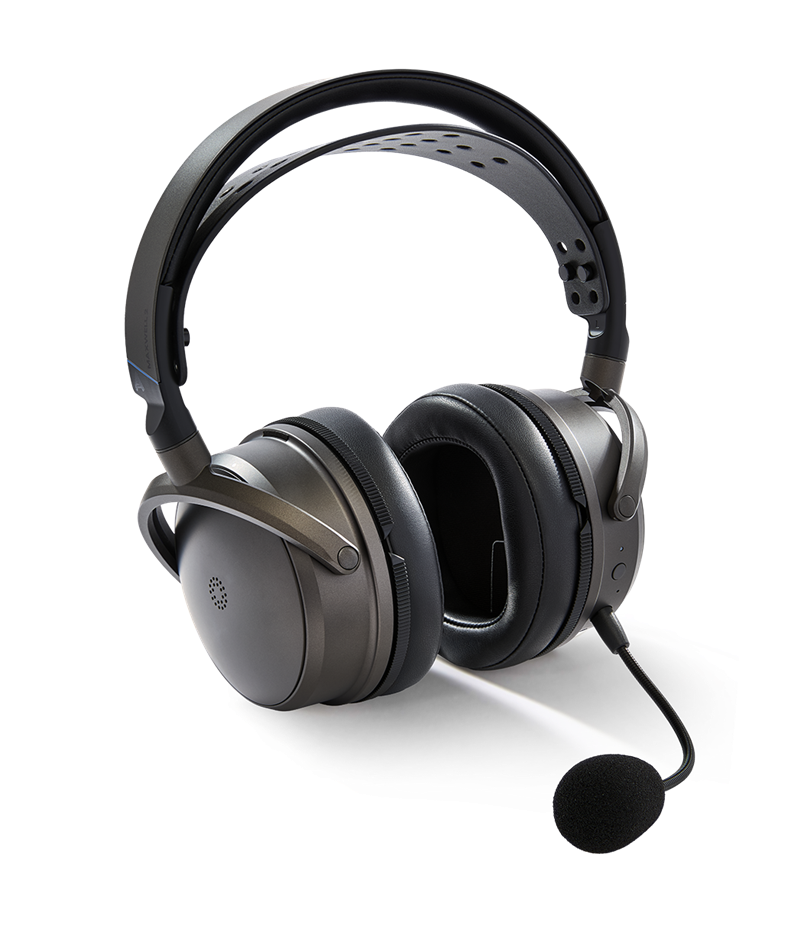
Buy it when sound quality has become the point rather than a feature. For everyone in between, value peaks a few tiers down and this is more headset than the game needs.
The catch: At 560g it is by far the heaviest thing here, and if you already own the original Maxwell there is not enough new to justify the upgrade.
Best by platform: PS5, Xbox, and everything at once
Console wireless is its own minefield. Xbox in particular uses a proprietary protocol, so a random 2.4GHz dongle that pairs fine with a PC and a PS5 will not talk to a Series X at all. If you are shopping for a specific box rather than a use case, these are the picks that clear the compatibility trap:
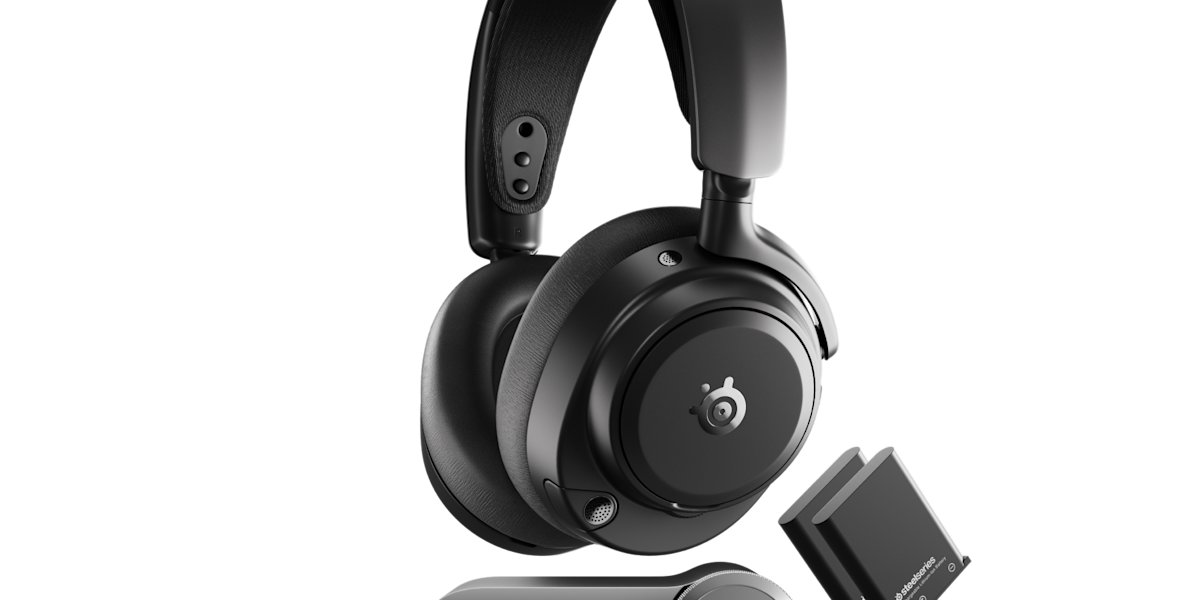
PlayStation 5
SteelSeries Arctis Nova Pro Omni
The new 2026 refresh of the long-reigning PS5 champion: swappable batteries so you are never dead, a desktop base station, and Tempest 3D audio support. The Cloud III S above also works great on PS5 if you want to spend half as much.
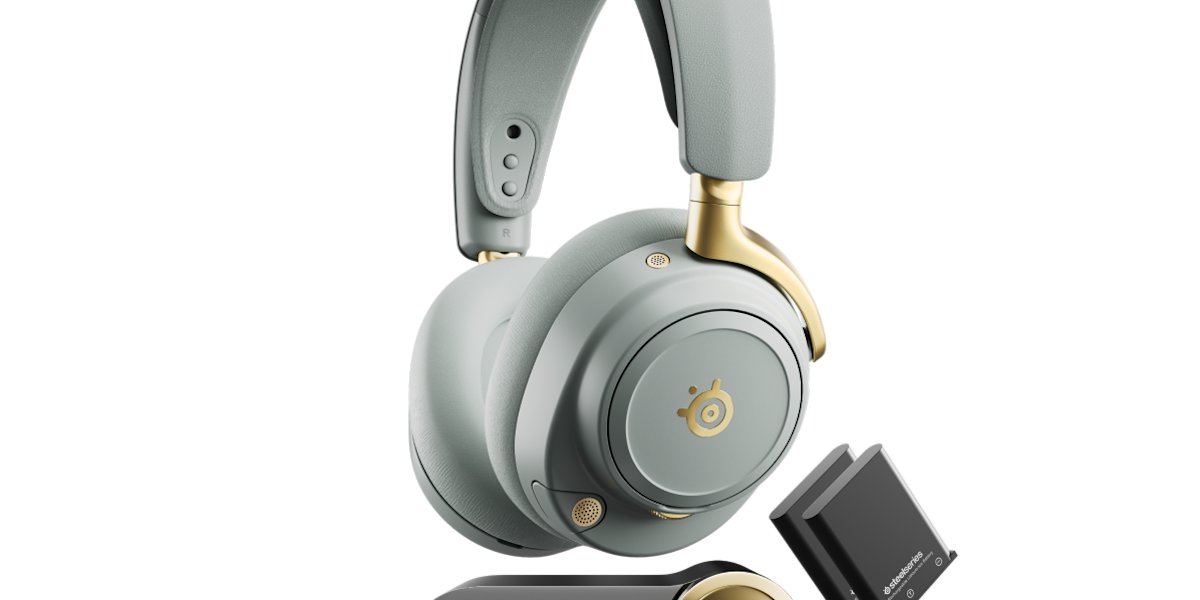
Xbox Series X|S
SteelSeries Arctis Nova Elite
Xbox-licensed wireless with hi-res audio, ANC, and an OLED hub. It is premium money, but the Xbox-licensed field is small and this is the best of it. The Audeze Maxwell 2 also comes in a dedicated Xbox version ($349) if sound quality is the priority.
Every Platform at Once
Astro A50 X
The everything headset: its base station plugs into Xbox, PS5, and PC simultaneously and doubles as an HDMI switcher, so one button swaps your whole setup between machines. Expensive, but it replaces three headsets.
Switch and handheld players: skip dongles entirely and use anything with Bluetooth - the Cloud III S covers that too.
More options worth a scroll
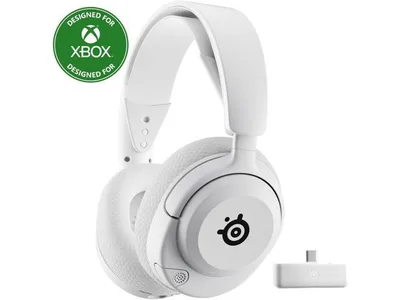
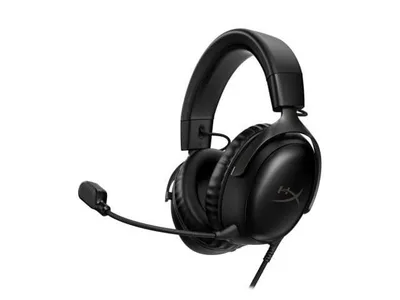
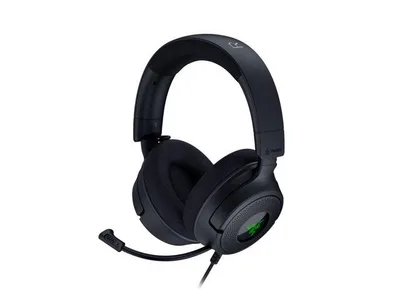
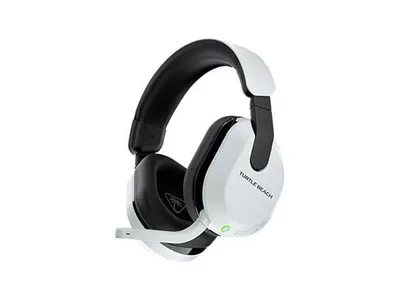
Not sold on the five above? These are the next four we would happily try on. Each one wins a narrower lane than the main picks, but if the specifics fit you, none of them are a mistake.
How to choose, and what to skip
If you strip away the marketing, four things decide whether a headset is worth your money.
Comfort is spec number one. You will wear this thing for four-hour sessions, and weight, clamp force, and earcup material are what make you love it or resent it - none of which show up on a spec sheet. This is why the 560g Maxwell 2 loses points despite god-tier drivers, and why the Cloud line keeps winning on nothing but pads and clamp.
Battery life is a solved problem, so demand it. In 2026, 70-plus hours is table stakes for a wireless headset. If one advertises 20 hours, it is an old design wearing a new price tag. Skip it.
Ignore "7.1 virtual surround" and RGB. Virtual surround is software post-processing you will switch off within a week, and lights on your ears are lights you cannot see that only cost you battery. A good pair of stereo drivers positions sound better than any gimmick mode.
The mic only matters if people actually hear it. Solo player? Buy purely on sound and comfort and never think about the mic. Nightly Discord crew? Then the BlackShark's mic complaints matter more than its driver quality does, and a headset like the Cloud III S earns its keep.
The best part of a headset upgrade is that it is the one component with zero bottleneck math. It does not touch your frame rate, so unlike that GPU you are eyeing, you do not need to run it through the checker first. If you are speccing out a whole new machine, the build generator handles the parts that do need to match.
Past winners
This archive starts now and grows every month. When a past winner is still worth buying, we will say so; when it has been beaten, the current pick at the top is your answer.
Check back at the start of each month, or just trust the verdict at the top - it is always current.
The bottom line
Headsets are the rare gaming purchase where the smart money and the comfortable money are the same money. The HyperX Cloud III S Wireless holds September at about $130, and this month it is not winning on price at all - two rivals are at the same $129.99. It wins because at identical money a 120-hour battery and the comfiest earcups in the class are the two things you notice every single session. Drop to the Stinger 2 Core only if the GPU ate the budget, reach for the BlackShark V3 if positional accuracy in shooters is your whole reason for buying, and step up to the Maxwell 2 only once sound quality has become a hobby in its own right. For almost everyone else, value peaks squarely in the $100-180 range, and the winner sits near the bottom of it. Pick the one that matches how you actually play, and skip the surround-sound stickers on the way to checkout.
Related reading
- Best budget gaming mic - for when the headset mic is not enough
- Best gaming mouse 2026 - the other peripheral worth getting right
- Best gaming keyboard 2026 - round out the desk
- Your monitor is the real bottleneck - the upgrade that actually changes what you see
- Free bottleneck checker - the parts that do affect FPS, before you buy
Found this useful? Pass it along:
Frequently Asked Questions
What is the best gaming headset to buy in September 2026?
The HyperX Cloud III S Wireless keeps our pick for September 2026, and the doubt we raised last month has gone away. It is back to $129.99, the price that won it the crown in July. What makes this month unusual is that two of its closest rivals - the SteelSeries Arctis Nova 5 and the Razer BlackShark V3 Wireless - are sitting at $129.99 too, while the Turtle Beach Atlas Air has moved back up to about $180. At identical money the 120-hour battery decides it.
Does a gaming headset affect FPS or performance?
No. A headset has zero impact on your frame rate, so it is one of the few upgrades you can make without worrying about bottlenecks. A USB or wireless headset does its audio processing onboard, and even analog headsets use a trivial amount of CPU.
Do PC gaming headsets work on PS5 and Xbox?
PS5 usually, Xbox usually not. Most 2.4GHz USB dongles work fine when plugged into a PS5. Xbox uses a proprietary wireless protocol, so wireless headsets need to be Xbox-licensed - look for an X in the model name or Xbox branding. Any wired 3.5mm headset works on every controller.
Is a wireless gaming headset worth it over wired?
In 2026, yes for most people. Modern 2.4GHz dongles add only a few milliseconds of latency, which is imperceptible even in competitive shooters, and battery life has gotten absurd - 70 to 120 hours is now normal. Wired still wins on price at the low end.
Are expensive gaming headsets like the Audeze Maxwell 2 worth it?
Only if audio quality is genuinely a hobby for you. The Audeze Maxwell 2 at $329 sounds better than anything else with a mic attached, but the jump from a $150 headset to a $330 one is much smaller than the jump from a $40 headset to a $150 one. Value peaks in the $100-180 range.