The Best PC Controllers in 2026: The $30 Upset and the Old Guard
Some links in this guide are affiliate links - we may earn a commission at no extra cost to you.
Even the most keyboard-devoted PC gamer owns a controller - racing games, souls-likes, couch co-op, emulation, the odd platformer that feels wrong on a mouse. The story of the 2026 market is blunt: the challenger brands solved stick drift with magnetic sensors and kept prices low, while Microsoft and Sony kept shipping the same potentiometer sticks they always have. That single split decides most of what follows.
Four things actually separate a good pad from a regret in 2026. The first is stick tech, and it is the whole ballgame for longevity. Old potentiometer sticks wear against a physical contact and eventually drift - your character creeps forward while your thumb is nowhere near the stick. Hall effect and TMR sticks use magnets with no contact, so drift is effectively impossible. The second is wireless latency: a 2.4GHz USB dongle is within a millisecond or two of wired and completely imperceptible, while Bluetooth adds enough lag to feel it in anything twitchy. If a pad ships a dongle, that is the connection you want.
The third is PC compatibility, which is quietly the thing that trips people up. Xbox pads are natively understood by effectively every PC game with zero setup. The DualSense works beautifully through Steam and even exposes its adaptive triggers and haptics in PlayStation ports. The challenger pads run great on PC, Steam, and Steam Deck but skip Xbox consoles, which only matters if you own one. The fourth is back buttons and paddles - remappable extras that used to be a premium-tier luxury and now show up on sub-$70 pads, handing you jump or crouch without leaving the sticks.
How we rank: we weigh the things that decide how a controller feels over months, not minutes - stick tech and drift resistance, wireless latency, ergonomics and build, PC and platform compatibility, and whether the extras justify the price. Dollar figures are what these pads actually sell for this week, not MSRP.
The short version
For most PC players I would just buy the 8BitDo Ultimate 2: magnetic TMR sticks that cannot drift, a low-latency dongle, and a charging dock for around $60, which undercuts an Xbox pad while out-speccing it. On a tighter budget the 8BitDo Ultimate 2C at $30 is almost silly. The Xbox Wireless Controller stays the zero-friction default if you want something that just works everywhere, and the DualSense is the move for PlayStation ports. The full reasoning on each is below.
Best overall: 8BitDo Ultimate 2
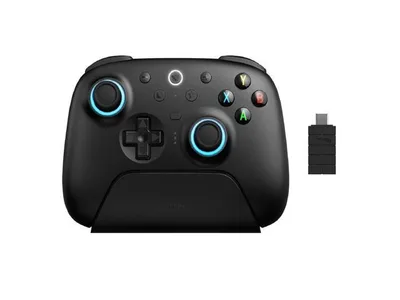
This is the flagship that made the big brands look lazy, and it is the one I point almost everyone to. Where the standard Xbox and PlayStation pads still ship drift-prone potentiometer sticks, the Ultimate 2 uses TMR magnetic joysticks where drift is physically impossible, and it pairs them with hall effect triggers, a 1000Hz-polling 2.4GHz dongle, a 25-hour battery, motion controls, remappable back buttons, and a charging dock in the box. At around $60 it undercuts an Xbox pad while beating it on essentially every spec that touches how the pad feels in your hands.
The one thing to know is the platform list: PC, Steam Deck, Android, and Switch, but not Xbox consoles. If you live on PC, that limitation never comes up. This is the pick for anyone who wants the best hardware, plays mostly on PC, and would rather not replace a controller in a year because a stick started walking on its own.
The catch: It works on PC, Steam Deck, Android, and Switch - but not on Xbox consoles, so if you need Xbox compatibility this is not your pad.
Best budget: 8BitDo Ultimate 2C
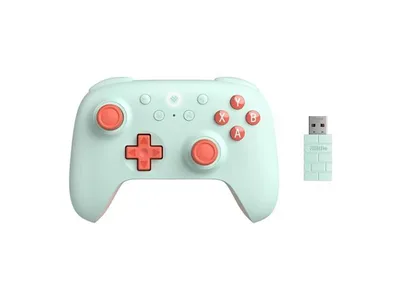
This is the pad that ends the "recommend me a cheap controller that is not junk" conversation. For half the price of a standard Xbox pad you still get hall effect sticks, a 2.4GHz dongle, and 1000Hz polling - the three things that actually decide how a controller feels and how long it lasts. A $30 pad with magnetic sticks would have been unthinkable two years ago, which is exactly how far the challenger brands have pushed the floor.
What you give up is the extras: no charging dock, no back paddles, a little less polish than its bigger sibling. None of that touches the fundamentals. This is the buy for a second controller for couch co-op, a first pad for a new PC gamer, or anyone who wants drift-proof sticks without spending a dollar more than they have to. Skip it only if you specifically want back buttons, in which case the Ultimate 2 is worth the extra $30.
The catch: You lose the charging dock, the back paddles, and some of the flagship's polish - none of which stops it from playing games beautifully.
The just-works default: Xbox Wireless Controller
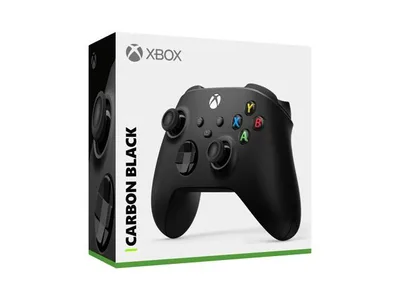
This is still the pad every PC game is designed around. You plug in or pair, and literally everything works - no software, no thought, no compatibility layer, no Steam Input remapping to babysit. The shape is the most universally comfortable in gaming, which is why it stays the reference other pads get measured against, and if you also own an Xbox it is the obvious one-pad-for-both answer.
The honest knocks are all about value rather than experience. The sticks are potentiometers that can eventually drift, it ships with AA batteries instead of a built-in cell, and the low-latency wireless dongle is a separate purchase. You are paying for guaranteed frictionlessness rather than the best hardware. For anyone who values that zero-setup certainty - or wants a controller that works across PC and an Xbox console - the trade is worth it. Pure PC players chasing the best sticks per dollar should take an 8BitDo instead.
The catch: Potentiometer sticks that can eventually drift, AA batteries out of the box, and the low-latency dongle costs extra - you are paying for frictionlessness, not hardware.
Best for PlayStation ports: Sony DualSense
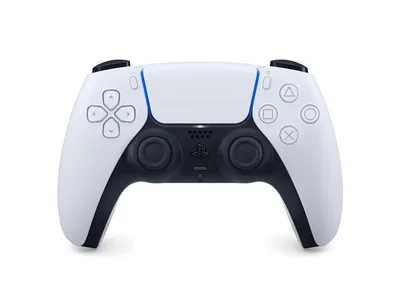
The DualSense has the best-feeling haptics in gaming, and that is not a small thing when the right game supports it. PlayStation PC ports like God of War, Spider-Man, and Helldivers 2 tap its adaptive triggers and advanced rumble natively, turning trigger tension into an actual gameplay cue, and Steam handles the pad cleanly for everything else in your library.
The reasons it is not my everyday pick are practical. Battery life is shorter than the 8BitDo pads, PC connection is Bluetooth-or-wired only so you do not get dongle-grade latency wirelessly, and it uses the same potentiometer sticks the big two keep clinging to. This is the buy for someone who plays a lot of PlayStation-native ports and wants them in full fidelity. If that is a small slice of your time, one of the 8BitDo pads covers the rest of your games better and for less.
The catch: Shorter battery life, Bluetooth-or-wired only on PC, and yes, potentiometer sticks - buy it for the games that showcase it, not as your everyday pad.
What about the premium tier?
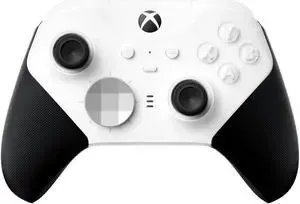
The $180-230 pads - Xbox Elite Series 2, Razer Wolverine V3 Pro, Scuf - buy you paddles, trigger stops, swappable sticks, and tournament styling. Two honest problems land hard in 2026: the Elite Series 2 still uses drift-prone potentiometer sticks at $180, and the Ultimate 2 gives you back buttons and better stick tech for a third of the price. Unless you specifically need four paddles or Xbox console compatibility with pro features, the value math is brutal - most people come out ahead with an Ultimate 2 and the $120 difference left in their pocket.
How to choose, and what to skip
Match the pad to how you actually play rather than the spec sheet:
- You mostly play on PC and want the best hardware: Ultimate 2. It is not close.
- You want to spend as little as possible without buying junk: Ultimate 2C.
- You also own an Xbox, or want guaranteed just-works: Xbox Wireless Controller.
- You love PlayStation exclusives on PC: DualSense.
And a short skip list. Skip any pad still on potentiometer sticks at a premium price - paying $180 for hardware that can drift is the worst deal in the category. Skip Bluetooth-only connections for fast-paced games if a dongle version exists. And skip the assumption that a pricier pad plays better: above the drift line, you are mostly paying for paddles and branding, not feel.
One thing no controller can fix: if your games stutter, that is the PC, not the pad. The bottleneck checker will tell you which part is actually holding your frame rate back - sort that first, then enjoy the couch.
More options worth a scroll
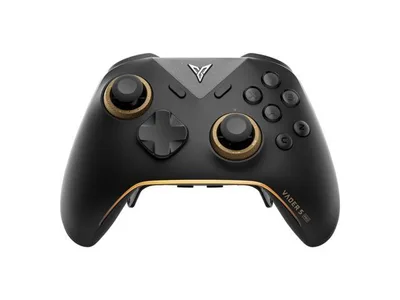
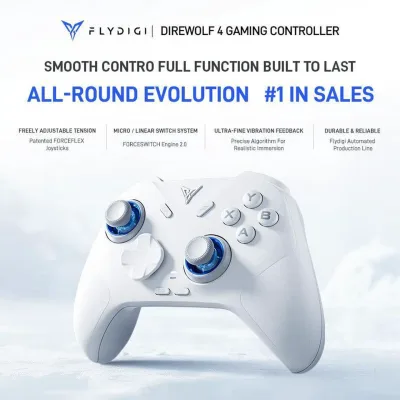
The pads that just missed the podium (GameSir Cyclone 2 and GuliKit KK3 Max are also worth a search if you like TMR sticks):
The bottom line
The controller market finally rewards buyers who read the spec that matters. Magnetic sticks moved from a $200 luxury to a $30 baseline, and the brands that ignored that shift are now selling nostalgia and frictionlessness rather than the best hardware. For most PC players the Ultimate 2 is the easy call, the Ultimate 2C makes "cheap but not junk" a solved problem, the Xbox pad remains the pay-for-certainty default, and the DualSense earns its keep in the handful of games built to show it off. Buy for how you actually play, and there is a genuinely great pad at every price this year.
Related reading
- Best gaming mouse in 2026 - the other half of a great PC setup
- Best gaming keyboard in 2026 - mechanical picks at every budget
- Best gaming headset of the month - our rolling audio pick
- Switching from PlayStation to PC - bringing your DualSense with you
- Best handheld gaming PC in 2026 - where controller feel matters most
Found this useful? Pass it along:
Frequently Asked Questions
What is the best controller for PC in 2026?
The 8BitDo Ultimate 2 (~$70) is the best PC controller for most people: drift-proof TMR sticks, hall effect triggers, a 2.4GHz dongle, 1000Hz polling, and a charging dock included. The Xbox Wireless Controller remains the compatibility king, and the DualSense is the pick if you play PlayStation ports.
Do stick drift problems still exist in 2026?
Only on controllers still using old potentiometer sticks - which includes the standard Xbox and PlayStation pads. Hall effect and TMR sticks (magnetic, no physical contact) have effectively solved drift, and they are now standard on 8BitDo, GameSir, and other challenger brands at prices below the big two.
Is a wireless controller laggy on PC?
Not with a 2.4GHz dongle - dongle wireless is within a millisecond or two of wired and completely imperceptible. Bluetooth is the laggy option, fine for slower games but noticeable in action titles. If your controller came with a USB dongle, use it.
Do PS5 and Xbox controllers work on PC?
Yes. Xbox controllers are natively supported by effectively every PC game. The DualSense works great in Steam and most modern titles, and PlayStation-native ports even support its adaptive triggers and haptics. Steam Input handles remapping for both.
Is the Xbox Elite controller worth it for PC?
Only if you will genuinely use the paddles and profiles. At $180 it still uses drift-prone potentiometer sticks, which is hard to swallow when $60 challengers ship magnetic sticks. Most people get more from an Ultimate 2 plus $120 in their pocket.