Best Handheld Gaming PC in 2026: The Steam Deck Price Hike Changed the Answer
Some links in this guide are affiliate links - we may earn a commission at no extra cost to you.
The Steam Deck spent three years as the easy answer. It was the affordable on-ramp to PC gaming on the couch, and when someone asked which handheld to buy, you said "Steam Deck" and moved on. Then Valve raised the price. The OLED model jumped to roughly $789 for 512GB and $949 for 1TB, and the reflex answer stopped being automatic. Handhelds got swept into the same memory crisis inflating RAM, SSDs, and graphics cards - the silicon and storage inside them costs more to make right now, and that lands on the sticker.
So picking a handheld in 2026 is a real decision again, and a handful of things decide it:
- The OS you live in. SteamOS is the console-like experience: it sleeps and wakes instantly, never drops you to a desktop, and sips battery. Windows handhelds run every store and launcher - Steam, Game Pass, Epic, mods, emulators - but you occasionally pay for that freedom with a stray desktop pop-up or a driver that needs a nudge. That tradeoff, more than any spec, is the real fork in the road.
- The chip and the battery. These all run AMD APUs, and battery life is the honest constraint: a demanding game can drain any of them in under two hours, while an indie or emulated title stretches far longer. Newer chips and bigger batteries help, but none of these are marathon runners at full tilt.
- The screen. OLED gives deep blacks and punchy color; LCD is cheaper and often brighter in daylight. Resolution and refresh matter too, and a gorgeous panel taxes the battery, so it cuts both ways.
- Weight. The bigger the screen, the heavier the device gets in your hands over a long session. Seven inches is pocket-ish; nearly nine inches is a portable monitor you hold.
And yes, there is a bigger Valve box in the room: the Steam Machine console lands at $1,049 running the same SteamOS, so if your real goal is a couch console, that is a different guide (we ran that math here). But a Steam Machine stays on your TV. The entire point of a handheld is that it comes with you - to bed, on a flight, to the other room - and that is a want the living-room box cannot fill. If portability is why you are reading this, the Steam Machine's price is a footnote, not a competitor.
How we rank: we weigh what actually matters once one of these is in your hands - the OS you will live in, real battery life, screen quality, and weight - against this week's street price rather than launch MSRP. When a maker hikes prices or quietly discontinues a model, the ranking moves, which is exactly what happened this year.
At a glance
Best value: Lenovo Legion Go S
The Legion Go S is the sleeper of the category and, at $573, the one I would actually hand most people right now. Lenovo keeps pricing the Glacier White config aggressively, so you pay Steam-Deck-LCD money for a meaningfully stronger machine: an 8-inch 1200p display and 32GB of RAM, double what most rivals ship. That extra memory is the kind of thing you never notice until a game or a background launcher wants it, and then you are very glad it is there.
It runs Windows, with SteamOS on some SKUs, so every store and Game Pass work out of the box - none of the "is this game supported" dance the closed platforms make you do. The price you pay is the usual Windows one: you will occasionally meet a desktop pop-up or a setting that needs a fix, and this is the smaller sibling to the full-size Legion Go, not the big-screen flagship. But dollar for dollar nothing else here is close, which is why it tops the list despite not being the flashiest name on the page.
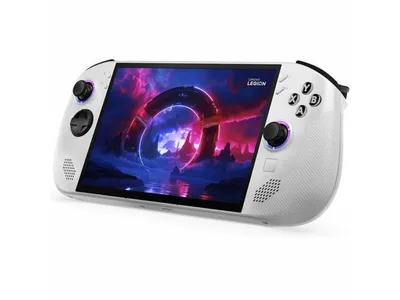
The most machine per dollar in 2026 - 32GB of RAM and an 8-inch 1200p screen at Steam-Deck-LCD money.
The catch: It runs Windows, which needs occasional patience, and it is the smaller sibling to the full-size Legion Go.
Best overall: ASUS ROG Xbox Ally
If the Legion Go S is the value play, the Ally is the best all-rounder and the handheld I would point most buyers to when budget is not the only question. ASUS and Microsoft pair a 7-inch 1080p 120Hz screen with an Xbox full-screen interface layered over Windows, and that layer is the point: it boots into something console-simple and hides most of the desktop mess, but the full PC is still underneath the moment you want a launcher, a mod, or an emulator. It is the smoothest Windows handheld experience going, and the Game Pass trial in the box makes the pitch obvious.
The reason it moved to the top of my list after Valve's hike is blunt math: at $787 it undercuts the 512GB Steam Deck OLED and runs faster while doing it. Battery life is the tradeoff - it trails the Deck's efficiency, and the higher-end Ally X variant costs a couple hundred more - but if you want one device that plays nice with Game Pass and every other store while feeling like a console until you need it not to be, this is the one to spend on.
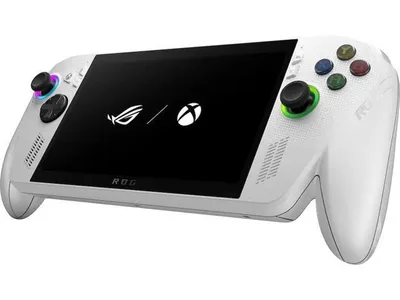
The smoothest Windows handheld - a console-simple Xbox interface, full PC underneath, and it undercuts the 512GB Deck OLED while running faster.
The catch: Battery life trails the Steam Deck, and the higher-end Ally X variant costs $200 or more on top.
Big-screen flagship: Lenovo Legion Go (2TB)
This is the one for people who are done pretending seven inches is enough. The 8.8-inch 144Hz 2K display is the best screen I have seen on any handheld, the detachable controllers do a genuine Switch impression, and this configuration ships with 2TB, which matters more than ever given what NAND costs in 2026 - the pricey storage tier comes baked in rather than as a $200 upcharge. Think of it as a portable-monitor-class experience rather than a pocket device.
That size is also the entire caveat. It is the biggest and heaviest thing on this page, and the spectacular screen taxes the battery harder than the smaller handhelds, so long sessions away from a charger are shorter here. I would only steer you to it if the display and the included storage are genuinely the reason you are buying - for that person, everything smaller feels like a compromise afterward. For everyone else, the Legion Go S delivers most of the experience for six hundred dollars less.
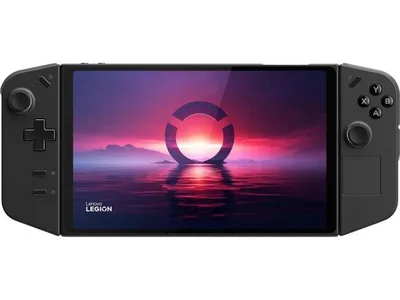
The best screen in handheld gaming - 8.8-inch 144Hz 2K, detachable controllers, and 2TB baked in.
The catch: It is the biggest and heaviest of the group, and that gorgeous screen taxes the battery.
And the Steam Deck OLED?
Still the best software in the category, full stop. SteamOS just works: it sleeps and wakes like a console, never bumps you to a desktop, and wrings more playtime out of less battery than anything running Windows. The OLED panel is lovely too. What changed is only the value math - at $789 for 512GB it now costs more than Windows handhelds with newer, faster silicon, so you are paying for polish rather than for the cheapest way in. If that smoothness is worth the premium to you, buy it directly from Valve (it is not sold through normal retailers) and do not look back. Just go in knowing you are buying the experience, not the deal.
How to choose (and what to skip)
Boil it down to two questions. First, which OS do you want to live in? If you mostly play Steam games and want a device that behaves like a console every time you pick it up, SteamOS - the Deck, or a SteamOS-SKU Legion Go S - is worth a small efficiency and simplicity premium. If you want Game Pass, every launcher, mods, and emulators, a Windows handheld is the only option, and the Ally hides the jank better than anything else. Second, how much do you carry it? Seven-to-eight-inch handhelds travel; the 8.8-inch Legion Go is a couch and tray-table device more than a backpack one.
A few things to skip. Do not overpay for the biggest storage tier of any handheld - the $165 trick below fixes that. Do not buy a Windows handheld expecting zero friction; the jank is manageable and mostly one-time setup, but it exists, and anyone who says otherwise is selling. And do not pay near-flagship money for last year's underpowered models still lingering on shelves at their old prices - the memory crisis raised the floor, but a slow handheld is still slow.
The $165 trick: never buy the bigger-storage model
Every handheld maker charges $150-360 to jump a storage tier. Nearly all of them - Deck, Ally, Legion Go - take a standard M.2 2230 SSD that swaps in about 20 minutes with a screwdriver and a YouTube video, so the smart move is to buy the cheapest storage config and upgrade it yourself:
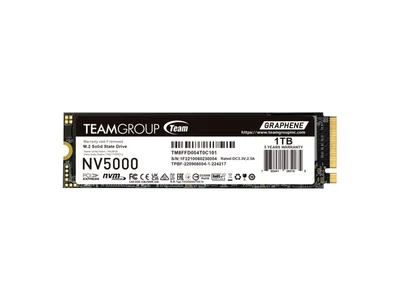
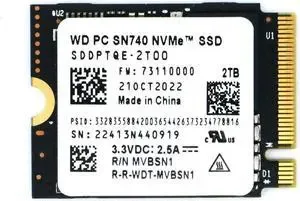
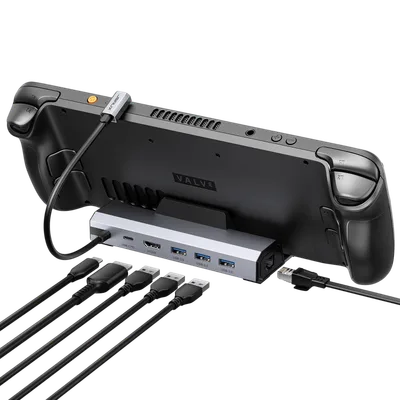
Buy the cheapest storage tier of whichever handheld you pick, spend $165 on the 2230 drive, and pocket the difference. Storage prices are climbing fast right now - the full story is in our RAM & SSD crisis guide.
The screen upgrade nobody mentions
Every handheld on this page tops out at a 7-to-9-inch panel, and every one of them can drive something much bigger over a single USB-C cable. That is where a portable monitor earns a spot in the travel bag: UPERFECT's GR16CQ gives you a 16-inch 2K QLED panel at 240Hz that folds flat like a laptop, draws its power over the same cable, and turns a hotel desk, dorm room, or friend's kitchen table into a real setup. The same port works on a PS5, Switch, or work laptop, so it rarely travels for just one reason.
An honest word on that 240Hz: a handheld APU will not feed it in AAA games, and nothing on this page changes that. Where it pays off is the esports column - Rocket League, CS2, Valorant-class titles where these devices genuinely push 100-200fps at sane settings - and double duty as a second screen for a desktop. If your travel gaming is heavy single-player, the refresh headroom is future-proofing, not magic.
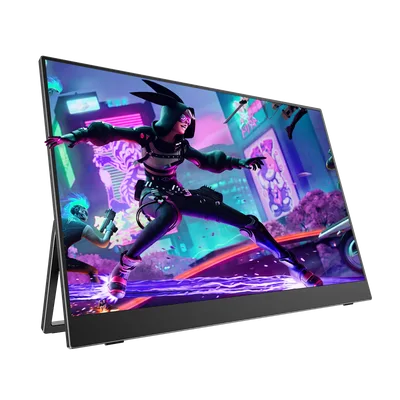
A 16-inch 2K 240Hz QLED that runs off one USB-C cable from any handheld here. The single biggest experience upgrade per dollar after the SSD swap.
The catch: Handheld APUs only exploit 240Hz in esports titles - for AAA-only players this is a very nice 2K panel with headroom you will not use.
Handheld or desktop?
A $600-1,200 handheld buys portability; the same money in a desktop buys raw performance, and it is not close - our $1,000 builds roughly double any handheld's frames on a real monitor. So the honest question is where you actually play. Commute, couch, bed, and travel: a handheld wins, because a desktop cannot come with you. A desk you sit at most nights: the build generator gives you dramatically more game per dollar. Plenty of people run both now - a Legion Go S for the road and a desktop at home, one Steam library feeding every screen in the house.
The bottom line
Valve's price hike turned a default into a real choice, and that is good for buyers. If you want the most machine for your money, the Lenovo Legion Go S at ~$573 is the value pick and the one I would steer most people toward. If you want the best all-around device and Game Pass in your pocket, the ROG Xbox Ally at ~$787 is worth the step up. If you want the biggest, best screen with storage to match, the Legion Go 2TB is the flagship. And if pure software polish and battery life are what you are after and the price does not scare you, the Steam Deck OLED still has no equal. Whichever you pick, buy the cheap storage tier and add your own drive - then go play.
Related reading
- Console prices in 2026 vs building a PC - where handhelds sit against the PS5, Series X, and Steam Machine
- The Steam Machine vs a gaming PC - Valve's $1,049 console, and the PC you could build instead
- Best handheld accessories for 2026 - docks, cards, and power banks worth adding
- Switching from PlayStation to PC - one Steam library, every screen in the house
Found this useful? Pass it along:
Frequently Asked Questions
What is the best handheld gaming PC in 2026?
After Valve's price hike pushed the Steam Deck OLED to $789-949, the value crown moved: the Lenovo Legion Go S at around $573 is the best price-to-performance handheld, and the ROG Xbox Ally at $787 is the best overall for its 120Hz screen and Game Pass integration. The Steam Deck OLED remains the best pure software experience if the price does not bother you.
Is the Steam Deck still worth it after the price increase?
SteamOS is still the smoothest handheld experience, and the OLED screen is excellent - but at $789 for 512GB, it now costs more than Windows handhelds with stronger chips. Buy it for the software polish and battery life, not the value math, because the value math flipped in May 2026.
Steam Deck vs ROG Ally - which should I buy in 2026?
At current prices, the ROG Xbox Ally: comparable money buys a faster chip, a 120Hz 1080p screen, full Windows compatibility (Game Pass, Epic, mods, every launcher), and Xbox integration. The Deck still wins on battery efficiency and its console-like OS. If you mostly play Steam games and value simplicity, Deck; for everything else, Ally.
Can you upgrade the storage in a Steam Deck or ROG Ally?
Yes - nearly every handheld (Steam Deck, ROG Ally, Legion Go) takes a standard M.2 2230 SSD, and swapping one takes about 20 minutes with a screwdriver. A 1TB 2230 drive costs around $165 and is dramatically cheaper than buying the higher-storage model of any handheld.