The Best Office Chairs in 2026: Our Picks at Every Budget
Some links in this guide are affiliate links - we may earn a commission at no extra cost to you.
A graphics card gets swapped every few years. The chair under you does not - it holds your spine for eight hours a day, five days a week, for as long as you keep the job. That math is why a good ergonomic chair is the highest-return health purchase most desk workers ever make, and why it's the one part of the setup I tell people not to cheap out on. You feel a bad chair in your lower back long after you've stopped noticing the frame rate.
What separates a real chair from a padded office prop is adjustment, not price tags or racing-stripe looks. Four things carry the weight: lumbar support that physically contacts and follows your lower back, seat depth you can set so there are a couple of fingers between the cushion edge and the back of your knees, armrests that move in height and angle to keep your shoulders loose, and a recline that lets you shift load off your spine through the day. Add a breathable mesh back over foam - it runs cooler and doesn't pack down into a board after a year - plus a build and warranty that survive real use, and you have the whole checklist. Everything else is styling. "Ergonomic" printed on the box is not a feature, and a chair shaped like a bucket seat is not automatically better for your body.
This guide is the work half of the desk: breathable, posture-first seats, nothing shaped like a race car. Want the racing-seat look? That's the gaming chair guide. Below are the chairs worth putting your spine on, at three budgets.
How we rank: we weigh the adjustments that matter over a full workday - lumbar contact, seat-depth range, armrest travel, recline - alongside breathability, build quality, and warranty, and we lean on the long-run consensus of the ergonomics community rather than brand names. Prices and availability get a re-check every quarter.
At a glance
SIHOO Doro C300 Pro - the buy-it-and-forget-it pick
This is the chair that made the big ergonomic brands nervous, and for most bodies and most budgets under $400 it's the one I point to first. The self-adaptive lumbar follows your lower back as you shift instead of jabbing at one fixed point, the 6D armrests move in every direction that keeps your shoulders relaxed, and the back is full breathable mesh so it stays cool through an eight-hour day. On paper that is the feature list of a $700 Herman-Miller-tier chair, and at $390 that gap is the entire reason it leads.
For a daily six-to-eight-hour sitter this is the set-it-once option: dial it to your frame and it disappears under you the way a good chair should. It has none of the Steelcase name recognition and none of the 12-year commercial warranty, but for the money it does what the expensive chairs do, which is the only test that counts. The one reason to skip it: if your budget clears $500, a refurbished premium chair (further down) is the better spend.
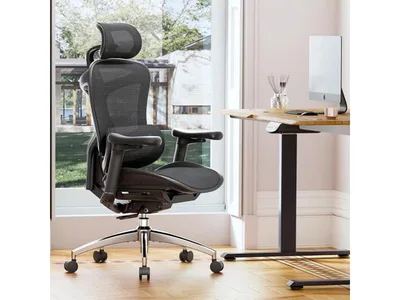
Adaptive lumbar and full mesh that feel like a $700 chair at $390 - the buy-it-and-stop-thinking pick for most desk workers.
The catch: It's a newer name than Steelcase and it ships as a box you assemble, so you're trading brand pedigree and 20 minutes of setup for the price.
Alera Elusion Series Mesh Chair - the value legend
The Elusion keeps winning budget roundups against seats several times its price, and it earns it. This comes from the office-furniture world, not the gaming aisle, and the durability shows: you get multifunction tilt, a contoured cushion, a breathable mesh back, and a genuinely commercial-grade build for around $245. It's the chair for someone who wants most of the Doro experience for less and doesn't care about adaptive lumbar or looks.
The one version to buy is the mid-back multifunction model - the cheaper synchro-tilt trims cut the adjustments that make it worth owning. The honest tradeoff is that it's plain to look at and it won't track your spine the way the SIHOO does; you adjust it once and it stays put rather than moving with you. But as a value pick that holds up year after year, nothing near the price seriously argues with it, which is exactly why it keeps landing on these lists.
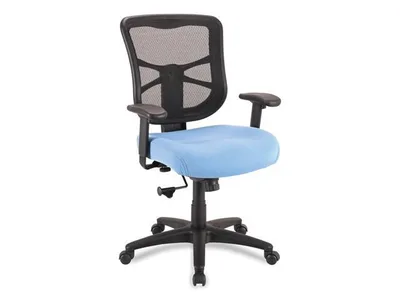
Commercial-grade office-furniture build at a budget price - most of the Doro for less, minus the adaptive lumbar.
The catch: It's plain to look at and only comes in the mid-back multifunction version worth buying - you get office-furniture substance, not styling.
Monoprice WFH Ergonomic Mesh Chair - the sub-$150 sleeper
Monoprice does to office chairs what it did to cables: strip out the brand tax and keep the substance. For roughly $103 you get a mesh seat and back, an adjustable headrest, lumbar support, and adjustable armrests - a real spec sheet where most competitors at this price hand you a padded board and call it ergonomic. That combination at a hundred dollars is why it's the sleeper of the whole category.
This is the pick when a hundred dollars is the hard ceiling: a first real desk chair, a spare workstation, a student setup. It won't outlast a Steelcase and the casters are basic - I won't pretend otherwise - but you feel those cuts in longevity, not in your back on day one. The one nudge: if you can stretch to the Alera, do it, because the build gap between $103 and $245 is real. Below that budget, though, nothing else is this complete.
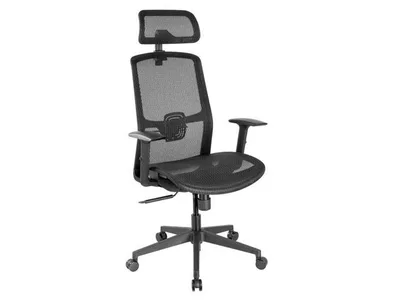
Strips the brand tax like Monoprice cables - the most complete chair you can put under yourself for around $100.
The catch: It won't last a decade and the casters are basic, but at $103 it doesn't have to - it just has to beat everything else near it, and it does.
The endgame move: buy premium refurbished
The thousand-dollar names - Steelcase Leap and Gesture, Herman Miller Aeron and Embody - earn their reputations: 12-year warranties, commercial-grade builds that last 10-15 years, and the deepest ergonomics engineering in the industry. Paying full retail for one, though, is the amateur move. The play every ergonomics community lands on is buying them refurbished: a refurb Steelcase Leap V2 on Amazon typically runs $400-600, carries the best lumbar system in the business, and delivers most of the new-chair experience. If your budget reaches $500 or more, that beats buying anything new at the same price - including our top pick above.
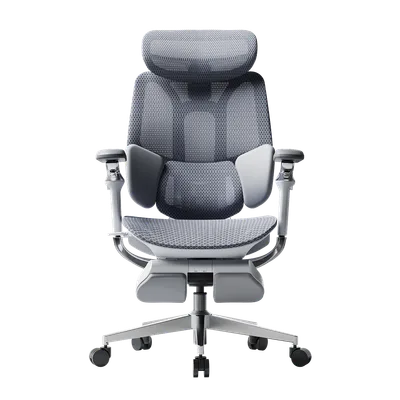
Worth a look too: the Hbada P3 (~$330) if you want an adaptive-lumbar alternative to the SIHOO, and if you sit hot, prioritize a full-mesh back over anything padded.
How to choose (and what cheap chairs cut)
- Size first. A chair that is wrong for your height and weight will hurt at any price. Check the spec sheet's recommended height range before anything else.
- Lumbar must touch. Adjustable lumbar that actually contacts your lower back is the single highest-value feature. "Ergonomic" printed on the box is not a feature.
- Seat depth matters more than people think - aim for two to three fingers of space between the seat edge and the back of your knees.
- Know what a cheap chair cuts. A new sub-$120 seat pays for its price by trimming the parts that matter: fixed or fake lumbar, armrests that only move up and down (or not at all), a foam pad that packs into a board, and casters and a gas lift rated for a year rather than a decade. That's a fair trade at $100 when you know you're making it. It's not a fair trade at $250, where the Alera exists.
- The chair is a third of the equation. Desk height and monitor height do the rest - that's the office desk guide and a monitor arm from the accessories list. Or grab the whole matched set in our complete ergonomic setups.
More options worth a scroll
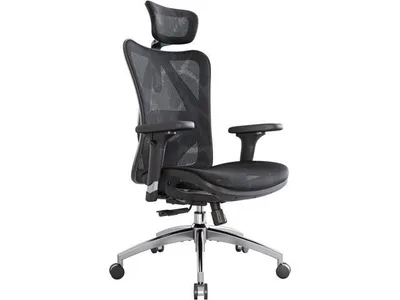
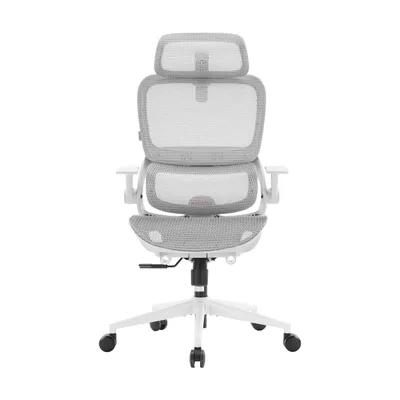
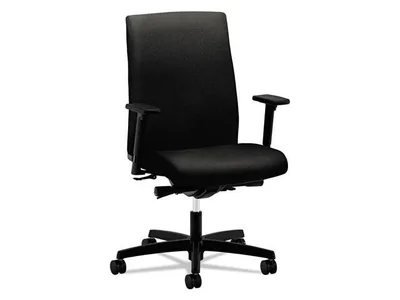
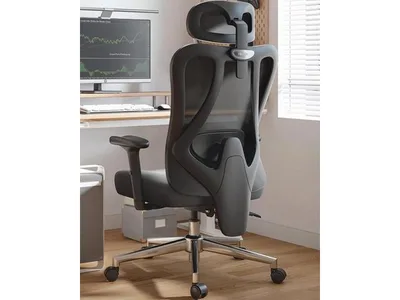
More chairs in the conversation (and remember the refurbished Steelcase and Herman Miller route from the endgame section above):
The bottom line
Boil it down and it's simple. Most desk workers should buy the SIHOO Doro C300 Pro and stop thinking about it - adaptive lumbar and full mesh at a price that undercuts everything with the same feature list. On a tighter budget, the Alera Elusion is the value legend that keeps beating chairs above its price, and the Monoprice WFH is the sub-$150 sleeper that still checks the ergonomic boxes most cheap seats skip. And if you can spend $500 or more, don't buy anything new - a refurbished Steelcase Leap is the endgame the whole ergonomics crowd agrees on.
Whatever you land on, spend more attention on fit than on the badge: a chair sized and adjusted to your body beats a famous logo set up wrong every single time. Your spine is carrying this decision for years. Buy like it.
Related reading
- Best gaming chairs in 2026 - the racing-seat half of the desk, if that's the look you want
- Best office desks in 2026 - the other half of good posture is desk height
- Best ergonomic setups in 2026 - the whole matched chair, desk, and monitor kit
- Best gaming setup accessories in 2026 - monitor arms, mats, and the small stuff that fixes posture
Found this useful? Pass it along:
Frequently Asked Questions
What is the best office chair in 2026?
For most people spending real hours at a desk, the SIHOO Doro C300 Pro (~$390) delivers the adaptive lumbar support and adjustability of chairs nearly twice its price. On a budget, the Monoprice WFH mesh chair at around $103 is the sleeper of the category. If money is no object, a Steelcase or Herman Miller - often best bought refurbished - is a 12-year-warranty investment.
Is an office chair better than a gaming chair for long hours?
For 8-hour days, usually yes. Quality office chairs prioritize posture support and breathable mesh over racing aesthetics, and the ergonomics research behind chairs like the Steelcase Leap runs decades deep. Gaming chairs win on recline range and looks. Fit and adjustment matter more than category.
Are expensive office chairs like Herman Miller worth it?
The premium brands are built to commercial standards with 12-year warranties and genuinely last 10-15 years, so the per-year cost is lower than it looks. The smart play is refurbished: a refurb Steelcase Leap V2 at $400-600 delivers most of the thousand-dollar experience and is the default recommendation of every ergonomics community.
What features actually matter in an office chair?
In order: correct size for your body, adjustable lumbar support that actually contacts your lower back, seat depth adjustment, and armrests that adjust in height and angle. Headrests are nice for recliners. Everything else - leather, brand, looks - is preference, not ergonomics.