The Best Chair Mats in 2026: Glass, Polycarbonate, or Cheap - Solved
Some links in this guide are affiliate links - we may earn a commission at no extra cost to you.
Nobody shops for a chair mat until they notice the damage. Roll an office chair across bare hardwood or laminate for a few months and the caster wheels grind grit into the finish, carve shiny tracks where you sit, and press dents into softwood. On carpet the problem flips - the chair sinks into the pile, every push forward is a fight, and your lower back pays for it. A chair mat fixes both: it spreads your weight over a hard, smooth surface so the wheels glide and the floor underneath takes none of the wear.
The catch is that most of what gets sold as a "chair mat" is thin PVC that solves the problem for about a year before it curls at the edges, cracks under the casters, and clouds over. So this is really a materials decision, and three materials matter. Cheap PVC is the disposable option. Polycarbonate is roughly twice as tough, stays clear, and lasts years. Tempered glass sits at the top, and it never dents, curls, or clouds - it is effectively permanent. PET and recycled polypropylene fill the honest middle.
Two things decide the rest. First, floor type: plastic mats are floor-specific, with gripper studs for carpet and a smooth non-slip back for hard floors, and using the wrong one either slides around or chews the carpet. Glass works on both. Second, size - your chair travels farther than you think, so a mat you keep rolling off the edge of is a mat you will hate. Get the material and the size right and you buy this once, or close to it.
How we rank: we weigh material durability over headline price, match every pick to the floor type it is actually built for, and favor the mats that survive years of daily rolling instead of the ones that look fine for a season and then curl. Prices are street prices we re-check every few months.
At a glance
Best overall: Lorell Tempered Glass Mat
Tempered glass is the answer to a question the plastic mats only postpone. This one is rated to hold 1,000 pounds, roughly five times the strength of ordinary glass, and it does not have the failure modes that kill plastic - no denting under the casters, no curling at the edges, no cloudy wear path where the wheels live, no chemical smell. Casters roll across it like ice, it disappears visually on any floor, and because it does not flex it works on carpet and hard floors alike, so you skip the floor-matching step entirely.
The way to think about it: plastic mats are consumables you quietly replace every few years, and this is furniture you buy once. It is heavy, so you set it down once and leave it, and the edges are hard glass rather than soft plastic. It costs more up front, but if you sit at a desk daily, it is the last chair mat you will ever shop for, and that is worth the premium.
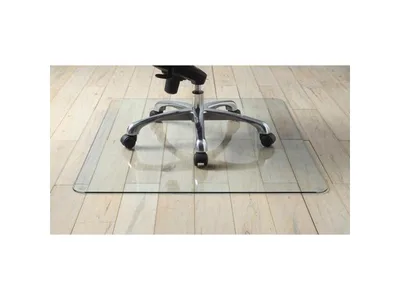
If you sit at a desk every day, this is the one pick on the page that ends the category for good - pay once, never think about a chair mat again.
The catch: It is genuinely heavy, so you place it once and leave it, and the edges are hard glass rather than soft plastic - not the mat for a room full of toddlers.
Best plastic: Floortex Cleartex Ultimat
If you want plastic done right, polycarbonate is the material and Floortex's Ultimat line is the reference brand. Polycarbonate has about double the impact strength of the bargain PVC mats, so instead of cracking, curling, discoloring, or off-gassing, it stays genuinely clear and flat for years - not the few months a cheap mat gives you before it starts to look rough. For a lot of people this is the sweet spot: most of the durability of glass at a real discount, and it is lighter to move if you rearrange the room.
The one thing to get right is the version. Floortex sells a hard-floor variant with a smooth non-slip back and a carpet variant with gripper studs underneath, so match it to whatever is under your desk before you check out. Do that and it does the job for years without complaint. It is still plastic, so it wears eventually - it just is not the buy-it-once permanence of glass.
The reference-grade plastic mat: most of the glass durability story for a chunk less money, as long as you buy the version built for your floor.
The catch: It is still plastic, so it wears eventually, and it is floor-type specific - grab the wrong backing and it either slides or chews your carpet.
Best budget: Gorilla Grip Chair Mat
This is the best-selling chair mat on Amazon, and unlike the anonymous bargain-bin PVC I warn about below, it earns the ranking. It is made of PET, a genuinely tougher plastic than the cheap stuff, rated to 400 pounds, and it resists the cracking and curling that turns a $30 mat into landfill inside a year. It comes in both hard-floor and carpet versions at around $35, so grab the one that matches your floor.
It will not feel as premium as the Floortex or glide like the glass, and I would not pretend otherwise - you are buying the sensible floor of the category, not its ceiling. But tens of thousands of five-star desk setups run on this exact mat, and if you just need honest floor protection without spending real money, this is where I would point you. The price works because PET is a good material, not because corners were cut.
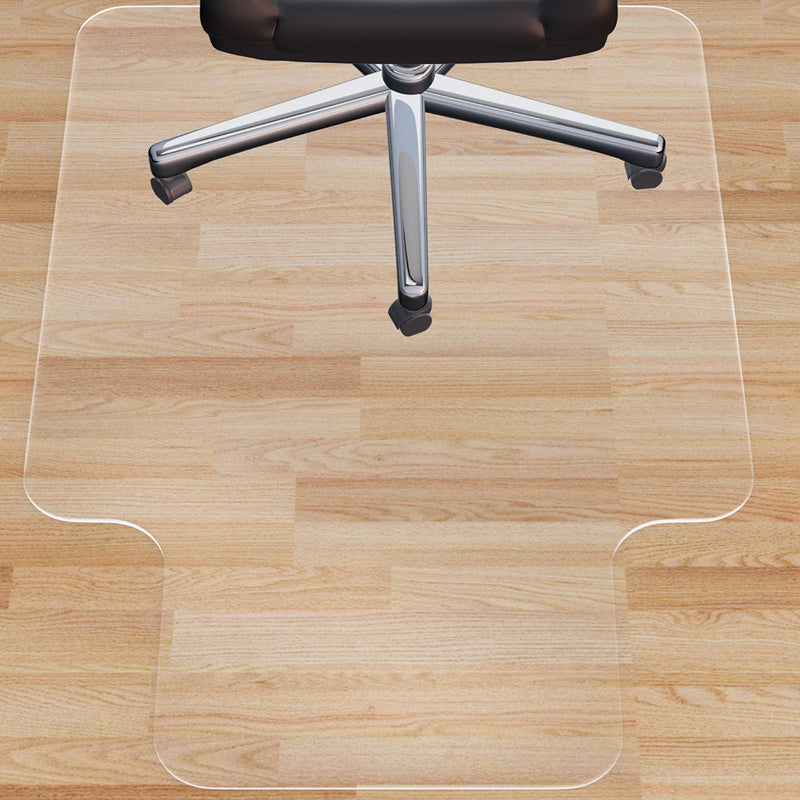
Honest floor protection at a price that works because PET is a good plastic, not because corners were cut.
The catch: It feels thinner and less premium than the Floortex and it will not glide like glass - you are buying the sensible floor of the category, not its ceiling.
The recycled alternative: Ecotex Polypropylene
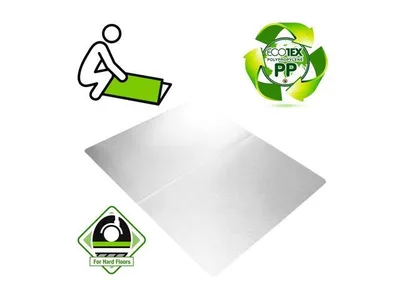
If you want to protect the floor with a lighter environmental footprint, the Ecotex is the pick to know. It is made from recycled polypropylene, ships flat instead of fighting you out of a stubborn roll, and has an anti-slip backing that keeps it planted on hard floors. Protection-wise it does exactly what the pricier mats do - it spreads the load so the casters never touch the finish - at a mid-range price that sits between the budget PET mat and the polycarbonate.
The trade is cosmetic and tactile. It is translucent rather than glass-clear, and it does not roll quite as smoothly as the picks above. If that is a fair swap for recycled materials and a mat that lies flat out of the box, it is an easy one to live with.
How to choose, and what to skip
- Match the mat to your floor (plastic mats only). Carpet mats have grip studs underneath; hard-floor mats have a smooth non-slip back. The wrong one either slides around or chews the carpet. Glass sidesteps this entirely.
- Size up. Your chair travels more than you think, so 44 x 50 inches is the practical minimum for a normal desk, larger if you roll between desk zones. A mat you keep rolling off the edge of is a mat you will resent.
- Skip anonymous bargain PVC. The no-name $30 big-box mats curl at the edges (a real chair-snag hazard), dent under the casters within months, and go cloudy. Cheap is fine when the material is right - the $35 Gorilla Grip gets away with its price because PET is genuinely tougher, not because it is thin.
- Do not mismatch floor and mat to save a few dollars. A hard-floor mat on carpet slides out from under you; a studded carpet mat on hardwood can mark the finish. Buy the version built for your floor, or buy glass and stop worrying about it.
- Upgrade the casters too. On hard floors, ~$30 rollerblade-style caster wheels are a great companion buy - quieter and gentler than stock nylon wheels, and they make even the budget mat feel premium.
The bottom line
A chair mat is a 10-minute decision that saves you a floor refinish, so the only real mistake is buying on price alone and landing on PVC that curls. If you sit at a desk daily, the tempered-glass Lorell is the honest endgame - buy it once and forget the category exists. If you would rather spend less, the Floortex Ultimat is the reference plastic and the Gorilla Grip is the budget mat that actually holds up, both of them fine for years as long as you match the version to your floor. And if a lighter footprint matters, the Ecotex covers the middle. Pick the material, get the size and floor type right, and the wheels glide while the floor underneath takes none of the wear.
Related reading
- The best office chairs in 2026 - the chair that sits on top of the mat
- The best gaming chairs in 2026 - racing-style seating, ranked and priced
- Complete ergonomic setups - chair, mat, desk, and monitor pre-matched at three budgets
Found this useful? Pass it along:
Frequently Asked Questions
What is the best chair mat in 2026?
Tempered glass is the endgame - the Lorell glass mat (~$142) never dents, curls, or clouds and rolls like ice. The Floortex Ultimat polycarbonate (~$126) is the traditional quality pick, and the $35 Gorilla Grip PET mat - Amazon's bestseller - covers budget setups far better than the bargain PVC it resembles.
Are glass chair mats worth it?
If you sit daily, yes. Tempered glass mats hold 1,000 pounds, never develop the dents and cloudy wear paths that plastic mats do, and casters roll noticeably smoother. Plastic mats are consumables you replace every few years; a glass mat is permanent. The math favors glass within a few years.
Do I need a different chair mat for carpet vs hard floors?
Yes for plastic mats: carpet versions have gripper studs underneath and hard-floor versions have a smooth non-slip backing - using the wrong one slides or damages. Glass mats work on both, which is part of their appeal.
Do chair mats actually protect hardwood floors?
Yes, and hardwood needs it most - caster wheels concentrate your full weight into small contact points and grind grit into the finish. A mat spreads the load and takes the wear. The alternative is refinishing the floor, which costs more than every mat on this page combined.