Gears of War: E-Day Is Out on PC. One Graphics Card in Eight Cannot Even Launch It.
Some links in this guide are affiliate links - we may earn a commission at no extra cost to you.
Gears of War: E-Day went on sale October 6 on Steam, the Xbox PC app and Game Pass, and debuted at number two on Steam's weekly top sellers behind a free-to-play MMO. The peak concurrent count on Steam hit 31,517, roughly three times what Gears 5 managed in 2019, which is a modest number for a seventy-dollar launch until you remember that most of the audience is playing it on Game Pass and never shows up in a Steam chart. Critics landed in the high 80s on Metacritic for the Xbox version and 83 for PC. As of October 10 the Steam user reviews sit at Mostly Positive, 5,473 positive to 1,881 negative, and a lot of the negative ones are about the same thing.
The thing is the spec sheet. Not the numbers on it, which are gentle, but one line that is easy to skim past.
The line that locks people out
Every tier of the E-Day requirements, from minimum up, says this: hardware ray tracing capable GPU is required. The Coalition built the game on Unreal Engine 5.6 with Megalights, the lighting system that leans on the ray-tracing hardware for every light in the scene rather than a handful of reflections, and there is no fallback path. A card without RT units does not run the game badly. It does not run the game.
That takes out every GeForce GTX card ever made, including the GTX 1080 Ti and the GTX 1660 Super, and every Radeon up to and including the RX 5700 XT. Doom: The Dark Ages did the same thing last year and the complaints were loud; E-Day is the second big release to draw the line and it will not be the last.
We can put a number on who that affects, because people tell our tools what they own. Across the bottleneck checker and the FPS calculator, visitors made 19,865 graphics-card selections between September 1 and October 10. We matched each one against our catalog and sorted them by whether the card has ray-tracing hardware.
| Cards selected Sept 1 to Oct 10 | Count | Share |
|---|---|---|
| Has hardware ray tracing (RTX, RX 6000 and newer, Arc) | 17,361 | 87.4% |
| No ray-tracing hardware (GTX, RX 5000 and older, Vega, GT) | 2,499 | 12.6% |
| Could not classify | 5 | 0.0% |
The most common cards on the wrong side of that line were the GTX 1660 Super (283 selections), the RX 580 (252), the GTX 1060 6GB (167), the RX 5700 XT (162) and the GTX 1650 (151). The GTX 1080 Ti, which still out-muscles an RTX 3050 in anything that does not need RT, was picked 146 times. Free to cite with a link: about one graphics-card selection in eight on this site, in the month before E-Day shipped, named a card that E-Day refuses to launch on.
These are selections, not unique people, and the people who use a bottleneck calculator skew toward older hardware they are thinking about replacing. Treat 12.6% as the shape of the problem rather than a census of the Steam population. Valve's own survey has the GTX 1650 and GTX 1060 still inside the top 25 cards, so the shape is not unusual.
The three tiers
The Coalition published a three-tier sheet in September; Steam carries the first two. All three assume upscaling is on, which the sheet says in the fine print and most coverage left out, and all three require an SSD and 115GB of space. The storage number came down from the 130GB the June listing showed.
| Minimum | Recommended | Ultra | |
|---|---|---|---|
| Target | 1080p, Medium, 60 fps | 1440p, High, 60+ fps | 4K, Ultra, 60+ fps |
| OS | Windows 10 22H2 | Windows 11 25H2 | Windows 11 25H2 |
| CPU | Ryzen 5 2600X, i7-6850K, i5-10400 | Ryzen 5 5600, i5-11600K | Ryzen 7 7800X3D, i7-14700K |
| RAM | 12GB | 16GB | 16GB |
| GPU | RTX 2060, RTX 5050, RX 6600, RX 9060 | RTX 5060, RTX 3060 Ti, RX 6700 XT, RX 9060 XT | RTX 5070 Ti, RX 7900 XT |
| VRAM | 6GB | 8GB | 12GB |
Two things on that table are unusual. The minimum asks for 12GB of RAM rather than 16, and the Ultra tier never asks for more than 16GB; in a year when a 32GB DDR5 kit costs close to five hundred dollars, a AAA sheet that does not demand it is worth a sentence. And the Ultra tier names an RTX 5070 Ti for 4K, which is a card most people can actually buy, not a 5090. The catch is the word upscaling. Native 4K is a different game, as the benchmarks below show.
There is also a fourth preset in the menu called Ludicrous, above Ultra, which does not appear on the sheet at all. The Coalition's framing is that it is aimed at hardware that does not exist yet, which is a polite way of saying do not judge the game by it.
What independent benchmarks found
DSOGaming ran its performance analysis on October 5 on a Ryzen 9 7950X3D with eight cards from an RTX 2080 Ti to an RTX 5090, Ultra preset, RTX Mega Geometry switched off so AMD and NVIDIA ran the same workload. The headlines: every card except the 2080 Ti handled 1080p Ultra comfortably; at 1440p Ultra the RX 9070 XT ran a touch behind the RX 7900 XTX and dipped to 57 fps in places; at native 4K Ultra only the RTX 5090 was described as smooth, and the RTX 4090 could not hold 60. Shaders precompile on first launch, so there was no shader-compilation stutter, but the author did catch some traversal stutter, milder than Oblivion Remastered's and a step back from Gears 5, which had none.
A separate set of numbers circulated from an unnamed test on the Ludicrous preset at native resolution with frame generation off, relayed by ThePCEnthusiast: an RTX 5070 Ti or RX 9070 XT in the mid-to-high 40s at 1440p and the mid 20s at 4K, an RTX 5080 around 50 at 1440p and under 30 at 4K, an RTX 5090 above 60 at 1440p and in the mid 40s at 4K. We have not been able to trace that run to a named outlet, so hold it a little more loosely than the DSOGaming figures, but it is consistent with them: the top preset is not meant for this generation.
Upscaler support is complete. DLSS 4.5, FSR 4, XeSS 3.0 and Unreal's own TSR are all in, frame generation is available where the hardware supports it, and the game is among the first to ship Megalights and RTX Mega Geometry together. Gamewatcher's launch-day guide made the practical point that matters more than any single number: Ultra can post a healthy average and still chug, because VRAM use spikes on it, and the stutter complaints mostly stop at High. The Coalition's October 5 patch was a general stability, performance and hardware-compatibility pass rather than a list of named fixes.
What our model says for the cards people own
Benchmarks cover eight cards. Our model covers the catalog. These rows are outputs from the E-Day profile in our FPS estimator, native resolution, no upscaler, no frame generation, with a 9800X3D-class processor so every row is limited by the graphics card. The first number is our middle preset, which lines up roughly with High; the second is Ultra. We set the profile against the Coalition's own targets and the DSOGaming run, and at Ultra it reads the RX 9070 XT at 70 fps at 1440p against a measured dip to 57, which is the right side of honest for an average.
| GPU | 1080p (High / Ultra) | 1440p (High / Ultra) | 4K native (High / Ultra) |
|---|---|---|---|
| GeForce RTX 2060 | ~63 / ~48 | ~46 / ~32 | ~27 / ~20 |
| Radeon RX 6600 | ~69 / ~53 | ~50 / ~35 | ~30 / ~22 |
| GeForce RTX 5050 | ~74 / ~56 | ~54 / ~37 | ~32 / ~23 |
| Intel Arc B580 | ~83 / ~63 | ~60 / ~42 | ~36 / ~26 |
| GeForce RTX 3060 12GB | ~86 / ~65 | ~62 / ~43 | ~37 / ~27 |
| Radeon RX 6700 XT | ~89 / ~68 | ~65 / ~45 | ~39 / ~28 |
| GeForce RTX 4060 | ~96 / ~73 | ~70 / ~48 | ~42 / ~30 |
| GeForce RTX 3060 Ti | ~102 / ~78 | ~74 / ~51 | ~45 / ~32 |
| Radeon RX 9060 XT 16GB | ~102 / ~78 | ~74 / ~51 | ~45 / ~32 |
| GeForce RTX 5060 | ~106 / ~80 | ~77 / ~53 | ~46 / ~33 |
| GeForce RTX 5060 Ti 16GB | ~119 / ~90 | ~86 / ~60 | ~52 / ~37 |
| Radeon RX 7800 XT | ~119 / ~90 | ~86 / ~60 | ~52 / ~37 |
| GeForce RTX 5070 | ~135 / ~103 | ~98 / ~68 | ~59 / ~43 |
| Radeon RX 9070 XT | ~139 / ~105 | ~101 / ~70 | ~60 / ~44 |
| GeForce RTX 5070 Ti | ~144 / ~109 | ~104 / ~72 | ~63 / ~45 |
| GeForce RTX 5080 | ~153 / ~116 | ~112 / ~77 | ~67 / ~48 |
| GeForce RTX 5090 | ~163 / ~124 | ~119 / ~82 | ~71 / ~51 |
Read the right-hand column against the Ultra tier and the word upscaling makes sense: an RTX 5070 Ti at native 4K Ultra reads 45 in our model, and DLSS at Quality renders from 1440p, where the same card reads 72. The sheet is not wrong, it just assumes the upscaler, and so should you at 4K on anything short of a 5090. We will say the one place we know the model is conservative: at native 4K Ultra it puts the 5090 at 51 where DSOGaming called it smooth, so the top of the table is probably a few frames low.
The processor is not the story here. E-Day is a third-person campaign and co-op shooter, not a hundred-player map, and every CPU on the sheet clears 120 frames in our model before the graphics card becomes the limit. If you own a Ryzen 5 2600X or an i5-10400 and a card from the table, buy nothing for the CPU side. Your own pairing at your own resolution is on the E-Day game page.
If you are buying for it
Start with the obvious one. If your card is on the wrong side of the ray-tracing line, no setting, driver or upscaler fixes that, and the cheapest card that does is older than you would think. An RTX 3060 12GB from the used market clears the recommended tier; new, the floor for 1440p with headroom is the RX 9060 XT in its 16GB version, which also sidesteps the VRAM spikes Gamewatcher saw on 8GB cards at Ultra. Make sure it is the 16GB model; the 8GB one sells for sixty dollars less and the sheet's Ultra tier wants 12.
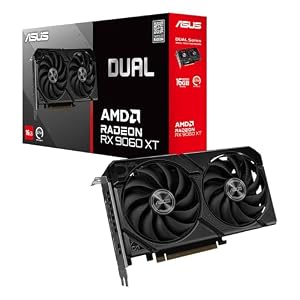
Recommended tier, 16GB
ASUS Dual Radeon RX 9060 XT 16GB
The recommended-tier card with double the VRAM the sheet asks for at that tier. Our model reads it at ~74 fps native 1440p on High, so FSR 4 is headroom rather than a crutch.
For the Ultra tier, the sheet names the RTX 5070 Ti and the RX 7900 XT. The 5070 Ti sits around $1,250 on Amazon as this is written and the RX 9070 XT, which trades blows with it in rasterized games and is a little behind in heavy RT, is around $830. In a game where Megalights runs on every card's RT hardware the gap is real but not four hundred dollars real. Our side-by-side goes through it.
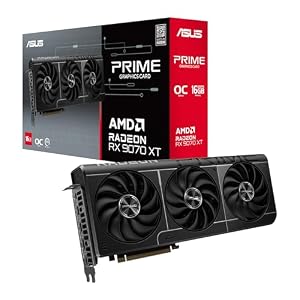
Ultra tier, the value route
ASUS Prime Radeon RX 9070 XT 16GB
DSOGaming's 1440p Ultra numbers put it a step behind the RX 7900 XTX with dips to 57; our model reads ~70 average. For 4K it is an upscaler card, same as the 5070 Ti the sheet names, for about $400 less.
Then the drive. The SSD requirement is not a suggestion: the Coalition's beta notes said hard-drive installs produced missing assets, stutter and crashes, and 115GB is the install today, before patches. If E-Day is going on the same drive as Modern Warfare 4's 115GB later this month, a 1TB boot drive is full. The Crucial P310 2TB is the cheapest PCIe 4.0 drive we would put a game library on, and SSD prices have been climbing all year, so there is no waiting-for-a-sale argument.
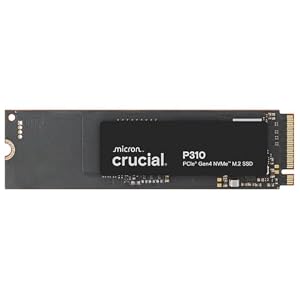
The 115GB problem
Crucial P310 2TB NVMe (PCIe 4.0)
7,100MB/s, no heatsink needed in a desktop, and two of this month's big shooters fit on it with room left. The Samsung 990 Pro 2TB is the nicer drive at about $390; for a game library the P310 is the better buy.
And the processor, only if yours is older than the minimum line. The recommended tier names a Ryzen 5 5600, which drops into any AM4 board that shipped with a Ryzen 1000, 2000 or 3000 chip after a BIOS update and costs about what a game does. On the Intel side an i5-12400F does the same job on a 600 or 700-series board.
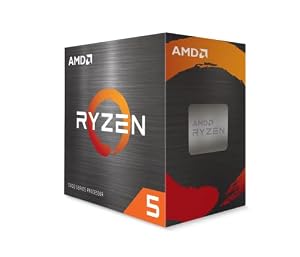
The $156 CPU fix
AMD Ryzen 5 5600
The exact chip on the recommended line, and a drop-in upgrade for the Ryzen 5 2600X the minimum names. In our model it feeds about 200 frames in this game, so it will never be the limit with any card under a 5080.
The game itself is $69.99 on Steam or as an Xbox and Windows digital code on Amazon, and the Amazon code is the Xbox PC app version rather than Steam, which matters if you care where your library lives. If you are not sure your machine clears the line, a single month of Game Pass Ultimate is about $23 and includes the PC version from day one. Play the first act, watch the frame-time graph in Intel's free PresentMon, and buy the card after, not before.
The short version
- Out October 6 on Steam, the Xbox PC app and Game Pass; number two on Steam's weekly top sellers, a 31,517 concurrent peak, Mostly Positive on Steam as of October 10.
- Hardware ray tracing is required at every tier. GTX cards and Radeons older than the RX 6000 series will not launch it. About one card selection in eight on our tools in the month before launch was one of those.
- Minimum RTX 2060 or RX 6600 for 1080p Medium at 60 with upscaling; recommended RTX 3060 Ti, RTX 5060 or RX 9060 XT for 1440p High; Ultra is an RTX 5070 Ti for 4K with upscaling. 12GB of RAM minimum, 16GB at the top, 115GB on an SSD, no exceptions.
- Native 4K Ultra is a 5090 job and native Ludicrous is nobody's job. High is where the stutter complaints stop.
- Shaders precompile, so no compilation stutter. Some traversal stutter, milder than Oblivion Remastered.
Found this useful? Pass it along:
Frequently Asked Questions
What are the minimum PC requirements for Gears of War: E-Day?
On the Steam listing: Windows 10 22H2, a Ryzen 5 2600X, Core i7-6850K or Core i5-10400, 12GB of RAM, 115GB on an SSD, and a hardware ray-tracing graphics card, with the RTX 2060, RTX 5050, RX 6600 and RX 9060 named. The Coalition's own sheet puts that tier at 1080p on Medium at 60 fps with upscaling on.
Can a GTX 1660 or GTX 1080 Ti run Gears of War: E-Day?
No. The game requires a GPU with hardware ray-tracing units and will not launch without one. Every GeForce GTX card and every Radeon from the RX 5000 series or older is excluded, regardless of how fast it is. An RTX 2060 or RX 6600 is the floor.
What PC do you need for Gears of War: E-Day at 1440p?
The recommended tier: Windows 11 25H2, a Ryzen 5 5600 or Core i5-11600K, 16GB of RAM and an RTX 5060, RTX 3060 Ti, RX 6700 XT or RX 9060 XT. The Coalition quotes 1440p on High above 60 fps with upscaling. Our model reads an RTX 3060 Ti at about 74 fps native on the middle preset, so the upscaler is headroom rather than a requirement at that tier.
Does Gears of War: E-Day stutter on PC?
It precompiles shaders on first launch, so the usual Unreal Engine 5 shader stutter is not the problem. DSOGaming reported some traversal stutter in its October 5 analysis, milder than Oblivion Remastered. Community reports split between no stutter and stutter at Ultra and above, which is where VRAM use spikes; High is where most of the complaints stop.
Is Gears of War: E-Day on Game Pass on PC?
Yes, day one on Game Pass through the Xbox PC app, and it is sold separately on Steam and the Microsoft Store at $69.99. A single month of Game Pass Ultimate is the cheapest way to find out whether your machine runs it before spending seventy dollars.