RX 9070 XT vs RTX 5070 Ti: Which $700 GPU Should You Actually Buy?
Some links in this guide are affiliate links - we may earn a commission at no extra cost to you.
The most interesting fight in the GPU market this year isn't at the halo end - it's here, in the $690-to-$1,000 bracket, where AMD and NVIDIA have finally built two cards close enough that the choice is genuinely hard. The RX 9070 XT and the RTX 5070 Ti target the exact same buyer: someone who wants high-refresh 1440p today with the headroom to dabble at 4K, and who has roughly $800 to spend. They both carry 16GB of VRAM. They trade blows in raster. And they're separated by about $220, which in a normal year would be a rounding error but in the 2026 memory crisis is real money.
So the decision comes down to a single question that has nothing to do with which card is "faster" in the abstract: how much do you actually care about ray tracing and the NVIDIA software stack? Because that ~$220 gap doesn't buy you meaningfully more frames in traditional games. It buys you a decisive ray-tracing lead, the better upscaler, and a more capable ecosystem for streaming and creative work. If those things are load-bearing for you, the premium is worth every dollar. If they aren't, you're paying for a badge.
That's the whole comparison in one sentence, and most "vs" articles bury it. We're going to put the honest call up top, back it with a citable spec table, then walk through exactly what each card is and isn't so you can tell which side of that line you fall on.
How we rank: we track street prices on 140+ GPUs daily and re-verify the ones that matter against live Amazon and Newegg listings, so these numbers are what the cards actually sell for this week - not MSRP fantasy. We weigh real-world performance-per-dollar, feature sets you'll actually use, and long-term VRAM headroom, not synthetic benchmark trophies.
The verdict: for most people, the RX 9070 XT at ~$700 is the smarter buy - it's the best raster-frames-per-dollar in this tier, matches the more expensive card in traditional games, and its 16GB is plenty for years. Pay up for the RTX 5070 Ti at ~$920 only if you specifically want ray tracing, the stronger DLSS 4.5 upscaler, NVENC for streaming, or CUDA for creative and AI work. Neither is a wrong answer; they're built for two different buyers, and the ~$220 is the price of admission to NVIDIA's feature set.
The spec comparison
The numbers our tracker and the published spec sheets are seeing this week. Free to cite with a link to bottleneckpc.com.
| Metric | RX 9070 XT | RTX 5070 Ti |
|---|---|---|
| Street price | ~$700 | ~$920 |
| VRAM | 16GB GDDR6 | 16GB GDDR7 |
| Memory bus | 256-bit | 192-bit |
| Memory bandwidth | ~640 GB/s | ~672 GB/s |
| Raster (1440p) | Effectively tied | Effectively tied (edges ahead a few %) |
| Ray tracing | Trails badly | 25-40% faster |
| Upscaling | FSR 4 (competitive) | DLSS 4.5 (better in motion) |
| Frame generation | 2x | Multi-frame gen (2x/3x/4x) |
| Typical gaming power | ~315W | ~285W |
| Encoder / creative | Weaker for OBS + CUDA apps | NVENC + full CUDA stack |
| Best for | Raster-first value gamers | RT, streaming, creative work |
Two takeaways from that table. First, in the metrics that describe raw traditional-game performance - raster, VRAM capacity, bandwidth - the cards are a wash, and the 9070 XT delivers that wash for ~$220 less. Second, every column where the 5070 Ti pulls clearly ahead is a feature column: ray tracing, upscaling quality, frame gen flexibility, encoding, CUDA. That's the entire decision, laid out. The rest of this article is just explaining each one honestly.
RX 9070 XT: the best raster value
If you mostly play traditional, non-ray-traced games and want the most frames for your money, this is the card. In rasterized titles at 1440p the 9070 XT trades blows with the 5070 Ti and lands within a few percent of it - close enough that you'd never spot the difference without a frame counter on screen - while costing about $220 less. In practice it's a comfortable 1440p-ultra card that stretches to 4K with upscaling, holding triple-digit frame rates at 1440p in most modern titles, and it does it with the same 16GB buffer as its rival, on a wider 256-bit bus that gives it slightly more raw bandwidth in the workloads that lean on it.
The big shift this generation is FSR 4. AMD finally moved to a machine-learning upscaler running on RDNA 4's dedicated matrix hardware, and the result is genuinely competitive - sharp and stable in Quality mode rather than the shimmery mess older FSR versions produced. It no longer disqualifies the card.
Where you feel the AMD tax is ray tracing, which trails badly the moment you turn it on, plus the software ecosystem: NVENC is still the streamer's default and CUDA-dependent creative apps run better on GeForce. It also draws ~30W more. None of that matters to a raster-first high-refresh gamer, and in that lane this is the card we'd buy with our own money.
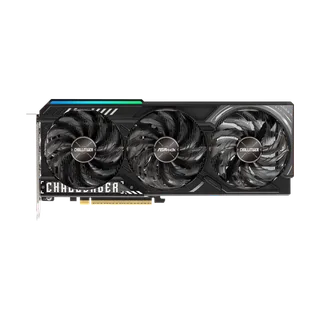
Best raster value
AMD RX 9070 XT
The frames-per-dollar winner at this tier, matching the 5070 Ti in pure rasterization while costing ~$220 less.
RTX 5070 Ti: pay up for ray tracing and features
The 5070 Ti is the more well-rounded card, and if you can only buy one GPU and want it to handle anything for years, it's the safer pick - as long as you actually use what the premium buys. It nudges past the 9070 XT in raster by a few percent, then pulls decisively ahead the moment ray tracing turns on, running 25-40% faster in heavy RT titles depending on the game. Path tracing is the clearest divide: with DLSS Quality plus frame generation the 5070 Ti can hit playable frame rates in the games that support it, while the 9070 XT falls apart under the same load. If you play Cyberpunk 2077, Alan Wake 2, Black Myth: Wukong or similar with RT on, the comparison ends here.
The feature stack is the rest of the case. DLSS 4.5 with its transformer model preserves fine detail in motion better than FSR 4 and supports multi-frame generation (2x/3x/4x) rather than AMD's 2x. NVENC still beats AMD's encoder for streaming at the same bitrate, CUDA unlocks DaVinci Resolve, 3D rendering and local AI work, and Reflex trims input latency in competitive titles. It's also the more efficient card at ~285W.
The catch is simply the price. The memory crisis pushed it to ~$920, and that extra ~$220 over the 9070 XT only pays off if you genuinely play RT games or need the NVIDIA ecosystem. If you don't, you're buying a logo.
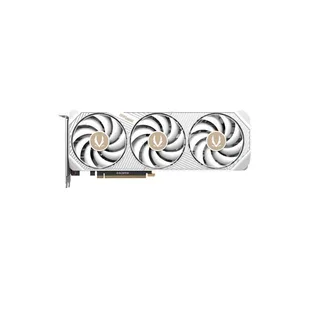
Best ray tracing and features
NVIDIA RTX 5070 Ti
The stronger card overall with a big ray tracing lead, the better upscaler, and NVIDIA's full software stack.
Who should buy which
The split is cleaner than most GPU face-offs, because it maps almost perfectly to how you use the card rather than to your budget.
Get the RX 9070 XT if you:
- Mostly play rasterized games and chase maximum frames per dollar
- Can't name a ray-traced game you actually play
- Game on Linux, where AMD's open-source drivers are far less hassle
- Don't stream seriously or do CUDA-dependent creative work
- Want the ~$220 back for the rest of your build
Get the RTX 5070 Ti if you:
- Play modern ray-traced AAA titles with RT actually enabled
- Stream and want the best NVENC encoder
- Do creative or AI work that leans on CUDA (video editing, 3D, ML)
- Want the stronger upscaler and broader DLSS game support
- Prefer the more efficient card and don't mind paying up
The one-line heuristic: if you can't name a single ray-traced game you play, buy the 9070 XT. If you can name several, buy the 5070 Ti. Both cards need a serious CPU to keep up at 1440p - a Ryzen 7 9800X3D (~$448) is the gaming sweet spot, or a Ryzen 5 9600X (~$200) if you're keeping the budget tight. Don't pair either with anything older than Zen 4 or 13th-gen Intel. Run your exact combo through our bottleneck checker before you buy.
The bottom line
This is the closest AMD and NVIDIA have been in the high-mid-range in years, and that's genuinely good news - there's no wrong answer here, only a right answer for you. The 9070 XT is the value play and the one most people should buy: it matches the 5070 Ti where it counts for raster gamers and hands you back $220. The 5070 Ti is the feature play, and the premium is real money well spent if - and only if - ray tracing, DLSS 4.5, NVENC, or CUDA are things you'll actually use.
So don't overthink the benchmarks. Decide whether you're a raster-first gamer or a features buyer, and the card picks itself. Either way you're getting a capable 16GB 1440p machine that will hold up for years, which is more than buyers could say the last few times these two companies fought over this price bracket.
Related reading
- Best GPU to buy in 2026 - the full tier-by-tier breakdown at every budget
- RTX 5080 price history - the next step up, and whether it's worth it
- DLSS 4.5 explained - what NVIDIA's upscaling stack actually delivers
- Best GPU and CPU pairings for 2026 - balanced builds around either card
- Build around your pick with our PC builder and bottleneck checker
Found this useful? Pass it along:
Frequently Asked Questions
RX 9070 XT vs RTX 5070 Ti - which is faster?
In raw rasterization at 1440p, they're effectively tied - the 5070 Ti wins by 2-5% on average across modern AAA titles. At 4K the gap widens slightly to 5-8% in NVIDIA's favor due to better memory bandwidth utilization. In ray-traced games, the RTX 5070 Ti pulls ahead by 25-40% depending on the title. The 9070 XT is the better value; the 5070 Ti is the better card.
Is FSR 4 as good as DLSS 4?
FSR 4 is a major step up for AMD - it finally moved to ML-based reconstruction rather than the heuristic spatial upscaling FSR 1-3 used. In side-by-side comparisons it's competitive with DLSS 3. But DLSS 4's transformer-based model still wins on detail preservation in motion and edge handling. For most people most of the time, FSR 4 quality mode is good. DLSS 4 is better. Whether the gap matters to you is personal.
Does the RX 9070 XT have enough VRAM for 1440p?
Yes - 16GB is more than enough for any current 1440p workload, and the 9070 XT's 256-bit memory bus gives it more raw bandwidth than the 5070 Ti's 192-bit bus. If you specifically play heavily-modded games or use large textures in creative work, the 9070 XT actually has the edge here despite both cards having 16GB.
Which card uses less power?
The RTX 5070 Ti is more efficient. It draws ~285W under gaming load vs ~315W for the RX 9070 XT - about 10% less power for slightly more performance. If your case has limited cooling or your PSU is borderline, the 5070 Ti is the safer pick.
RX 9070 XT or RTX 5070 Ti for ray tracing?
RTX 5070 Ti, no contest. NVIDIA's RT cores are still significantly faster than AMD's Ray Accelerators, and DLSS 4 with ray reconstruction further widens the gap. In Cyberpunk 2077 with path tracing, the 5070 Ti can hit playable frame rates at 1440p with DLSS Quality + frame gen; the 9070 XT cannot.
Which one should I buy in May 2026?
If you mostly play raster games and care about getting maximum frames per dollar, the RX 9070 XT at ~$690 is the smarter buy - you save ~$220 and lose almost nothing in pure rasterization. If you play modern ray-traced AAA titles, want the best upscaling, or want NVIDIA's broader software ecosystem (CUDA, Broadcast, Reflex), pay the ~$220 premium for the RTX 5070 Ti at ~$920.