Should I Get a 9950X3D2? Read This Before You Spend ~$900
Some links in this guide are affiliate links - we may earn a commission at no extra cost to you.
AMD spent three generations hearing the same complaint about its big X3D chips, and in April it finally shipped the fix. The Ryzen 9 9950X3D2 Dual Edition is the first desktop CPU to ship with 3D V-Cache beneath each of its two core clusters. Sixteen cores, 192MB of L3, 5.6GHz boost, and nothing left for the scheduler to get wrong.
It is a real engineering milestone. It is also, for most of the people typing its name into a search box, the wrong thing to buy. Those two facts live together comfortably, and AMD half-admits it: read their own product page and the audience it courts is people who build, render and compile for a living, with gaming second.
The short answer
Game only? Buy the Ryzen 7 9800X3D at ~$439 and spend the difference on your graphics card. Work and game on the same machine? The original 9950X3D at its ~$699 list price (no live listing on our tracker right now) quietly became the value pick of the whole high end the day the Dual Edition launched. The 9950X3D2, listing at ~$899, is for the narrower group whose all-core workloads are themselves cache-hungry, or who simply want the argument to be over.
Every one of those chips ends this article with a buy link. The job here is matching you to the right one.
What the Dual Edition actually fixes
The original 9950X3D was two eight-core clusters with V-Cache under one of them. Games wanted the cached cluster; heavy multi-core work wanted all sixteen cores; Windows had to know which was which. On a current install with current chipset drivers this worked far better than the internet's folklore suggests, but it was real machinery that could go wrong, and on a fresh build it occasionally did.
The Dual Edition deletes the problem instead of managing it. Cache under both clusters means there is no wrong place for a game to land. That is worth something. The question is what it is worth to you, and our own numbers make that uncomfortably clear.
What our scores say about the gap
We track a gaming score and an all-core benchmark score for every CPU in the catalog, and the three chips in this decision line up like this: the 9950X3D2 games at 99 and benches 97. The original 9950X3D games at 98 and benches 96. The 9800X3D games at 99 and benches 88.
Read the gaming column first: one point separates all three. That is not a rounding accident, it is how games work. Past eight cores fed by a big cache, current engines have nothing left to ask a CPU for, and the bottleneck moves to the graphics card where it belongs. You can check that claim against your own card in about ten seconds - put the 9950X3D2 into the bottleneck calculator next to whatever GPU you own, then swap in the 9800X3D and watch the verdict not move.
Now read the bench column, because that is where the ~$460 gap between top and bottom lives. Rendering, compiling, encoding, simulation - the sixteen-core chips pull far ahead, and the Dual Edition's universal cache adds a real edge in the subset of that work that is itself cache-sensitive.
So the purchase decision is not "which chip is best". It is "which column is your life in".
If you only game: buy the 9800X3D and stop reading
One admission before the sales pitch: we are a data shop, not a test lab. We track scores, prices and stock across the catalog daily, and the pattern below comes from that data plus published benchmarking, not from machines on our own bench.
The pattern is still unambiguous. Eight cached cores deliver flagship frame rates, and everything above them in the range is productivity hardware wearing a gaming halo.
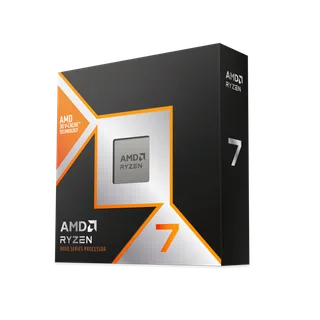
The gaming answer
AMD Ryzen 7 9800X3D
Ties the ~$899 flagship in our gaming score at half the price. The ~$460 you keep is over half of an RTX 5070, which will do more for your frames than any CPU on this page.
If that ~$460 saving has you wondering what card it buys, our GPU pairing guide walks the whole budget ladder, or let the build generator spend it for you in context.
If you work and game: the original 9950X3D is suddenly the deal
Here is the opinion this article exists for: the launch of the Dual Edition made the chip it replaced the smartest buy in the high end, and almost nobody is framing it that way.
The original 9950X3D still benches within a point of the new flagship in our scoring. Its one genuine weakness, the asymmetric cache, is a solved problem on any maintained Windows install - keep the chipset drivers current and games park where they should. What changed in April is the price gap: roughly $200 now separates it from the Dual Edition on list price, for a difference you will mostly fail to measure.
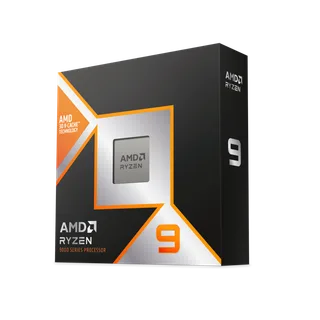
The work-and-play value
AMD Ryzen 9 9950X3D
Sixteen cores that bench within a point of the Dual Edition, games within a point of everything, and lists ~$200 less than the new flagship.
That upgrade-path line in the pros is not filler. AM5 means you can take the ~$699 chip today and drop the Dual Edition into the same board in two years if your workload grows into it, likely at a friendlier price than launch.
If you are the person it was built for: fine, here it is
Some readers cleared every gate above: sixteen cores earn their living, the workloads are cache-bound, the machine also games, and the difference between 96 and 97 in a bench score is measured in billable minutes. For that reader the Dual Edition is not a luxury, it is the first chip that stops making them choose.
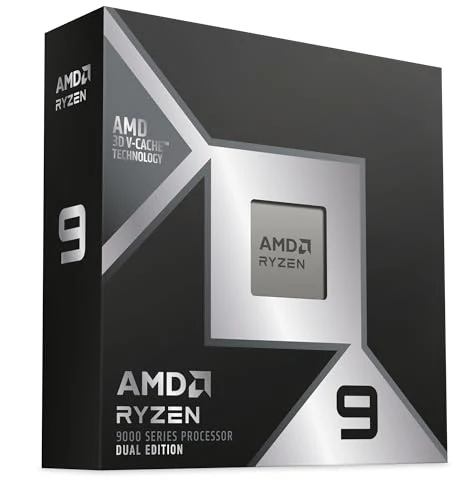
The no-compromise chip
AMD Ryzen 9 9950X3D2 Dual Edition
V-Cache under both clusters, 192MB of L3, and the scheduling question deleted from your life. Built for the machine that renders all day and games all night.
Pair it like the flagship it is: our best GPU for the 9950X3D2 list ranks every current card against it, and at this budget the answer starts with a 5080.
The pattern under all of this
AMD's product ladder now does something almost elegant: every X3D chip games identically, and the price climbs purely with how much work your machine does when you are not playing. Once you see the ladder that way, the ~$900 question answers itself. Buy the rung your workload stands on, not the one at the top, and if the rung is "I play games", it costs ~$439 and leaves enough behind for the graphics card that actually moves your frame rate.
Found this useful? Pass it along:
Frequently Asked Questions
Is the Ryzen 9 9950X3D2 good for gaming?
It is excellent at gaming - that is not the question to ask. In our scoring it games within a point of chips costing half as much, because games stop caring past eight cache-fed cores. The question is whether you also do the heavy multi-core work that uses the other half of the chip. If yes, it is the no-compromise pick. If not, you are paying roughly double for frames you already had.
What is the difference between the 9950X3D2 and the 9950X3D?
Cache placement. The original 9950X3D put 3D V-Cache under one of its two core clusters, so games had to land on the right half of the chip to benefit. The Dual Edition stacks cache under both clusters - 192MB of L3 in total - which removes the scheduling asymmetry entirely. Games, however, were already landing on the cached cluster correctly on a maintained system, which is why the real-world gaming gap between the two is small.
Is the 9950X3D2 better than the 9800X3D for gaming?
Barely, and not in a way you will feel. Both sit at the top of our gaming score, because eight cores with V-Cache is already enough for every current engine. The 9950X3D2 wins convincingly at rendering, compiling and other all-core work - that is what the second cluster and the price are for.
Is the 9950X3D2 worth $900?
For a developer or creator whose machine earns money and who games on the same box, yes - it is the first chip where the work cores and the game cache stop being a trade-off. For everyone else the honest answer is no: the original 9950X3D does the same dual-duty job for a couple hundred less, and a pure gaming build should not spend past the 9800X3D at all.