Best GPU to Buy in 2026: What to Actually Get at Every Budget
Some links in this guide are affiliate links - we may earn a commission at no extra cost to you.
Buying a graphics card in 2026 means making peace with a hard truth: they cost what they cost, and what they cost went up again this summer. The brief post-launch calm evaporated when the memory shortage wrecking RAM and SSD prices came for GDDR too, so the RTX 5090 that flirted with $3,600 in the spring now runs north of $6,500 where it can be found at all, and even mid-range cards crept up a notch. Waiting for a crash is a losing game - memory costs are the floor under GPU pricing, and that floor isn't dropping until 2027 at the earliest.
The upside is that the actual lineup is the best it's been in years. AMD's RX 9070 series finally makes NVIDIA sweat on price, Intel's Arc B580 broke the sub-$300 logjam, and DLSS 4.5 versus FSR 4 is a genuine fight now instead of a blowout. Whatever your budget, there's a card that makes sense. You just have to buy the right one, and not overpay for a badge or get trapped by a stingy VRAM buffer that chokes two years from now.
How we rank: we track street prices on 140+ GPUs daily and re-verify the ones that matter against live Amazon and Newegg listings, so the numbers here are what cards actually sell for this week - not MSRP fantasy. Picks weigh real-world performance-per-dollar, VRAM longevity, and features you'll actually use.
The short version: for most people the smart buy is the RX 9060 XT 16GB at ~$520 - and the 16GB buffer is the whole point, so avoid the 8GB version of either brand. If you've got 1440p-high ambitions and don't live for ray tracing, the RX 9070 XT at ~$750 is the best raster-per-dollar on the market. Ray-tracing diehards pay up for the RTX 5070 Ti, and you only reach for a 5090 if money genuinely isn't a factor. The full reasoning, tier by tier, is below.
Current GPU street prices, 18 September 2026
Cheapest in-stock first-party listing on our tracker as of this update. Free to cite with a link to bottleneckpc.com.
| GPU | Street price | vs. launch MSRP |
|---|---|---|
| RTX 5090 | $6,500+ where findable (no tracked SKU alive) | +225% |
| RTX 5080 | ~$1,250 at Newegg ($1,600+ on Amazon) | +25% |
| RTX 5070 Ti | ~$1,120 | +50% |
| RTX 5070 | ~$860 | +57% |
| RTX 5060 Ti 16GB | ~$830 (one listing) | +93% |
| RX 9070 XT | ~$750 | +25% |
| RX 9070 | ~$590 | +7% |
| RX 9060 XT 16GB | ~$520 | +49% |
| RTX 5060 | no live listing (last seen ~$410) | +37% |
| Intel Arc B580 | ~$300 | +20% |
A correction, since this page asks to be cited. Until an August update this table showed the RTX 5060 Ti 16GB at ~$400 and called it the one current card selling below MSRP. That was wrong. The figure had come from an 8GB listing bound to the 16GB card in our own price data; once the two were separated the real 16GB price was ~$580 at the time, 35% over launch rather than 7% under it, and it has climbed further since. The recommendation built on that number has been rewritten below rather than quietly nudged.
What each card costs per unit of performance
Street price divided by our 0-100 gaming score. Lower is better, and this is the number that actually decides a purchase.
| GPU | Price | Score | $ per point |
|---|---|---|---|
| RTX 5060 (last seen, no live listing) | $410 | 64 | $6.41 |
| RX 9070 | $590 | 76 | $7.76 |
| RX 9060 XT 16GB | $520 | 62 | $8.39 |
| RX 9070 XT | $750 | 84 | $8.93 |
| RTX 5070 | $860 | 82 | $10.49 |
| RTX 5060 Ti 16GB (one listing) | $830 | 72 | $11.53 |
| RTX 5070 Ti | $1,120 | 87 | $12.87 |
| RTX 5080 (cheapest retailer) | $1,250 | 93 | $13.44 |
| RTX 5090 (where findable) | $6,500 | 99 | $65.66 |
The 5090 costs more than eight times as much per unit of performance as the RX 9070, the best per-point card with a live listing. That is not an argument against buying one, since halo cards were never about value, but it is worth seeing the size of the gap before spending six and a half thousand dollars.
The more useful comparison sits in the middle. The RX 9070 XT at ~$750 delivers 97% of an RTX 5070 Ti's performance for 67% of its price. If you are choosing between those two and ray tracing is not your priority, that is close to a settled argument.
Best under $300: Intel Arc B580
For years the sub-$300 slot was a graveyard of 8GB cards that were obsolete the day you bought them. Intel changed that. The Arc B580 pairs a competent 1080p GPU - roughly RTX 4060 raster performance, a bit behind in ray tracing - with 12GB of VRAM, and that memory is the whole story at this price. Modern textures are hungry: an 8GB card at 1080p high in something like the latest Call of Duty or Indiana Jones and the Great Circle will start swapping textures and stuttering, while the B580 just keeps rendering. It comfortably holds 60+ FPS at 1080p high in most current AAA games and leans on XeSS or FSR for the heaviest ones.
The honest catch is drivers. Intel has come an enormous way since the A-series launch - day-one support for big releases is now the norm - but you'll still hit the occasional rough edge in older or VR-modded titles that nobody at Intel prioritized. If your library is mostly current games and esports, that's a non-issue and the B580 is the best money you can spend down here. NVIDIA and AMD simply don't have an answer, because shipping 12GB at $300 isn't profitable for them in this memory market.
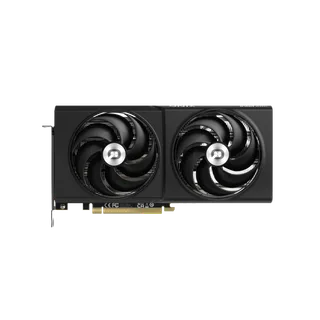
Best under $300
Intel Arc B580 (12GB)
The only sub-$300 card with 12GB - the budget pick that won't run out of VRAM in two years.
Best mainstream value: RX 9060 XT 16GB
This slot used to belong to the RTX 5060 Ti 16GB, on the strength of a price that turned out not to be real. At ~$830 - and that is a single in-stock listing on our tracker, a scarcity ask - the 5060 Ti is no longer the mainstream value pick, and pretending otherwise would just be defending an old sentence.
The RX 9060 XT 16GB at ~$520 takes it instead, and the arithmetic is not close: $8.39 per performance point against the 5060 Ti's $11.53, with the same 16GB buffer, for ~$310 less. The 9060 XT carries a +49% memory-crisis tax over launch; the 5060 Ti's lone remaining listing sits at +93%, a scarcity ask rather than a market price. Either way it is simply more card for the money.
What you give up is the NVIDIA feature stack. FSR 4 has closed most of the gap with DLSS 4.5 but not all of it, and ray tracing remains NVIDIA's to lose. If you play with RT on by default, pay the difference and read the next section instead. If you play raster games at 1080p and 1440p, which is most people, the 9060 XT is the better buy today.
The 16GB warning still stands and now applies to both brands: an 8GB card at this tier is a two-year card. Check the box.
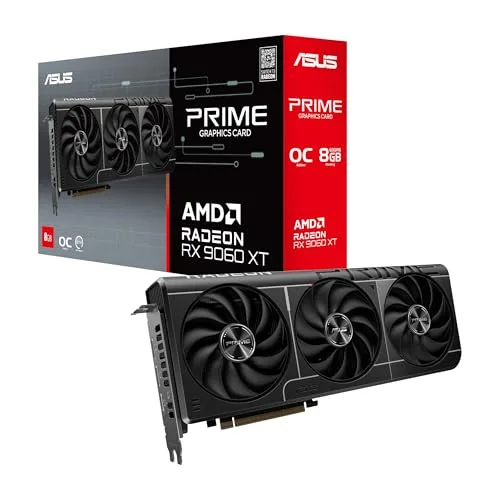
Best mainstream value
AMD RX 9060 XT 16GB
Better performance per dollar than the 5060 Ti, same 16GB buffer, ~$310 less. Buy the 16GB, never the 8GB.
Where that leaves the RTX 5060 Ti 16GB
Still a good card, no longer a bargain. At ~$830 - one in-stock listing on our tracker, a scarcity price - it is ~$310 more than the 9060 XT for slightly better ray tracing and the DLSS 4.5 feature set including Multi Frame Generation. That is a defensible trade if you value those things; it is not the automatic recommendation it was when we thought it cost $400. If you want it, buy the 16GB and nothing else - the 8GB version shares the name, and it is the reason our own price data went wrong.
The 1440p step-up: RTX 5070
The RTX 5070 sits in an awkward spot, and it's worth being honest about why. It's a clean 1440p card - roughly 20% quicker than the 5060 Ti, with the full Blackwell feature set and excellent DLSS 4.5 - and if you found one at MSRP it'd be an easy call. At ~$860, though, it's asking about as much as the 5060 Ti 16GB's lone ~$830 listing and more than the RX 9070 XT at ~$750, and it does that with 12GB of VRAM against 16GB on both. That's the quiet problem: 12GB is fine today at 1440p, but it's the spec most likely to feel tight in 2027-2028 titles, which is exactly the horizon someone spending $850 is buying for.
So the 5070 makes sense in a narrow lane: you specifically want 1440p high-refresh in current AAA games, you value NVIDIA's software stack, and the RX 9070 XT's weaker ray tracing bothers you. For a lot of buyers, though, the smarter move is the RX 9070 XT, which at ~$750 now costs less than the 5070 and gets you 16GB plus more raster - stated plainly, at ~$860 against a ~$750 9070 XT the 5070 is hard to recommend on value. The 5070 is a good card boxed in by its own price and its neighbors.
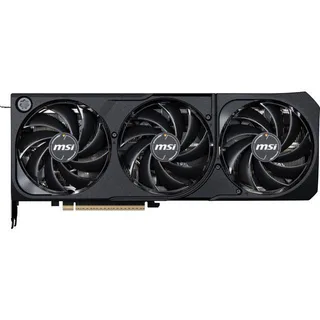
1440p high-refresh
NVIDIA RTX 5070 (12GB)
A clean 1440p card in an awkward price spot - good, but at ~$860 it now costs more than the 16GB RX 9070 XT.
Best raster value: RX 9070 XT
If you mostly play traditional (non-ray-traced) games and want the most frames for your money, this is the card. The RX 9070 XT trades blows with the RTX 5070 Ti in raster - the 5070 Ti edges it by a few percent - but does it for around $370 less, with the same 16GB of VRAM. In practice that's a comfortable 1440p-ultra card that stretches to 4K with FSR, holding triple-digit frame rates at 1440p in most modern titles. And FSR 4 finally closed the gap that used to make AMD an easy pass: it's genuinely competitive with DLSS now, sharp and stable rather than the shimmery mess of a couple generations ago.
Where you feel the AMD tax is ray tracing and the software ecosystem. Heavy RT titles lean 25-40% in NVIDIA's favor, the NVENC encoder is still the streamer's default, and CUDA-dependent creative apps run better on GeForce. None of that matters if you're a raster-first gamer chasing high refresh - in that lane the 9070 XT is the best-value card in the whole stack, and it's the one we'd buy with our own money at this price point.
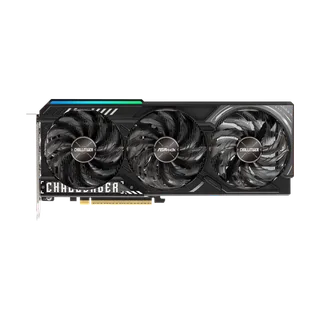
Best raster value
AMD RX 9070 XT (16GB)
Best raw frames per dollar in the market. FSR 4 finally competes with DLSS - the raster gamer's pick.
Best ray tracing under $1,200: RTX 5070 Ti
The 5070 Ti is the most well-rounded card of the generation, and if you can only pick one GPU and forget about it for four years, it's the one. It nudges past the RX 9070 XT in raster and pulls decisively ahead the moment ray tracing turns on - 25-40% faster in heavy RT titles like the path-traced modes in Cyberpunk 2077 or Alan Wake 2 - all with 16GB of GDDR7 and the full DLSS 4.5 Multi Frame Gen suite. Add NVIDIA's better encoder for streaming and the broader software stack (CUDA, Broadcast, Reflex), and it's the closest thing to a no-compromise 1440p/entry-4K card that doesn't cost 5080 money.
The catch is simply that the memory crisis pushed it up from ~$750 in the spring to ~$1,120 now, which stings, and the extra ~$370 over the 9070 XT only pays off if you actually play ray-traced games or need the NVIDIA ecosystem. If you don't, the AMD card is the smarter spend. If you do - or you want the one-and-done pick - this is the card, and the price premium buys you real, visible performance rather than just a logo. One caveat: at the cheapest retailer we track the 5080 is only ~$130 more, so if that ~$1,250 listing is in stock the step up is small.
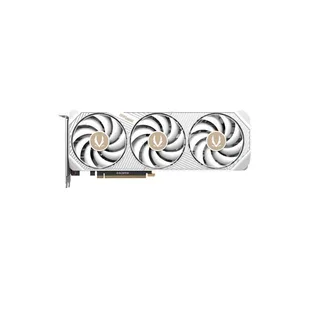
Best ray tracing under $1,200
NVIDIA RTX 5070 Ti (16GB)
The one-and-done pick. Beats the 9070 XT decisively the moment ray tracing turns on.
The cheapest real 4K card: RTX 5080
Here's where the money starts to get serious, and where you have to decide whether 4K is actually your goal or just something you'd like on paper. The RTX 5080 is roughly 25-30% faster than the 5070 Ti at 4K, and it's the first card in the stack that plays modern games at 4K with ray tracing on and still holds a comfortable frame rate - usually 60-90 FPS at 4K high with DLSS doing some of the lifting. For a genuine 4K gamer who isn't willing to pay 5090 money, this is the sensible ceiling.
Two honest caveats. First, ~$1,250 at the cheapest retailer we track (and $1,600+ on Amazon) is a lot, and it's still only a 16GB card - fine for gaming today, but not the generous buffer you'd hope for at this price. Second, its whole appeal is being the reasonable stop before the 5090's price goes up fivefold for a fraction more performance. If you're a 1440p player who thinks you might dabble in 4K, the 5070 Ti will save you ~$130 at the cheapest retailer we track (several hundred against Amazon's 5080 floor) and cover you. The 5080 is for people who play at 4K, know it, and want it to just work without remortgaging anything.
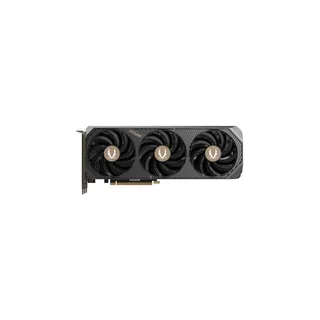
Cheapest real 4K card
NVIDIA RTX 5080 (16GB)
The sane stop before the 5090's price goes vertical. The first genuinely comfortable 4K + ray tracing card.
The halo product: RTX 5090
The RTX 5090 is the fastest consumer GPU ever made, the only card that plays 4K path tracing at 60+ FPS without heroic upscaling, and it comes with 32GB of VRAM that's overkill for games but a real draw for local AI work. It's also north of $6,500 where it can be found at all - no tracked SKU is alive on our tracker, and the retail listings that exist run ~$6,700-9,600 - which is more than 3x its own MSRP and roughly five times a 5080 for something like 30% more gaming performance. Every dollar-per-frame calculation says this is a terrible deal, and every dollar-per-frame calculation is beside the point.
Because that's exactly what a halo product is: it's not sold to be sensible, it's sold to be the best, and it's priced for buyers who genuinely don't weigh the cost. If you're doing the math on whether you can afford it, that's your answer - buy the 5080 or below and spend the difference on the rest of your build. If price truly isn't a factor and you want the fastest thing on the planet for 4K, path tracing, or serious AI workloads, this is it, and nothing else comes close. Just go in clear-eyed that you're paying a steep tax for the last 30%.
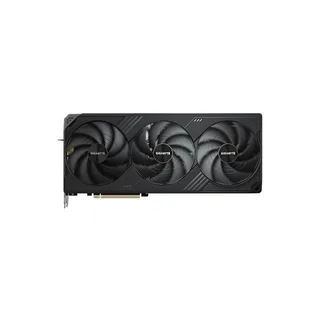
Halo product
NVIDIA RTX 5090 (32GB)
The fastest GPU on the planet, priced like it. Only for buyers who genuinely don't weigh the cost.
What to skip in 2026
Being the authority means telling you what not to buy, too. A few cards we'd actively steer you away from right now:
- RTX 5060 8GB and RTX 5060 Ti 8GB. Same silicon as the cards worth owning, hamstrung by half the memory. The 8GB buffer already stutters in current titles; in two years it'll be genuinely limiting. The tiny saving isn't worth it - the 16GB 5060 Ti is the floor for a card you want to keep.
- Last-gen RTX 4070 / 4070 Super at full new-stock prices. Fine cards, but at what remaining stock costs they're beaten by the RX 9060 XT 16GB on value and by the RTX 50 cards on features. A used 4070 under $400 can still make sense; a full-price new one doesn't.
- Used RTX 30-series at near-MSRP. The used 3070/3080 market stayed stubbornly expensive through years of shortages. A new 5060 Ti 16GB outperforms a used 3080, adds current features, and comes with a warranty.
- Anything older than RTX 30-series, bought new. GTX 16-series and RTX 20-series cards still on shelves are priced like it's 2020. Don't pay 2020 prices for 2020 performance in 2026.
Don't forget the rest of the build
A GPU doesn't run on its own, and the memory crisis inflated everything else too - so budget for it before you fall in love with a card:
- DDR5 RAM: a 32GB DDR5-6000 kit now runs ~$400-600 (the cheapest kit on our tracker is ~$395), up from ~$200 in 2024. This is the single biggest jump.
- NVMe SSDs: NAND spiked as well - a 2TB Gen 4 NVMe drive is ~$360-390.
- AM5 motherboards: B650/B850 boards start ~$160, X870 boards ~$240.
- Power supply: a quality 850W Gold unit is $130-160.
- Case: a solid mid-tower case runs $80-130.
Put it together and a complete RTX 5070 Ti / Ryzen 7 9800X3D build lands around $2,800-3,100 with a decent case - noticeably more than the same machine cost in 2024, almost entirely because of memory and storage. If you want the full parts list at your exact budget with live prices, our build-a-pc tool does the math for you.
What CPU to pair with each tier
The wrong CPU throttles the card you just paid for. Rough pairings that keep things balanced:
- Arc B580 / RTX 5060 Ti: Ryzen 5 7600X (~$210) or Ryzen 5 9600X (~$220).
- RTX 5070: Ryzen 5 9600X (~$220) or Ryzen 7 7700X (~$249).
- RX 9070 XT / RTX 5070 Ti: Ryzen 7 9800X3D (~$450) or Ryzen 7 7800X3D (~$389) - the X3D cache is worth it here.
- RTX 5080: Ryzen 7 9800X3D (~$450), the gaming sweet spot.
- RTX 5090: Ryzen 7 9800X3D for pure gaming, or Ryzen 9 9950X (~$510) if you also do heavy productivity.
Not sure your specific combo is balanced? Run it through our free bottleneck checker for real FPS estimates at your resolution before you buy.
The bottom line
2026 is an expensive year to build, but it's a genuinely good one to choose - the AMD-versus-NVIDIA fight means every tier has a card worth owning. If we had to boil it down: most people should stop at the RX 9060 XT 16GB and be happy; 1440p-high raster gamers should take the RX 9070 XT; ray-tracing devotees pay up for the 5070 Ti; and only genuine 4K players need to spend past $1,200.
The one thing not to do is wait. Memory costs are the floor under all of this, and that floor isn't cracking before 2027 - and NVIDIA's quiet 2026 means next-gen is 9-12 months out at the earliest. The hardware on shelves today is good for years. Buy the right card for your budget, pair it sensibly, and go play.
Related reading
- RX 9070 XT vs RTX 5070 Ti - the $750-vs-$1,120 showdown in full
- RTX 5080 price history - how the high end got here
- DLSS 4.5 explained - what NVIDIA's software stack actually delivers
- NVIDIA's mid-range falling apart - the broader 2026 GPU picture
- Best GPU and CPU pairings for 2026 - balanced builds at every budget
Found this useful? Pass it along:
Frequently Asked Questions
What's the best GPU to buy right now?
It depends on budget. Under $300, the Intel Arc B580 is the best value. Around $520, the RX 9060 XT 16GB is the mainstream sweet spot. At ~$750 the RX 9070 XT is the best raster value and now undercuts the RTX 5070 (~$860) with 16GB; at ~$1,120 the RTX 5070 Ti is the pick for ray tracing. The RTX 5080 (~$1,250 at the cheapest retailer we track, $1,600+ on Amazon) is the cheapest real 4K card, and the RTX 5090 (north of $6,500 where findable) is the halo product if money is no object.
Has GPU pricing improved in 2026?
No - it got worse through mid-2026. Early in the year most cards had eased off launch highs, but the 2026 memory/NAND crunch and a GPU supply squeeze pushed street prices back up. The RTX 5090 went from ~$3,600 in spring to north of $6,500 where it can be found at all, and the RTX 5070 Ti from ~$750 to ~$1,120; even the RX 9070 XT at ~$750 still sits about 25% above its launch price. Buying sooner rather than later is the safer bet while memory costs stay elevated.
Should I wait for next-gen GPUs?
Probably not. NVIDIA didn't announce new GPUs at CES 2026 (first time in 5 years) and the RTX 50 Super refresh reportedly slipped to CES 2027. The next real lineup won't arrive before Q1 2027. AMD's RX 9070 series is the current generation. Buying now and skipping a generation is the smart move - and prices aren't dropping while the memory crisis holds.
RTX 5060 Ti 16GB or RTX 5070 - which is the better value?
At current prices the RX 9060 XT 16GB (~$520) is the better value for most buyers; the RTX 5060 Ti 16GB is down to a single in-stock listing on our tracker at ~$830, a scarcity price. The RTX 5070 at ~$860 is meaningfully faster than either and is the pick if you want 1440p high settings in modern AAA titles - though at that money the RX 9070 XT (~$750, 16GB) is the stronger buy unless you need DLSS.
Is the RTX 5090 worth $6,500 or more?
Only if money is truly no object. The 5090 is the fastest consumer GPU ever made and the only viable choice for 4K path tracing at high frame rates. But $6,500 and up - no tracked SKU is alive on our tracker, and the retail listings that exist run ~$6,700-9,600 - is wildly disproportionate to the performance gain over the ~$1,250 RTX 5080. Buy the 5090 if you have to have the best. Otherwise the 5080 covers the same use cases at a fraction of the price.
Should I buy AMD or NVIDIA?
Both make sense at different price points. AMD wins on raw value (RX 9070 XT at ~$750 is the best $/raster-frame in the market). NVIDIA wins on ray tracing, DLSS 4.5, and software ecosystem. If you don't play heavy RT titles, save the money and go AMD. If you do, the NVIDIA premium is worth it.