NVIDIA's Mid-Range Is Falling Apart - Here's What to Buy Instead
Some links in this guide are affiliate links - we may earn a commission at no extra cost to you.
NVIDIA's mid-range used to be the safe default. You bought an xx60 or xx70 card, it did the job, and nobody thought twice about it. That's not the situation in 2026. The 2026 memory crisis that wrecked RAM and SSD prices came for GDDR7 too, and NVIDIA's answer was to quietly starve the parts that need the most memory. The 16GB RTX 5060 Ti keeps vanishing from shelves, the 8GB version that stays in stock is a VRAM trap the day you buy it, and the RTX 5070 Ti has crept from a $749 launch price up to around $1,120. The whole $400-800 band, the exact range where most people actually shop, got squeezed.
What makes this more than a pricing gripe is that NVIDIA left a hole, and AMD walked straight into it. The RX 9070 and 9070 XT both ship with 16GB of VRAM at prices NVIDIA can't touch right now, the drivers are genuinely good, and FSR 4 finally turned upscaling into a real fight instead of a reason to pay the NVIDIA tax. For a raster-first gamer, the value math has flipped hard toward Radeon.
None of this is going to un-happen soon. Memory pricing is expected to stay elevated into 2027, so the "wait for it to get better" plan is a losing one. The right move is to buy the card that gives you the most usable frames and enough VRAM to last, and for most people in this range that card now wears a Radeon badge.
How we rank: we track street prices on 140+ GPUs daily and re-verify the ones that matter against live Amazon and Newegg listings, so the numbers here are what cards actually sell for this week, not MSRP fantasy. Picks weigh real-world performance-per-dollar, VRAM longevity, and features you'll actually use.
The short version: in the mid-range the smart buy is the RX 9070 XT at ~$750 - 16GB of VRAM, the best raster-per-dollar in the market, and FSR 4 that finally competes. On a tighter budget the RX 9070 at ~$590 gives up little and keeps the 16GB buffer. Only pay up to the RTX 5070 Ti at ~$1,120 if you genuinely play heavy ray-traced games or need DLSS and the NVIDIA software stack. The 8GB cards are a trap at any price. The full reasoning is below.
Mid-range GPUs at a glance, September 2026
These are the numbers our tracker is seeing this week. Free to cite with a link to bottleneckpc.com.
| Card | VRAM | Street price | Best for |
|---|---|---|---|
| RX 9070 XT | 16GB | ~$750 | Best raster value, 1440p ultra |
| RX 9070 | 16GB | ~$590 | 1440p on a tighter budget |
| RTX 5070 Ti | 16GB | ~$1,120 (one live listing) | Ray tracing + DLSS, one-and-done |
| RTX 5070 | 12GB | ~$860 | NVIDIA raster at 1440p, tighter VRAM |
| RTX 5060 Ti 16GB | 16GB | ~$830 (one live listing) | Was the mainstream value pick - not at this ask |
| RTX 5060 Ti 8GB | 8GB | ~$400 where still listed | Skip - out of VRAM on arrival |
The pattern is hard to miss: at $590-750 you get 16GB from AMD, while the nearest NVIDIA cards ask ~$860 for 12GB or ~$1,120 for 16GB. That gap is the whole story of this range in 2026.
Best raster value: RX 9070 XT
Start with why the NVIDIA options here disappoint, because it explains the pick. The 16GB RTX 5060 Ti keeps selling out, the 8GB version is hamstrung on VRAM, and the 5070 Ti climbed to ~$1,120. That leaves a wide-open lane, and the RX 9070 XT owns it. It launched at $599 with 16GB of VRAM and RDNA 4, and reviews backed it up - GamersNexus found it trading blows with the RTX 5070 Ti in rasterization, and it runs roughly 11% ahead of the RTX 5070. At ~$750 street it isn't at MSRP, but it's a lot closer to list than anything NVIDIA is putting in this range, and it beats the 5070 Ti on raw frames per dollar by a wide margin.
The 16GB buffer is the quiet superpower. While the 8GB 5060 Ti already bumps into VRAM walls in current titles, the 9070 XT has headroom to spare for years - that's a comfortable 1440p-ultra card that stretches to 4K with upscaling. And FSR 4 finally closed the gap that used to make Radeon an easy pass: it's sharp and stable now, genuinely competitive with DLSS rather than the shimmery mess of a couple generations ago. Where you still feel the AMD tax is heavy ray tracing and the software ecosystem, but if you're a raster-first gamer chasing high refresh, this is the card we'd spend our own money on.
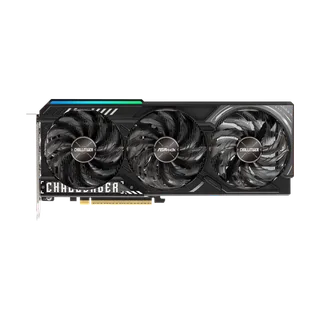
Best raster value
AMD RX 9070 XT
Best raw frames per dollar in the mid-range, with 16GB and FSR 4 that finally competes.
Best value under $600: RX 9070
If the XT is a stretch, the plain RX 9070 gives up surprisingly little. Same RDNA 4 architecture, the same crucial 16GB of VRAM, just slightly lower clocks and a bit less performance - and at ~$590 it lands well under the awkwardly-priced RTX 5070. Against the RTX 5070 in particular it's the sharper buy for most people: the 5070 asks ~$860 with only 12GB, so you're paying ~$270 more for less memory and roughly comparable raster. The 9070 stays a step behind its own XT sibling, but it's widely available and it's the cleanest way into 16GB, 1440p-capable gaming without crossing $700.
The honest caveat is the same one that applies to the whole Radeon stack: ray tracing trails NVIDIA, and if you lean on DLSS-supported RT titles you'll feel it. But for a 1440p player who mostly runs raster games and wants the memory headroom to keep the card for years, the 9070 is the value anchor of this range. It's the card to grab when the XT's extra ~$150 doesn't fit the budget and you refuse to be talked into an 8GB dead end.
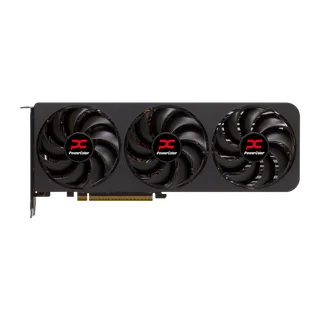
Best value under $600
AMD RX 9070
Same 16GB as the XT for less money - the cleanest way into 1440p without an 8GB compromise.
When the NVIDIA premium is justified: RTX 5070 Ti
There is a real case for spending up, and it's worth being honest about it. The RTX 5070 Ti nudges past the RX 9070 XT in raster and then pulls decisively ahead the moment ray tracing turns on - expect it to lead by roughly 25-40% in heavy RT titles like the path-traced modes in Cyberpunk 2077 or Alan Wake 2. It carries the same 16GB of VRAM, plus the full DLSS 4 Multi Frame Gen suite, NVIDIA's stronger NVENC encoder for streaming, and the broader software stack that CUDA-dependent creative apps still prefer. If you can only buy one GPU and want it to feel current for four years, this is the well-rounded pick.
The catch is the price. The memory crunch pushed it from a $749 launch up to ~$1,120, which is ~$370 over the 9070 XT, and that premium only pays off if you actually use what it buys. Play a lot of ray-traced games, stream, or lean on the NVIDIA ecosystem, and the extra money returns real, visible performance rather than a logo. Don't touch ray tracing and stick to raster? Then the 9070 XT is the smarter spend and the 5070 Ti is quietly overpriced for you. Supply is also still tighter than AMD's - our tracker shows a single live listing as we write - so if you find one anywhere near $1,000, that's about as good as this card gets right now.
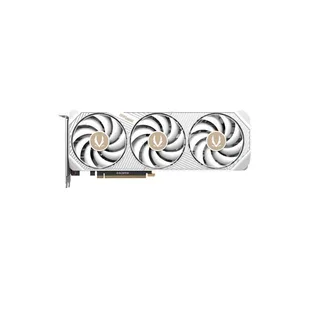
When you need ray tracing
NVIDIA RTX 5070 Ti
The one-and-done pick - beats the 9070 XT decisively once ray tracing turns on, if the ~$370 premium fits.
Why this is happening
One word: memory. Samsung, SK Hynix, and Micron - the three companies that make basically all the world's memory chips - have been redirecting production toward HBM (High Bandwidth Memory) for AI data centers. NVIDIA, AMD, and every cloud company on Earth are buying every HBM chip that rolls off the line, which squeezed consumer-grade GDDR7 and GDDR6 and drove prices up several hundred percent in under a year.
NVIDIA's response was predictable: shift production toward cards that use less memory. The 8GB RTX 5060 Ti uses half the GDDR7 chips of the 16GB version, and the 12GB RTX 5070 keeps rolling, but the 16GB SKUs aren't profitable enough to justify the memory allocation when the same chips could go into an AI accelerator that sells for 10x the price. That is why the parts you actually want keep disappearing while the compromised ones stay in stock. AMD is somewhat better insulated because RDNA 4 leans on standard GDDR6 for some models, but even AMD has warned that this window of reasonable pricing won't last forever.
What to skip
Being the authority means telling you what not to buy, too. A few things to actively avoid in this range right now:
- RTX 5060 Ti 8GB and RTX 5060 8GB. Same silicon as the cards worth owning, hamstrung by half the memory. Tom's Hardware found the 8GB 5060 Ti stuttering in games like Alan Wake 2 and Star Wars Outlaws at 1080p high - the resolution it's supposed to target - while the 16GB version sails through. You're buying a card with a ticking clock. The RX 9070 with 16GB at a similar price is the obvious counter.
- Overpaying for ray tracing you won't use. The RTX 5070 Ti's ~$370 premium over the 9070 XT is only worth it if you actually play heavy RT titles or need DLSS and NVENC. If your library is mostly raster games, that money buys you a logo, not frames.
- The 12GB RTX 5070 at full price when a 16GB Radeon is right there. It's a fine card, but at ~$860 it asks ~$270 more than the RX 9070 for less VRAM. For most buyers in this band, the memory buffer matters more than the badge.
The bottom line
The mid-range mess is a direct consequence of the AI boom - memory that used to go into gaming GPUs now goes into far more profitable data-center hardware, and NVIDIA followed the money. That leaves the $400-800 sweet spot as AMD territory, and it isn't close. If you play mostly raster games and want the most GPU for your money with the VRAM to stay relevant, the RX 9070 XT is the buy, with the RX 9070 as the budget anchor beneath it. Reach for the RTX 5070 Ti only when ray tracing, DLSS, or the NVIDIA ecosystem genuinely earn the premium.
The one thing not to do is wait. Memory costs are the floor under all of this, and that floor isn't cracking before 2027. The hardware on shelves today is good for years - buy the right card for how you actually play, pair it sensibly, and go game. Not sure your CPU and GPU are balanced? Run the combo through our free bottleneck checker before you buy, or start from our pre-built recommendations.
Related reading
- RX 9070 XT vs RTX 5070 Ti - the $750-vs-$1,120 showdown in full
- Best GPU to buy in 2026 - the honest tier-by-tier breakdown at every budget
- 8GB of VRAM in 2026: we counted every card we track
Found this useful? Pass it along:
Frequently Asked Questions
Why is NVIDIA canceling mid-range GPUs?
DDR5 and GDDR7 memory costs have skyrocketed thanks to the 2026 RAM shortage. NVIDIA can't hit reasonable price points with 16GB of VRAM, so they're quietly killing the RTX 5060 Ti 16GB and RTX 5070 Ti rather than selling them at a loss.
Is the RTX 5060 Ti 8GB worth buying?
Honestly, no. 8GB of VRAM in 2026 is not enough for modern games at high settings. You'll run into stuttering and texture issues in anything demanding at 1440p. The RX 9070 with 16GB at a similar price is a way better buy.
What GPU should I buy instead of the RTX 5070 Ti?
The RX 9070 XT at ~$750 is the obvious alternative - 16GB VRAM, strong 1440p performance, and actually available. If you can stretch to ~$1,250 at the cheapest retailer we track, the RTX 5080 is the next step up on NVIDIA's side - and with the 5070 Ti at ~$1,120 the two are now only ~$130 apart.
Is AMD actually better than NVIDIA for mid-range GPUs right now?
Right now, yes. AMD's RX 9070 and 9070 XT both offer 16GB of VRAM at prices NVIDIA can't match. The driver situation has improved a lot too. NVIDIA still wins at the high end with the 5080 and 5090, but the $400-800 range belongs to AMD.