RTX 5080 in 2026: The Price Drop That Reversed - Is It Worth ~$1,250?
Some links in this guide are affiliate links - we may earn a commission at no extra cost to you.
The RTX 5080 has one of the more honest price stories in this market, because it went the wrong way. It launched into a memory-constrained shortage at $1,400-1,800, and through the spring of 2026 it looked like the pressure was finally letting up. AIB stock caught up, AMD's RX 9070 XT settled around $700 and forced NVIDIA's partners to stop pretending the 5080 was a $1,500 card, and the street price slid toward ~$1,250. That dip is what this post was originally written to celebrate.
Then it reversed. The same memory crisis that wrecked RAM and SSD pricing in 2026 came for graphics memory too, and GDDR7 costs pushed the whole GPU stack back up. The 5080 spiked back near ~$1,320 at the peak of the crunch, the 5090 went vertical to ~$4,190, and even mid-range cards crept up a notch. It has since eased to around ~$1,250 as AIB stock stabilized, but the spring lows are gone, and the reasons they happened have been overwhelmed by a supply problem that isn't cracking before 2027. Treat any older "5080 is finally cheap" headline (including this one's title) as a snapshot from a moment that passed.
So is it worth it at ~$1,250? It's defensible, not exciting. The 5080 is the cheapest card that plays modern games at 4K with ray tracing on and still holds a comfortable frame rate, and that specific job is worth something. But it sits in an awkward value spot - too expensive to be a value pick, not powerful enough to be the no-compromise flagship. For most buyers, the smarter money is a tier down.
How we rank: we track street prices on 140+ GPUs daily and re-verify the ones that matter against live Amazon and Newegg listings, so the numbers here are what cards actually sell for this week, not MSRP fantasy. Picks weigh real-world performance-per-dollar, VRAM longevity, and features you'll actually use.
The short version: the RTX 5080 at ~$1,250 is the cheapest real 4K + ray-tracing card, and if you play at 4K, know it, and want it to just work, it's a coherent buy. But for most people the smarter spend is a step down - the RTX 5070 Ti at ~$920 for NVIDIA's feature set and near-4K performance, or the RX 9070 XT at ~$700 for the best raster frames per dollar in the market. The 5090 above it costs roughly triple for about 30% more, so almost nobody should stretch past the 5080. The full reasoning is below.
RTX 5080 vs the alternatives at current prices
These are the numbers our tracker is seeing this week. Free to cite with a link to bottleneckpc.com.
| GPU | Price | 4K Raster | 4K Ray Tracing | VRAM | $/Frame |
|---|---|---|---|---|---|
| RTX 5090 | $4,190 | 100% | 100% | 32GB | $42 |
| RTX 5080 | $1,250 | 75% | 78% | 16GB | $17 |
| RTX 5070 Ti | $920 | 62% | 65% | 16GB | $15 |
| RX 9070 XT | $700 | 58% | 45% | 16GB | $12 |
| RTX 5070 | $600 | 52% | 55% | 12GB | $12 |
(Performance numbers are normalized to RTX 5090 = 100. Real-world results vary by game.)
The 5080's 4K performance and its 16GB
This is the tier where 4K stops being an aspiration and becomes the actual job. The RTX 5080 is roughly 25-30% faster than the 5070 Ti at 4K, and it's the first card in the stack that runs modern games at 4K with ray tracing turned on and still holds a comfortable frame rate - generally in the 60-90 FPS range at 4K high with DLSS doing some of the lifting. Pair it with the full DLSS 4 Multi Frame Gen suite and the demanding titles that would bring a lesser card to its knees stay smooth. For a genuine 4K gamer who won't pay 5090 money, this is the sensible ceiling.
The honest caveat is the memory. It's a 16GB card, which is plenty for games today, but it's not the generous buffer you'd want at this price for a machine you plan to keep through 2028. Textures are getting hungrier every year, and 16GB is the spec most likely to feel tight down the road on a card you paid four figures for. It doesn't change the buy today - it's just the reason the rumored 24GB Super refresh matters.
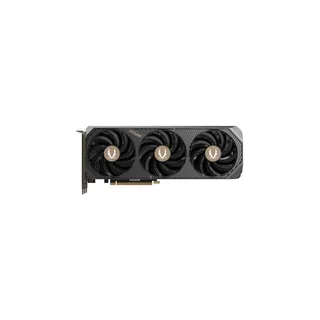
NVIDIA's 4K + RT pick
NVIDIA RTX 5080
The tier you buy when you want NVIDIA's 4K ray-tracing stack without spending 5090 money. Not a value pick, but finally stable in price and actually in stock.
The value cliff to the 5090
Look at the table and one pattern jumps out: there is a massive value cliff between the 5080 and the 5090, and only a gentle slope between the 5070 Ti, the 9070 XT, and the 5070. The 5090 costs more than triple the 5080 - ~$4,190 against ~$1,250 - for something like 30% more gaming performance. Every dollar-per-frame calculation says that's a terrible trade, and the $/frame column makes it plain: the 5080 sits at $18 while the 5090 balloons to $42.
That cliff is exactly why the 5080 exists and exactly why it's hard to love. Its entire appeal is being the reasonable stop before the price goes vertical, which means the case for it is really a case against spending more, not a case for spending this much. If money genuinely isn't a factor and you want the fastest thing on the planet for 4K path tracing or local AI work, the 5090 is unmatched and nothing else comes close. For everyone else - which is almost everyone - the correct move is to buy the 5080 or below and put the difference into the rest of the build. There is no sensible middle ground between them, only a wall.
The case for stepping down to the 5070 Ti or 9070 XT
For most people the right buy is not the 5080 at all. It's a tier down, and you give up less than the price gap suggests. The RTX 5070 Ti at ~$920 delivers most of the 5080's real-world experience - the same 16GB of VRAM, the full DLSS 4 stack, strong 1440p and capable entry-4K - for roughly $400 less. It's the closest thing to a one-and-done card that doesn't cost 5080 money, and it pulls decisively ahead of AMD the moment ray tracing turns on. If you thought you might dabble in 4K but mostly live at 1440p, this is the smarter spend, full stop.
If you don't care about ray tracing, step to the RX 9070 XT at ~$700 instead. It trades blows with the 5070 Ti in raster while costing ~$220 less, again with 16GB, and FSR 4 has finally closed the upscaling gap that used to make AMD an easy pass. Where you feel the tax is heavy RT titles, streaming (NVENC), and CUDA creative work. If none of that describes you, the 9070 XT is the best frames per dollar in the whole stack.
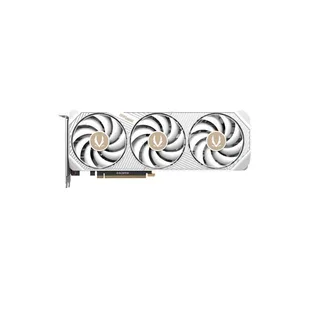
Smarter 4K-capable buy
NVIDIA RTX 5070 Ti
For most buyers this makes more sense than the 5080 - most of the 4K performance, the same 16GB of VRAM, and roughly $400 less out of pocket.
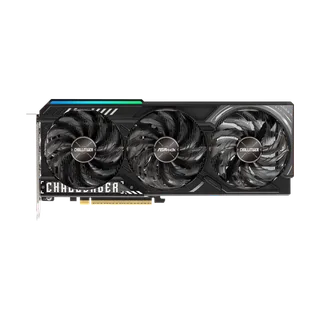
Best raster value
AMD RX 9070 XT
The value pick of the high end. You give up ray-tracing muscle and DLSS strength but get near-5070 Ti raster for the least money of the three.
Should you wait for a 5080 Super?
If you're on the fence, this is the question that keeps you there. The rumor mill - kopite7kimi and MEGAsizeGPU among others - points to a possible RTX 5080 Super with 24GB of GDDR7 (versus the current 16GB), a modest 8-12% performance bump, and a launch somewhere in late 2026 or early 2027. If those numbers hold, that card would be the obvious pick over the standard 5080 for anyone doing 4K gaming or VRAM-hungry creative and AI work, purely on the memory.
The problem is that none of it is confirmed, and the memory crisis cuts against the optimistic read. A Super refresh launching into today's GDDR pricing could easily arrive at $1,400 with no real value improvement, or slip to mid-2027, or not happen at all if NVIDIA decides their AI-accelerator margins make consumer refreshes not worth the wafers. Don't bank on a specific outcome. If you have a working GPU and no real bottleneck, waiting six-plus months is a fine, low-risk bet. If your current card is actually holding you back in games you play today, the "wait for the next thing" trap has cost a lot of people a lot of gaming time for a payoff that never quite lands.
Bottom line
The RTX 5080 at ~$1,250 is a rational purchase, not a triumphant one. The spring price drop that this post's title once celebrated has reversed, memory costs have pushed the whole stack back up, and MSRP is a fantasy while that holds. What you're buying is the cheapest card that does real 4K with ray tracing and just works, without spending ~$4,190 on a 5090. If that is specifically you - a 4K gamer who knows it and wants no drama - buy it and don't look back.
For nearly everyone else, the smarter money is a tier down. The 5070 Ti gives you most of the card for ~$400 less, and the 9070 XT gives you the best raster value in the market for less still. Want a complete build around any of them? Our build-a-pc page has current optimized recommendations at every budget with live pricing, and the bottleneck checker will show FPS estimates for your exact pairing before you spend a dollar.
Related reading
- Best GPU to buy in 2026 - the full tier-by-tier breakdown at every budget
- RX 9070 XT vs RTX 5070 Ti - the $700-vs-$920 showdown in full
- DLSS 4.5 explained - what NVIDIA's software stack actually delivers
- Best GPU and CPU pairings for 2026 - balanced builds at every budget
Found this useful? Pass it along:
Frequently Asked Questions
How much does the RTX 5080 cost in 2026?
The RTX 5080 is currently ~$1,250 at Newegg for AIB models, after a mid-year spike near $1,320 during the worst of the memory crunch. That's down from launch street pricing of $1,400-1,800 but still about $250 above its $999 MSRP. Founders Edition cards at $999 remain near-impossible to find.
Is the RTX 5080 Super coming out soon?
Nothing is confirmed. The current consensus from leakers (kopite7kimi, MEGAsizeGPU) points to a possible RTX 5080 Super refresh in late 2026 or early 2027, likely with 24GB GDDR7 and a ~10% performance bump. Nothing official from NVIDIA yet.
Should I buy the RTX 5080 now or wait?
If you need a GPU now and game at 4K, buy. The price has stabilized and supply is finally caught up. If you can comfortably wait 6+ months and don't currently have a working GPU bottleneck, waiting for the rumored 5080 Super (or a further 5080 price cut) makes sense. But 'wait for next gen' has cost a lot of people a lot of gaming time over the years.
RTX 5080 vs RX 9070 XT - which is the better buy at current prices?
At ~$1,250 vs ~$700, the RX 9070 XT is the obvious value pick - you're paying roughly 80% more for about 25-30% more 4K performance from the 5080. The 5080 wins clearly on ray tracing and DLSS 4. If you play heavy RT titles or care about NVIDIA features, pay the premium. If you mostly play raster games, the 9070 XT is the smart money.
Why did the RTX 5080 drop in price?
It briefly did, then reversed. Through spring 2026 AIB stock caught up and AMD's RX 9070 XT at ~$700 pressured the high end, pulling the 5080 toward ~$1,250. Then the 2026 memory crisis came for GDDR the same way it hit RAM and SSDs, and the 5080 spiked back near ~$1,320 before easing to ~$1,250 as stock stabilized. Don't expect it to fall to MSRP while memory costs stay elevated.