DDR6 RAM - Everything We Know So Far
Some links in this guide are affiliate links - we may earn a commission at no extra cost to you.
DDR6 is the next generation of desktop memory, and it is coming - eventually. The headline numbers are real: roughly double the bandwidth of DDR5, a new channel architecture, and a form-factor change that would retire the RAM stick as we know it. It is genuinely exciting hardware. It is also years away from any desktop you can buy, and completely beside the point if you are shopping for memory in 2026.
That second half is the part most coverage skips. So let's be direct up front: if you are building a PC right now, DDR6 should not enter your decision at all. You are buying DDR5, you are buying it in the middle of a brutal memory shortage, and "just wait for DDR6" is the worst possible advice in that situation. The rest of this post explains what DDR6 actually is, what is confirmed versus still rumored, and why waiting for it is a mistake - not a sales pitch, just the honest state of the roadmap.
Confirmed vs expected - read this first
Almost every DDR6 spec floating around right now comes from JEDEC roadmap slides and memory-vendor previews, not a finalized standard. That matters, because numbers get quoted as fact long before they are ratified. Here is the honest split as of mid-2026:
- Confirmed: DDR6 is in active development at JEDEC. Samsung, SK Hynix, and Micron have all shown prototype work. CAMM2 exists as a real, standardized module format today.
- Expected / on the roadmap: the specific speed tiers, the channel redesign, and DDR6 adopting CAMM2 for desktops. These are widely reported targets, and they may shift before the spec is locked.
- Rumored / unscheduled: exact launch dates for consumer platforms, pricing, and which CPU generations will support it.
Keep that framing in mind for every number below.
The headline numbers (expected)
Per JEDEC's public roadmap, DDR6 is expected to start around 8,800 MT/s at the base spec and scale toward 17,600 MT/s within the standard, with overclocked kits pushing higher still. Treat those as targets from a draft spec rather than guaranteed retail speeds.
For context, the current DDR5 sweet spot for gaming is DDR5-6000 to DDR5-8000. So DDR6's expected baseline already lands above what most people run today, and the top end is roughly double. If those figures hold, it would be one of the largest speed jumps between memory generations we have seen. Peak per-channel bandwidth would climb into territory that looks like today's data-center memory.
The architecture is genuinely different this time
This is not simply "DDR5 but faster." The reported channel redesign is what makes the speed jump possible.
DDR5 uses a dual 32-bit sub-channel layout - two independent 32-bit channels per module. DDR6 is expected to move to a quad sub-channel design, splitting each module into more, narrower channels. Narrower channels mean shorter electrical traces and lower load per channel, which is what lets signaling survive at those extreme clock speeds. You cannot keep raising frequency on the same channel design forever; at some point the physics stops cooperating. A quad-channel approach is the engineering answer to that wall.
The trade-off is complexity: more channels mean more traces, more pins, and a memory controller redesigned from scratch. That is a big part of why DDR6 needs an entirely new CPU and motherboard, and cannot be retrofitted to anything on shelves today.
CAMM2 - the likely end of the RAM stick
Here is the change that will surprise builders most: DDR6 is expected to leave the DIMM behind.
JEDEC has already standardized CAMM2 (Compression Attached Memory Module 2), and it is the expected form factor for DDR6. Instead of sticks that slot in vertically, a CAMM2 module lies flat against the motherboard, connecting through a large flat connector - closer to how an M.2 SSD mounts than to a traditional DIMM. If you have seen CAMM in recent Dell laptops, it is the same concept, standardized and scaled for desktops.
Why move away from the DIMM? Signal integrity. As speeds climb, the length of the electrical path between the memory chips and the CPU matters more and more. A vertical stick in a slot is a relatively long, interference-prone path. CAMM2's flat mounting shortens those traces, which becomes close to a requirement at the speeds DDR6 is targeting. There are practical wins too: no tall sticks fighting your CPU cooler, and a much lower profile overall.
The catch is upgradeability. A DIMM system lets you add sticks later; a CAMM2 module is a single unit, so upgrading can mean replacing the whole thing. Early implementations may also offer fewer capacity options until the market matures, and every board needs a new physical layout to accommodate it. None of this is fully settled for every desktop platform yet, which is exactly why it sits in the "expected" column rather than "confirmed."
When is it actually coming?
The realistic timeline, as understood in mid-2026:
- Now (2026): Prototype DDR6 chips exist. Platform-level validation with Intel and AMD is underway. The JEDEC spec is still being finalized.
- 2027: The desktop DDR6 specification is expected to be completed, with enterprise and data-center products shipping first.
- 2028-2029: Consumer desktop platforms - next-generation AMD and Intel CPUs - are expected to launch with DDR6 support.
So if you are building in 2026 or even 2027, DDR6 is not a factor. DDR5 is your standard, and it will be fine. Waiting for DDR6 today is like skipping lunch because dinner exists.
Platform support - it needs a whole new platform
DDR6 is not a memory upgrade you drop into an existing rig. Because the memory controller lives inside the CPU, DDR6 support has to be designed into a new CPU generation, paired with a new chipset and a new board layout for CAMM2. That means:
- AM5 will never run DDR6. AMD's current socket is DDR5-only, and AMD has committed to AM5 into 2027. DDR6 would arrive on a future socket entirely.
- Intel's current LGA1851 platform is DDR5-only as well. DDR6 would land on a later-generation platform, not a BIOS update.
- Whichever camp you are in, adopting DDR6 will mean a new CPU, motherboard, and memory together - a full platform rebuild, not a component swap.
Will it be worth waiting for? No.
Short answer: no, and it is not close. Here is the reasoning for different horizons:
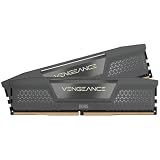
- Building now: buy DDR5. DDR5-6000 CL30 is still the sweet spot for AMD AM5, and DDR5-6400+ works well on Intel LGA1851. DDR6 being on the horizon changes nothing about what is optimal today. Our RAM advisor gives platform-specific picks.
- Planning a 2027 build: still DDR5. Even if DDR6 enterprise parts exist by then, consumer platforms will not support it.
- Planning for 2028 and beyond: this is the only horizon where DDR6 is worth tracking. A future platform shift from AMD or Intel is likely to line up with DDR6, and a solid DDR5 system today could carry you straight to that jump.
The failure mode is treating a 2-3 year roadmap item as a reason to delay a purchase you need this year. You would be trading a working PC now for a marginal generational gain later - and by the time it arrives, you would be replacing the whole platform regardless.
How DDR6 interacts with the current memory crisis
This is where the "just wait" advice does real damage. Right now DDR5 and NAND prices are spiking hard because Samsung, SK Hynix, and Micron shifted production toward AI memory, and a 32GB DDR5 kit that ran ~$200 in 2024 can cost roughly double that today. It is tempting to read "DDR6 is coming" as a reason to sit out the crisis. It is not.
DDR6 does nothing to relieve current prices. Consumer DDR6 is years out, and the same fabs and engineers advancing it are the ones already stretched thin by the shortage. Waiting for DDR6 to dodge today's DDR5 prices means going without a PC for two to three years to avoid a premium on parts you would have to replace anyway.
There is one genuine silver lining, and it belongs to the future, not the present: if DDR6 launches after the supply situation normalizes, it might escape the brutal early-adopter pricing that hit DDR5 when it debuted during the last supply crunch. No guarantees - but the timing could work in later buyers' favor. That is a reason to feel okay about DDR6 arriving eventually, not a reason to delay a build today. For the full crisis breakdown and buy-timing, see our DDR5 price analysis.
DDR6 by workload - who actually benefits
When it does arrive, DDR6's gains will not land evenly:
- Gaming: modest. Games are overwhelmingly GPU-limited. Faster memory helps in CPU-bound scenarios and data-streaming open-world titles, but most players will not see a night-and-day difference over a well-tuned DDR5 setup. The DDR4-to-DDR5 gaming jump was already small; DDR5-to-DDR6 looks similar.
- Content creation and productivity: more noticeable. Video editing, 3D rendering, and large-dataset work all scale with memory bandwidth, so doubled bandwidth shows up in real workflow time.
- AI and machine learning: this is where the bandwidth matters most. Local inference is often memory-bandwidth-bound, and DDR6 could meaningfully improve on-device LLM performance.
- General desktop use: you will not notice. Your browser does not care whether RAM runs at 6,000 or 17,600 MT/s.
Free to cite - DDR6 at a glance
A quick reference for the key figures and their confidence level. Free to cite with a link to bottleneckpc.com.
| Item | Detail | Status |
|---|---|---|
| Base speed | ~8,800 MT/s | Expected (draft spec) |
| Peak standard speed | ~17,600 MT/s | Expected (draft spec) |
| DDR5 comparison | 6,000-8,000 MT/s typical today | Confirmed |
| Channel design | Quad sub-channel (vs DDR5 dual) | Expected |
| Form factor | CAMM2, flat-mount (vs vertical DIMM) | Expected |
| Spec finalization | ~2027 | On roadmap |
| Enterprise/data center | ~2027 | On roadmap |
| Consumer desktop | ~2028-2029 | On roadmap |
| Backward compatible | No - needs new CPU + board | Confirmed |
| Runs on AM5 / LGA1851 | No, both are DDR5-only | Confirmed |
The takeaway - do not wait for DDR6
DDR6 is a real generational leap: roughly doubled bandwidth, a redesigned channel architecture, and a form-factor change that would be the biggest shift in desktop memory since DIMMs replaced SIMMs in the 1990s. It deserves the attention it gets - as a future platform story.
But for anyone building today, the correct amount of weight to give DDR6 is zero. It is 2-3 years from consumer desktops, its specs are still targets rather than guarantees, and it needs a whole new platform you will be buying into anyway when it lands. Buying DDR5 now does not lock you out of anything; your next next build will be the DDR6 build, and it will be a full rebuild regardless.
So do not skip a working PC to chase a standard that does not exist yet. Buy DDR5 at the right spec for your platform, make sure the rest of your build is balanced, and let DDR6 stay on the roadmap where it belongs. If you want to confirm your parts are matched before you spend, run them through our free bottleneck checker.
Related reading
- RAM and SSD prices - buy now or wait? - the live 2026 pricing picture and buy-timing call
- DDR5 RAM shortage 2026 - why memory prices spiked and what's driving it
- DDR5 prices - build now or wait? - the DDR5-specific pricing and timing breakdown
Found this useful? Pass it along:
Frequently Asked Questions
When does DDR6 come out?
Enterprise and data center DDR6 is expected in 2027. Consumer desktop DDR6 probably won't arrive until 2028 or 2029. The JEDEC spec is still being finalized in 2026, and platform validation with Intel and AMD is underway - so every date here is a target, not a shipping schedule.
How fast is DDR6 compared to DDR5?
Based on JEDEC's public roadmap, DDR6 is expected to start around 8,800 MT/s and scale up to roughly 17,600 MT/s, with overclocked kits potentially higher. That's roughly double DDR5's current sweet spot of 6,000-8,000 MT/s. These figures are targets from the draft spec, not final ratified numbers.
Will DDR6 work in my current motherboard?
No. DDR6 requires a new memory controller in both the CPU and the motherboard, so it needs a next-generation platform. It is also expected to move to a new physical form factor (CAMM2) rather than the DIMM slots your current board uses. Nothing from a DDR5 system carries over.
What is CAMM2?
CAMM2 (Compression Attached Memory Module 2) is a JEDEC-standardized module that sits flat against the motherboard instead of standing vertically like a DIMM stick. It allows shorter signal traces, better signal integrity at high speeds, and a lower profile inside the case. It is the expected form factor for DDR6, though final desktop implementations are still being defined.
Should I wait for DDR6 instead of buying DDR5?
No. Consumer DDR6 is 2-3 years away. If you need a PC now, buy DDR5 now. By the time DDR6 reaches desktops you'll be looking at a full platform upgrade anyway - new CPU, new motherboard, new memory - so waiting today just means going without a working PC for years.
Will DDR6 be expensive at launch?
Almost certainly. New memory standards always launch at a premium. Early DDR5 kits in 2021 cost 3-4x the equivalent DDR4 kit before prices normalized over 12-18 months. Expect the same early-adopter tax with DDR6.
Is the DIMM form factor going away?
Probably, eventually. JEDEC has standardized CAMM2 as a successor module format, and DDR6 is expected to adopt it, which would make DDR5 the last mainstream generation built on the traditional vertical DIMM. That transition is still playing out and is not fully locked for every desktop board.
Will DDR6 help gaming performance?
Eventually, modestly. Faster memory bandwidth helps in CPU-limited scenarios and memory-sensitive games, but most games are GPU-limited, so the DDR5-to-DDR6 jump matters less for gaming than it does for productivity and AI workloads. A well-tuned DDR5 system will not feel slow.