DDR5 RAM Shortage 2026: Why Prices Spiked and When to Buy
Some links in this guide are affiliate links - we may earn a commission at no extra cost to you.
Quick answer: The DDR5 RAM shortage in 2026 is happening because Samsung, SK Hynix, and Micron shifted factory capacity toward HBM memory for AI datacenters, which is far more profitable than consumer DDR5. That cut supply right as demand stayed high, so DDR5 prices have roughly quadrupled since late 2025 - a 32GB kit that was $80-120 last year now runs $395-610 - and DDR4 got dragged up too as builders fled to it. If you need a PC now, buy 32GB of DDR5-6000 and budget for the markup. If you can wait, real relief probably isn't coming until late 2027, and the near-term risk is that prices climb further, not fall.
How we track this: we monitor thousands of memory and storage listings across our price feed daily and re-verify the figures that matter against live retail listings, so the numbers below are what kits actually sell for this week - not a MSRP that stopped meaning anything eighteen months ago.
This isn't a normal price bump - it's a supply crisis
Memory prices move around all the time. This is not that. Since late 2025 the cost of a mainstream 32GB DDR5-6000 kit has gone from roughly $80-120 to a $395-570 spread, and the increase hasn't plateaued - it has kept grinding upward through the first half of 2026. Builders comparing their 2025 parts lists to a 2026 rebuild routinely find that the RAM line item alone now exceeds what they spent on a whole mid-range GPU last year.
The important thing to understand up front is the shape of it. A normal correction bounces back in a quarter or two. This is a structural supply reallocation driven by a demand source - AI infrastructure - that isn't slowing down and doesn't care what a gamer will pay for a memory kit. That changes how you should react to it, which is the whole point of this piece.
What actually caused the DDR5 shortage
Short version: AI is eating the memory chips. The longer version is worth understanding, because it tells you why this won't resolve on the usual timeline.
Samsung, SK Hynix, and Micron are effectively the only three companies on earth that manufacture DRAM at scale. All three have been converting production lines toward HBM (High Bandwidth Memory), the specialized stacked memory that sits on datacenter AI accelerators. HBM commands dramatically higher margins than commodity DDR5, and demand for it from AI buildouts is close to insatiable.
The catch is that HBM and your regular DDR5 come out of the same fabs, off the same advanced process nodes, competing for the same wafer capacity. Every wafer a manufacturer dedicates to HBM for an AI datacenter is a wafer that isn't producing DDR5 for a gaming PC. Faced with a choice between selling premium AI memory at fat margins and selling consumer kits at thin ones, all three makers made the rational business decision. Micron went a step further and discontinued its consumer-facing Crucial memory line entirely to concentrate on datacenter parts.
The result is a textbook squeeze: supply pulled away from the consumer market at exactly the moment demand held firm. Team Group's management flagged in late 2025 that the crisis was "only just starting," and the contract-price data backed them up - DRAM contract prices jumped roughly 55-60% in a single quarter, and the climb continued into 2026 rather than reversing. This is a supply-side event with a multi-year fix, not a demand blip that clears itself.
How bad it is, and how long it lasts
Bad, and a while. Those are the honest answers, and it's worth being precise about both because the internet oscillates between panic and denial.
On severity: a 32GB DDR5-6000 kit sits between $395 and $570 depending on brand, roughly 4-6x its 2024 price, and that spread is itself part of the story - the cheapest and dearest 32GB kits we track are now $215 apart, $395 to $610. 64GB DDR5 kits run $736 to $1,328. NAND flash got dragged into the same story - contract prices are up sharply year over year - so SSDs have climbed too, with 1TB Gen4 NVMe drives that were $75 now starting around $190. The one part of the memory market that stayed sane is DDR4, and even that only because it was already cheap before builders rediscovered it (more on that below).
RAM Price Trend: Jul 2025 - Oct 2026
Points through Feb 2026 are market estimates compiled from public reporting. The Oct 26 point is the median kit price in our own live catalogue (32 kits across the three groups), which is weighted toward Amazon listings and is not a claim about the cheapest price available anywhere.
On duration: most analysts don't expect meaningful relief until new fab capacity comes online in late 2027. Fabs take years to build and qualify, and the AI demand underwriting all of this is still scaling up, not winding down. Some forecasts had prices plateauing in mid-2026, but a plateau only means they stop rising - it does not mean they fall back. And the nearer-term risk actually points the wrong way: memory analysts are warning of another 40-50% leg up before year-end as datacenter contracts lock in more supply. A return to 2025 pricing is not on any credible near-term horizon.
What the shortage does to a build budget
This is where it stops being trivia and starts costing you money. RAM used to be a rounding error in a build - a line you barely thought about. In 2026 it's one of the most expensive single components in a mainstream machine, and it distorts everything around it.
Concretely, a complete current-gen build now carries roughly $400 of memory-and-storage inflation over the same machine in 2024, almost all of it in the RAM and the SSD. That's enough to bump you down a GPU tier if you don't plan for it. The trap is falling in love with a graphics card first and discovering the memory tax afterward - by then it's eating the frames you were trying to buy.
The move is to budget memory and storage first, as fixed costs, and let the GPU absorb whatever's left rather than the other way around. Two things help here. If you're speccing from scratch, our pre-built PC builds are already balanced against current prices, so the memory markup lands in one predictable line instead of quietly wrecking the whole plan. And if you're unsure what speed and capacity your board actually wants, the RAM advisor sorts it by chipset so you don't overpay for a kit your motherboard can't fully use - which in this market is real money, not a rounding error.
DDR4 vs DDR5: the escape hatch and its catch
When DDR5 spiked, a lot of builders had the same instinct: go DDR4 and dodge the tax. It's a better idea than it sounds - and also a more complicated one than it sounds.
The good news is that DDR4 genuinely skipped most of the crisis. A 32GB DDR4-3200 kit runs $230-250 on our tracker, roughly 60% of the DDR5 floor, and 16GB DDR4 sits near $140. For a budget build, that gap is decisive: on a fixed total budget, a Ryzen 5000 / AM4 machine that redirects the DDR5 savings into the GPU will out-game a DDR5 build at the same price. The raw platform advantage of DDR5 does not come close to justifying a $150+ memory premium for most gamers. That math is real, and it's why balanced budget builds at the lower tiers increasingly lean back toward AM4.
The catch is twofold. First, DDR4 only barely dodged the crisis - the surge of builders fleeing to it, combined with manufacturers already winding down DDR4 production, pushed it up from genuinely cheap to merely reasonable. It is not the $50 kit it was in 2024. Second, and more important, DDR4 means an older platform - AM4 or LGA1700 - with no path to a current-generation CPU. Every current AM5 and LGA1851 board is DDR5-only. So DDR4 is the right call for a budget build you intend to keep as-is, and the wrong call if you were counting on dropping a next-gen chip into that board in two years. Buy it clear-eyed about which of those you're doing.
The honest what-to-do
No hedging. Here's the actual guidance by situation.
If you're building now: buy the memory. 32GB of DDR5-6000 is the target for a modern gaming rig, and waiting doesn't help you when the forecast is up, not down. Don't let anyone talk you into 64GB at these prices unless you genuinely edit video or run VMs. Budget the RAM and SSD as fixed costs before you pick the GPU.
If you're on a budget: this is DDR4's moment. An AM4 build with the memory savings pushed into the graphics card is the value play of 2026, as long as you accept it's a platform you won't be upgrading.
If your current PC is fine: leave it alone and don't panic-buy. If you want more frames, put the money into a GPU instead - graphics cards have their own 2026 problems, but they aren't tied to the same memory squeeze in the same way, and a card upgrade delivers more gaming uplift per dollar than a RAM swap right now.
If you have RAM sitting in a drawer: this is a strange upside. Old DDR4 and DDR5 kits are the most liquid they've ever been, worth 2-3x what you paid. If you have spare sticks you'll truly never use, someone on the secondhand market wants them. Keep a working fallback set, though - during a crunch, a dead kit you can't cheaply replace is a real problem.
Key numbers - mid-September 2026
From BottleneckPC's daily price tracking. Free to cite with a link to bottleneckpc.com.
| Item | Now | A year ago | Move |
|---|---|---|---|
| 32GB DDR5-6000 | $395-570 | $80-120 | roughly 4-6x |
| 64GB DDR5 | $736-1,328 | ~$220 | roughly 3-6x |
| 32GB DDR4-3200 | $230-250 | ~$90 | roughly 2.5-3x |
| 16GB DDR4-3200 | ~$140 | ~$50 | roughly 2.8x |
| 1TB Gen4 NVMe SSD | $185-190 | ~$75 | roughly 2.5x |
| DRAM contract prices | up ~55-60% in a single quarter | - | still climbing |
Forecast: analysts warn of another 40-50% DDR5 jump before year-end, with no meaningful supply relief expected before late 2027.
Where to actually buy, without overpaying
This is a news-and-analysis piece, not a buying guide, so we'll keep the shopping short. These two kits answer ninety percent of the "fine, what do I actually buy" mail - one per memory generation, both from our tracked feed, prices approximate:
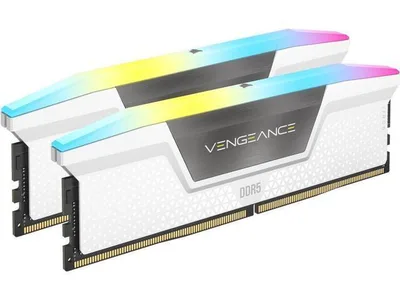
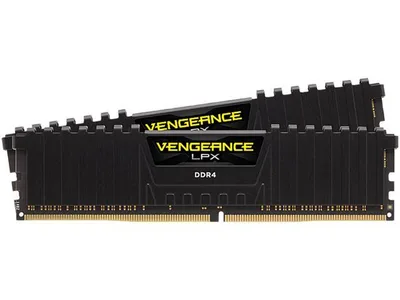
When you're ready to pick specific kits and drives, our RAM and SSD price guide has the current still-sane picks - the cheapest brand-name DDR5-6000 kit worth buying, the DDR4 escape-hatch kit, and any storage deals that are beating the going rate that week. And before you check out, run your board through the RAM advisor so you're buying the right speed and capacity for your chipset instead of paying up for spec you can't use. On a fixed budget, the build-a-pc tool will show you where the memory tax is best absorbed across the whole machine.
While the rest of your build is under a microscope, it's also worth making sure you're not compounding the RAM tax with a mismatched CPU and GPU. Our bottleneck checker will tell you whether your pairing is balanced before you spend - no sense overpaying for a card your CPU can't feed when memory is already stretching the budget.
The bottom line
The 2026 memory shortage is a structural problem, not a passing spike. AI datacenters are outbidding the consumer market for the exact fab capacity that makes your RAM, all three DRAM makers have followed the money, and the fix - new capacity - is years out. That means the usual advice to "wait for a better price" is backwards this year: the credible near-term move is up, not down.
So budget for it and build anyway. Get 32GB of DDR5 if you're on a modern platform, seriously consider DDR4 if you're building to a budget, treat memory and storage as fixed costs you plan around rather than surprises you discover at checkout, and put the rest into the GPU. The market is expensive, but a well-balanced machine is still very much buildable - you just have to spend with your eyes open.
Related reading
- RAM and SSD prices: buy now or wait? - the current still-sane kits and drives, with live picks
- DDR5 RAM prices: when to buy - the DDR5-specific pricing and timing breakdown
- DDR6 RAM: everything we know - what the next memory standard means for this crisis
Found this useful? Pass it along:
Frequently Asked Questions
What is causing the DDR5 RAM shortage in 2026?
AI is the root cause. Samsung, SK Hynix, and Micron - the only three companies that make DRAM - have shifted production lines toward HBM (high bandwidth memory) for AI datacenter GPUs because it's far more profitable. HBM and consumer DDR5 come out of the same fabs, so every chip made for AI is a chip not going into a stick of gaming RAM. Less supply plus surging AI demand caused the 2026 shortage.
Should I buy RAM now or wait in 2026?
If you need a working PC now, buy 32GB of DDR5-6000 today and accept the RAM tax - prices aren't dropping anytime soon, and analysts are forecasting another 40-50% jump before year-end. If your current rig is fine and you're just planning ahead, waiting could help, but don't expect real relief until late 2027 when new fab capacity comes online. This isn't a 'wait two weeks' situation.
Why is DDR5 RAM so expensive in 2026?
Two things hit at once. AI data centers are buying massive amounts of HBM and DRAM, eating into supply. Then Samsung and SK Hynix shifted production lines to prioritize high-margin AI memory over consumer DDR5. Less supply plus more demand equals prices roughly quadrupling since late 2025 - a 32GB DDR5-6000 kit that was $80-120 a year ago now runs $395-570 depending on brand.
When will RAM prices go back to normal?
Nobody knows for sure, but most analysts don't expect meaningful relief until new fab capacity comes online in late 2027. Don't expect a sudden price crash even then - it'll be a gradual decline, and prices probably won't hit 2025 lows again for years. In the near term the risk is the other direction: another 40-50% spike is forecast before this year is out.
How much RAM do I need for gaming in 2026?
32GB is the sweet spot for gaming. 16GB still works but you'll feel it in newer titles that are getting more memory hungry. 64GB is overkill unless you're doing heavy video editing or running VMs alongside your games - and at $736-1,328 a kit right now, there's no reason to overbuy.
Is it worth buying DDR5 right now or should I wait?
If you need a PC now, buy DDR5 now - just get 32GB of DDR5-6000 and don't overthink the brand. If your current setup works fine and you're just planning a future build, waiting could help someday, but there's no near-term relief signal and prices may climb further before they fall.
Can I use DDR4 instead to save money?
Only if you go with an older platform like LGA1700 or AM4. Current-gen AM5 and LGA1851 boards are DDR5-only. DDR4 barely moved in this crisis, so a 32GB DDR4-3200 kit at $230-250 is roughly 60% of the DDR5 floor, about $150-165 less - but it locks you into a platform with no modern CPU upgrade path. For a budget build, that trade can still be worth it.