The RTX 5060 Is Here - Should You Actually Buy One?
Some links in this guide are affiliate links - we may earn a commission at no extra cost to you.
The RTX 5060 didn't launch into a vacuum - it launched into an argument that's been running for three straight generations. NVIDIA put 8GB of GDDR7 on a brand-new 2026 gaming card, priced it at a $299 MSRP that almost nobody actually pays, and let it hit the street around $349. The reviews wrote themselves before the card even shipped: fast enough silicon, choked by a memory buffer that was already looking thin two years ago.
That doesn't make it a bad card. It makes it a specific card, one with a narrow window where it's the right call and a wide zone around that window where it isn't. The RTX 5060 is a genuinely capable 1080p GPU - roughly 4060 Ti rasterization with real ray-tracing gains and the full DLSS 4.5 stack on top. The trouble is that it runs out of memory before it runs out of horsepower, and that gap only widens as new games ship.
So the question isn't "is the RTX 5060 good?" It's "are you the person it's actually for?" For a tight-budget 1080p or esports build, yes, and it's an easy recommendation. For nearly everyone else, spending a little more - or a lot more - buys you out of the 8GB trap entirely. Here's the honest breakdown.
How we rank: we track street prices on 140+ GPUs daily and re-verify the ones that matter against live Amazon and Newegg listings, so the numbers here are what cards actually sell for this week - not MSRP fantasy. Picks weigh real-world performance-per-dollar, VRAM longevity, and features you'll actually use.
The short version: most people should step up to a 16GB card, and as we write that means the RX 9060 XT 16GB at ~$520 rather than the RTX 5060 Ti 16GB - the Ti's only live listing on our tracker is a scarcity ask near ~$830, which is no longer a small premium over the plain 5060. The doubled VRAM is the whole reason to step up, because 8GB is the spec most likely to bite you in 1440p titles over the next couple of years. The plain RTX 5060 8GB only makes sense if you're locked to 1080p or esports and every dollar counts, and right now it has no in-stock first-party listing on our tracker (list $349.99, last seen ~$410). And if you can stretch to ~$590, the RX 9070 is a real 1440p card with a buffer that won't sweat. The full reasoning is below.
The cards at a glance, September 2026
These are the numbers our tracker is seeing this week. Free to cite with a link to bottleneckpc.com.
| Card | VRAM | ~Price | Best for |
|---|---|---|---|
| RTX 5060 | 8GB | list $349.99, no live listing (last seen ~$410) | 1080p and esports on a tight budget |
| RX 9060 XT 16GB | 16GB | ~$520 | 1080p and 1440p - the smart mainstream buy |
| RTX 5060 Ti 16GB | 16GB | ~$830 (one live listing) | NVIDIA's 16GB option, only if it drops back near list |
| RX 9070 | 16GB | ~$590 | proper 1440p with a big VRAM buffer |
| RX 9070 XT | 16GB | ~$750 | 1440p ultra stretching into entry 4K |
The pattern jumps right out: the plain 5060 is the only 8GB card here, and the 16GB card closest to it in price is now the RX 9060 XT at ~$520, while the 5060 Ti 16GB's lone live listing sits ~$310 above that. Those two rows are most of the buying advice in this whole post.
The card that launched: RTX 5060 8GB
Start with what's actually good, because there's real substance here. The RTX 5060 runs NVIDIA's Blackwell architecture - the same generation as the 5070, 5080, and 5090 - so you get the current shader pipeline, improved RT cores, and full DLSS 4.5 with Multi Frame Generation. Raw rasterization lands right around RTX 4060 Ti territory, which means you're buying last generation's $399 performance for less money, plus a meaningful jump in ray tracing. At 1080p high in the games most people actually play, it holds a comfortable 60+ FPS, and in esports titles it's well past that.
The catch is the 8GB buffer, and it's not a theoretical one. Several 2025-2026 titles - The Last of Us Part II, Black Myth Wukong, Indiana Jones and the Great Circle, Star Wars Outlaws - already push past 8GB at 1440p with high textures. The card has the compute to render those scenes; it just doesn't have the memory to hold them, so it starts swapping textures and stuttering. NVIDIA's answer is DLSS to render at a lower internal resolution, and it works, but you're leaning on software to paper over a hardware choice made for margins. Buy this card knowing exactly what it is: a solid 1080p GPU that you should not ask to do 1440p.
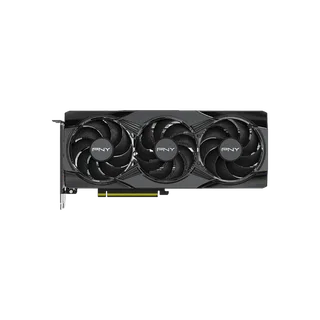
Budget 1080p pick
NVIDIA RTX 5060
A clean 1080p card if you stay at 1080p. The 8GB buffer is the whole compromise. No in-stock first-party listing on our tracker as we write - last seen ~$410.
The smarter spend: RTX 5060 Ti 16GB
This is the card we pointed most people to at launch, and the reason is almost entirely that 16GB buffer. "RTX 5060 Ti" is really two products sharing a name - an 8GB version that's a trap and a 16GB version that's excellent - built on the same chip at the same clocks. The extra memory is what lets the 16GB model hold 1440p high in most 2025-2026 titles instead of falling off a cliff when VRAM fills, and it used to do it for only a small premium over the plain 5060 - as we write, its only live listing on our tracker is a scarcity ask near ~$830. Same DLSS 4.5 feature set, same Blackwell RT cores, but a memory buffer that won't be the thing that ages this card out.
The math is what made it the pick. At its $429 list you were looking at roughly $80 more than the base 5060 to double your VRAM and buy yourself a card that stays relevant into 1440p territory rather than one boxed into 1080p. At ~$830 that premium is gone, and the RX 9060 XT 16GB at ~$520 does the same job for ~$310 less. It's not dramatically faster in raw raster - the win is longevity, not frame rate - but longevity is exactly what an 8GB card can't sell you. 16GB is the floor for a GPU you actually want to keep for a few years. Just triple-check the box says 16GB before you check out, because the 8GB variant shares the name and the shelf.
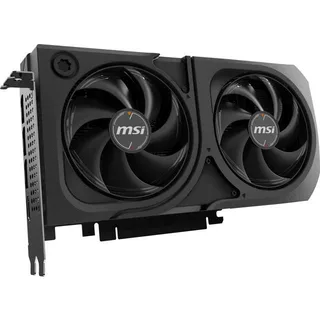
NVIDIA's 16GB option
NVIDIA RTX 5060 Ti
Double the VRAM, but the only live listing on our tracker is a scarcity ask near ~$830 - the RX 9060 XT 16GB does the same job for ~$310 less.
The 1440p alternative: AMD RX 9070
If your target is genuinely 1440p rather than 1080p with occasional ambitions, the RX 9070 is a different class of card and worth the reach. At ~$590 it's a real 1440p GPU - meaningfully faster than the 5060, with 16GB of VRAM and the headroom to run modern titles at high settings without the memory anxiety baked into the NVIDIA budget tier. FSR 4 has also closed most of the gap that used to make AMD an easy pass; it's sharp and stable now rather than the shimmery mess of a couple generations back, so you're not giving up nearly as much on upscaling as you would have in 2024.
Where you feel the trade is NVIDIA's software moat. Heavy ray-traced titles still lean in NVIDIA's favor, NVENC remains the streamer's default, and CUDA-dependent creative apps run better on GeForce. If you play a lot of path-traced games or stream seriously, that premium buys something real. But for a raster-first 1440p gamer who just wants frames and a buffer that lasts, the 9070 is the smarter place to put ~$590 than any 8GB card. It's the "buy once, don't think about VRAM for years" option in this price range.
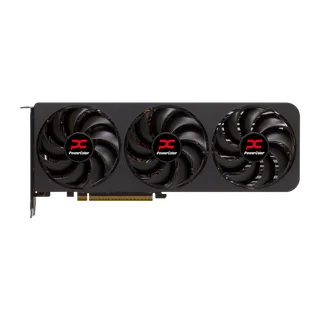
Better long-term buy
AMD RX 9070
The real 1440p card in this roundup. Faster than the 5060 with double the VRAM.
Top of this bracket: RX 9070 XT
If you want the ceiling before you're into genuinely expensive territory, the RX 9070 XT is the pick. At ~$750 it's the fastest card in this comparison by a wide margin - a comfortable 1440p-ultra GPU that stretches into entry-level 4K with FSR doing some of the lifting, holding triple-digit frame rates at 1440p in most modern games. Same 16GB buffer as the plain 9070, more raster muscle, and the same FSR 4 that finally makes AMD's upscaling something you'd actually leave on. For a raster-first gamer chasing high refresh at 1440p, this is the best frames-per-dollar in the whole bracket.
The honest framing: this is more card than an RTX 5060 shopper usually needs, and it costs roughly double the 5060's list price. If you came here for a $349 card, the 9070 XT is not a lateral move, it's a different build with a different budget. But if reading this far has you reconsidering how much GPU you actually want, it's the sensible top end - you get the AMD ray-tracing and ecosystem trade-offs in exchange for the best raw performance short of the RTX 5070 Ti and 5080 tiers. Overkill for 1080p, right at home at 1440p and above.
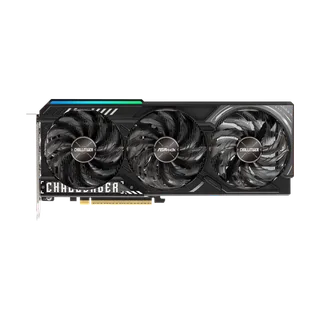
Top of the tier
AMD RX 9070 XT
Best raw frames per dollar here. Serious 1440p that reaches into entry 4K.
Who should skip the RTX 5060
Being straight with you means naming the buyers this card actively wrongs:
- Anyone serious about 1440p. The 8GB buffer makes 1440p a compromise that only gets worse as new games ship. Step up to the RX 9060 XT 16GB at ~$520 or the RX 9070 at ~$590 - both solve the exact problem the plain 5060 creates.
- People who can stretch ~$240 over list. The RX 9070 at ~$590 is a dramatically better card: faster, double the VRAM, built for the resolution the 5060 struggles to hold. If the budget flexes, that's where it should go.
- RTX 4060 Ti owners. There's no meaningful upgrade here - you'd be paying $349 list, and more on the street where it is stocked at all, to move sideways. Wait for a bigger jump or the next generation.
The trap to avoid across all of it is the 8GB tier in general. The saving over a 16GB card - ~$170 against the RX 9060 XT at list prices - is not worth a memory buffer that's already stuttering in current titles and will only get tighter. If a card is meant to last, 16GB is the floor in 2026.
What CPU to pair with it
If you do go RTX 5060, don't overspend on the processor - this card hits its limits long before a mid-range CPU does. A Ryzen 5 7600X (~$210) is the cheapest sensible AM5 entry with zero bottleneck at 1080p, and a Ryzen 5 9600X (~$220) is the small step up if you want a little more headroom. On the Intel side, a Core Ultra 5 245K (~$227) makes sense only if you already have an LGA1851 board. Skip the 9800X3D and anything north of $400 - that money does far more good put toward a better GPU. Not sure your combo is balanced? Run it through our free bottleneck checker for real FPS estimates at your resolution before you buy.
The bottom line
The RTX 5060 is a fine 1080p card that NVIDIA hobbled with an 8GB buffer it knew would draw fire. If you're locked to 1080p, value the NVIDIA feature set, and every dollar counts, it does the job and does it well. The catch is that the moment your budget or your resolution has any give at all, better options crowd in immediately - the RX 9060 XT 16GB for ~$170 over the 5060's list, the RX 9070 for a real 1440p buffer if you can reach ~$590. The one thing not to do is buy an 8GB card in 2026 expecting it to last. Match your card to your actual resolution, don't overspend on the CPU behind it, and you'll come out fine.
Before you commit, run your build through our bottleneck checker to confirm your CPU and GPU are properly matched, and check our pre-built recommendations if you want a full system that's already optimized.
Related reading
- Best GPU to buy in 2026 - the full tier-by-tier breakdown at every budget
- RX 9070 XT vs RTX 5070 Ti - the next bracket up, head to head
- DLSS 4.5 explained - what NVIDIA's software stack actually delivers
- Best GPU and CPU pairings for 2026 - balanced builds at every budget
- 8GB of VRAM in 2026 - where the market drew its line, and which side this card is on
Found this useful? Pass it along:
Frequently Asked Questions
How much does the RTX 5060 cost?
MSRP is $299 and most AIB models carry a $349.99 list price, but as we write there is no in-stock first-party listing on our tracker - the last figure we saw was ~$410. Founders Edition cards at $299 are nearly impossible to find. Expect to pay well above list where the card is still stocked.
Is 8GB of VRAM enough in 2026?
For 1080p gaming, 8GB is still fine in most titles. But at 1440p with high textures, several 2025-2026 games already push past 8GB. This card will hit VRAM limits sooner than it hits performance limits, which is a frustrating design choice by NVIDIA.
RTX 5060 vs RX 9070 - which is better?
The RX 9070 at ~$590 is a different tier - it's faster with 16GB VRAM and targets 1440p. If you can stretch your budget, the 9070 is the better long-term buy. The RTX 5060 is strictly a 1080p card at a lower price point.
RTX 5060 vs RTX 4060 Ti - which should I buy?
The RTX 5060 is roughly equal to the 4060 Ti in rasterization and significantly better in ray tracing, at a lower price. If you're choosing between these two new, the 5060 wins. But if you already own a 4060 Ti, there's no reason to upgrade.
What CPU should I pair with the RTX 5060?
At this performance tier, you don't need a flagship CPU. A Ryzen 5 9600X (~$220) or even a Ryzen 5 7600X (~$210) pairs perfectly without any bottleneck at 1080p or 1440p. Don't overspend on the CPU for this GPU.
Is the RTX 5060 good for 1440p gaming?
It can handle 1440p in most games at medium-to-high settings, but the 8GB VRAM becomes a real constraint at 1440p with high textures. If 1440p is your target resolution, save up for an RX 9060 XT 16GB or RX 9070 instead.